
Introduction:-
Farming is one of the most important parts of our life. It gives us food, provides jobs, and supports millions of families. For many years, farmers have used chemical fertilizers and pesticides to grow more crops. These methods helped increase production, but they also created some problems. Soil quality started decreasing, farming costs became higher, and the environment was affected.
Today, many farmers are looking for better and safer ways to farm. One such method is organic farming. Organic farming means growing crops with the help of natural methods instead of using harmful chemicals.
Organic farming is not only good for the environment, but it also creates economic opportunities. It helps farmers reduce costs, earn better income, and build a sustainable future. This complete system is often called the organic farming economy.
In simple words, an organic farming economy includes everything related to organic farming, such as crop production, food processing, marketing, transportation, employment, and income generation.
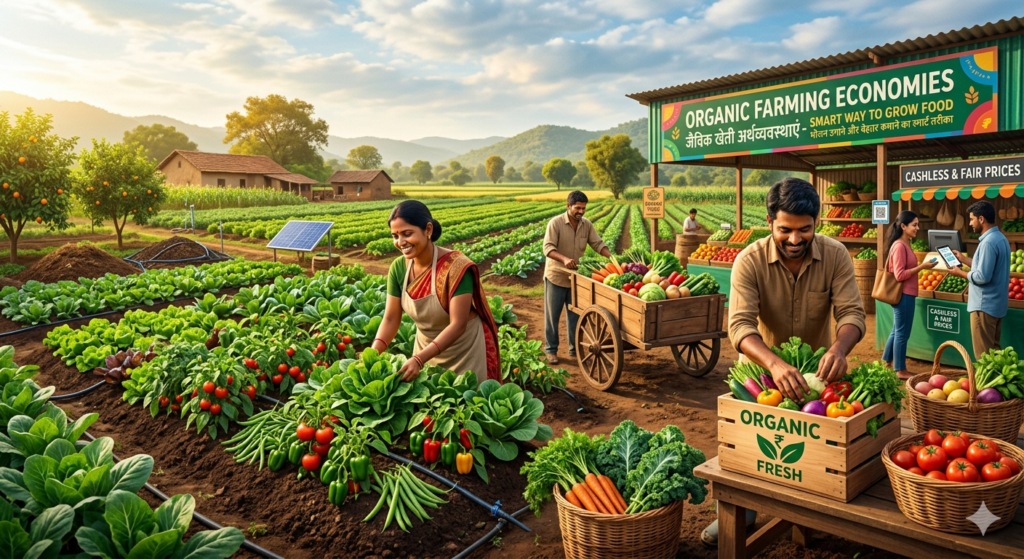
What is Organic Farming??
Organic farming is a natural way of growing crops. It focuses on keeping the soil healthy and protecting nature.
In organic farming, farmers use:-
Compost made from plant waste
Animal manure
Bio-fertilizers
Crop rotation
Natural pest control methods
Instead of depending on chemical products, organic farming uses natural resources available on or near the farm.
The main goal is to produce healthy food while protecting soil, water, and the environment.
Why Organic Farming is Becoming Popular????
People today are becoming more aware of their health. They want fresh and safe food on their plates.
Many consumers prefer food that is grown naturally because they believe it is healthier and safer.
As a result, the demand for organic products is increasing every year.
Some popular organic products are:-
Vegetables
Fruits
Pulses
Spices
Tea
Coffee
Honey
This growing demand creates new opportunities for farmers and businesses.
How Organic Farming Helps Farmers Save Money?????
One of the biggest advantages of organic farming is that it can reduce farming expenses.
In traditional farming, farmers often spend a lot of money on:-
Chemical fertilizers
Chemical pesticides
Weed-control chemicals
In organic farming, many of these costs can be reduced because farmers use natural alternatives.
For example:-
Crop waste can be turned into compost.
Animal waste can be used as manure.
Natural solutions can help control pests.
When farmers spend less money on inputs, they can keep more profit for themselves.
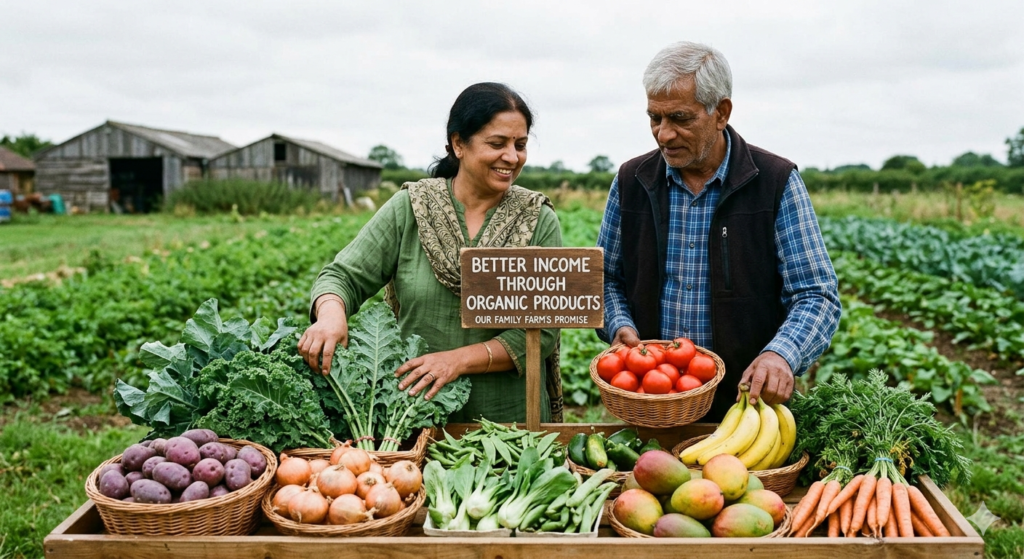
Better Income Through Organic Products:-
Organic products often sell at higher prices than regular products.
This happens because many consumers are willing to pay more for naturally grown food.
For example, if a farmer sells organic vegetables directly to customers, the farmer may receive a better price compared to selling ordinary vegetables.
Higher prices do not always mean huge profits immediately, but over time they can improve a farmer’s income.
This is one reason why many farmers are slowly moving towards organic farming.
Real-Life Example:-
A farmer named Ramesh owns a small farm. For many years, he used chemical fertilizers to grow vegetables. Every season he spent a large amount of money on fertilizers and pesticides.
Even when production was good, his savings remained low because his expenses were high.
Later, Ramesh started using compost made from farm waste and animal manure. He also learned natural methods to protect crops from pests.
The first few years were not easy, but slowly his soil became healthier. His farming costs reduced, and some customers started buying vegetables directly from him.
Today, Ramesh spends less on farming and earns a more stable income.
This example shows how organic farming can help farmers in the long run.
Organic Farming Creates More Jobs:-
Organic farming often needs more human effort than chemical-based farming.
People are needed for:-
Compost preparation
Manual weeding
Crop monitoring
Sorting and grading
Packaging
Because of this, organic farming can create more employment opportunities in villages.
This is especially helpful for rural families who depend on agriculture for their livelihood.
Small farmers often face financial challenges.
Buying expensive fertilizers and pesticides every season can be difficult.
Organic farming gives them another option.
Many organic farming methods use local resources that are already available on the farm.
Examples include:-
Cow dung
Crop residues
Leaves
Kitchen waste
Using these resources helps farmers reduce dependence on expensive products from the market.
Benefits for Soil Health:-
Healthy soil is the foundation of successful farming.
When soil becomes weak, crop production can suffer.
Organic farming helps improve soil health by adding natural organic matter.
Healthy soil can:-
Hold more water
Support beneficial microorganisms
Improve plant growth
Reduce soil erosion
A farmer with healthy soil is often better prepared for future farming seasons.
Water Saving Benefits:-
Water is becoming a valuable resource in many farming areas.
Organic farming helps soil absorb and store water more effectively.
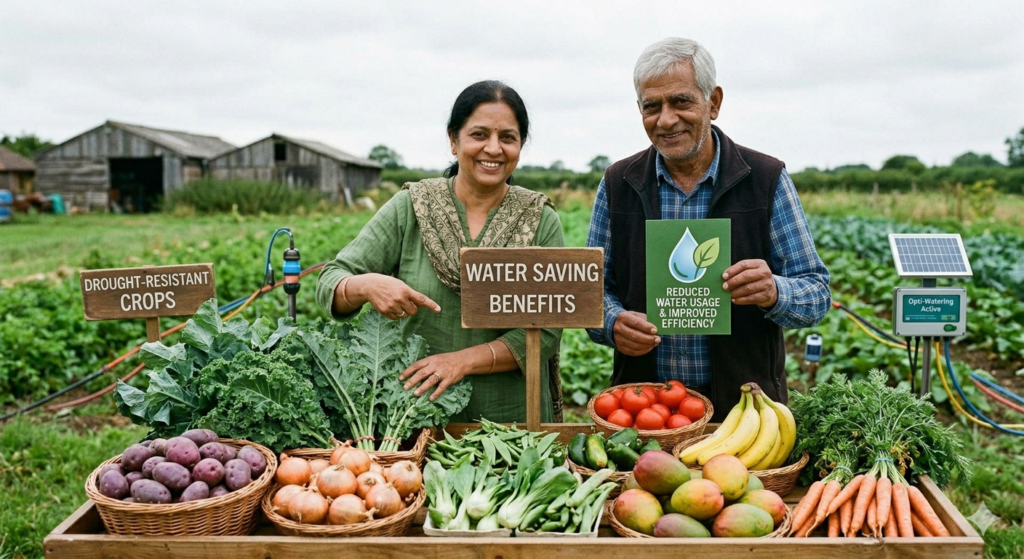
This means:-
Less water wastage
Better moisture retention
Reduced irrigation needs
During dry periods, these benefits can make a big difference for farmers.
Protection of Nature:-
Organic farming is not only about crops. It also supports nature.
Many living organisms benefit from organic farming practices, including:-
Bees
Butterflies
Birds
Earthworms
These creatures play an important role in agriculture.
For example, bees help with pollination, while earthworms improve soil quality.
By protecting biodiversity, organic farming helps maintain a healthy farming ecosystem.
Challenges in Organic Farming:-
Like every farming system, organic farming also has some challenges.
1. Transition Period:-
When farmers switch from chemical farming to organic farming, they may need time to see results.
2. Lack of Knowledge:-
Some farmers may not know the best organic farming methods.
3. Market Problems:-
Finding buyers for organic products can sometimes be difficult.
4. Certification Process:-
Organic certification may require extra time and effort.
5. Storage and Transport:-
Organic products need proper handling to maintain their quality.
Even with these challenges, many farmers believe the long-term benefits are worth the effort.
Role of Technology in Organic Farming:-
Modern technology is helping organic farming grow faster.
Farmers can use:-
Weather forecasting services
Mobile farming apps
Soil testing facilities
Efficient irrigation systems
These tools help farmers make better decisions and improve productivity.
For example, weather information can help farmers plan irrigation and harvesting at the right time.
Technology and organic farming can work together to create better results.
Future of Organic Farming Economies:-
The future of organic farming looks bright.
Several factors are supporting its growth:-
Increasing health awareness
Growing demand for natural food
Better farming knowledge
Improved market opportunities
Rising interest in sustainable agriculture
Young people are also showing interest in organic farming and related businesses.
Many entrepreneurs are creating new opportunities in food processing, packaging, and direct selling of organic products.
This can strengthen rural economies and create new sources of income.
Steps to Make Organic Farming Stronger:-
To help organic farming grow further, some important steps can be taken:-
Provide training to farmers.
Increase awareness among consumers.
Improve storage facilities.
Strengthen farmer groups.
Support local organic markets.
Encourage research and innovation.
Improve transportation systems.
These efforts can help farmers receive better returns from their hard work.
Conclusion:-
Organic farming is more than just a farming method. It is a way to create a healthier future for farmers, consumers, and the environment. By reducing the use of harmful chemicals, improving soil health, saving water, and creating employment opportunities, organic farming contributes to both economic growth and environmental protection.
Although there are challenges, the benefits are clear. Farmers can reduce costs, improve soil quality, and find new income opportunities. Consumers can enjoy food grown through natural methods. At the same time, nature receives the protection it needs.
In the coming years, organic farming economies are likely to play an even bigger role in agriculture. As more people choose sustainable and healthy food, organic farming will continue to create opportunities for farmers and support long-term economic development. It is not just a trend; it is a practical step toward a better and more balanced future.