
Introduction: An Invisible System With Visible Effects
Most people rarely think about how goods reach them. Food on the table, clothes in wardrobes, fuel for vehicles, and medicines in hospitals—all depend on a long and complex global supply chain. This system works quietly in the background, connecting farms, factories, ports, warehouses, and markets across continents.
However, when this system breaks down, its impact becomes immediately visible. Rising prices, delayed deliveries, shortage of essential goods, and slowing industries are all signs of supply chain stress. In recent years, global supply chain issues have emerged as one of the biggest challenges for the world economy, affecting both developed and developing countries.
Understanding the Global Supply Chain:-
A global supply chain is the complete journey of a product from raw material to final consumer. It includes extraction of resources, manufacturing, packaging, transportation, storage, and retail distribution. Each step often takes place in different countries depending on cost, skill availability, and infrastructure.
This interconnected structure makes production efficient, but also fragile. If one link is disrupted, the entire chain feels the pressure. What was once seen as a strength of globalization has now revealed its weaknesses.
Why Supply Chains Became Vulnerable???
Earlier, companies focused mainly on reducing costs. They sourced materials from the cheapest locations and kept very low inventory to save money. This approach improved profits but reduced flexibility.
When unexpected disruptions occurred, businesses had no backup options. Lack of alternative suppliers, limited stock, and heavy dependence on long-distance transport made recovery slow and expensive. These weaknesses gradually turned into global supply chain problems.
(Key Reasons Behind Global Supply Chain Issues)
1. Disruptions in Transportation Networks:-
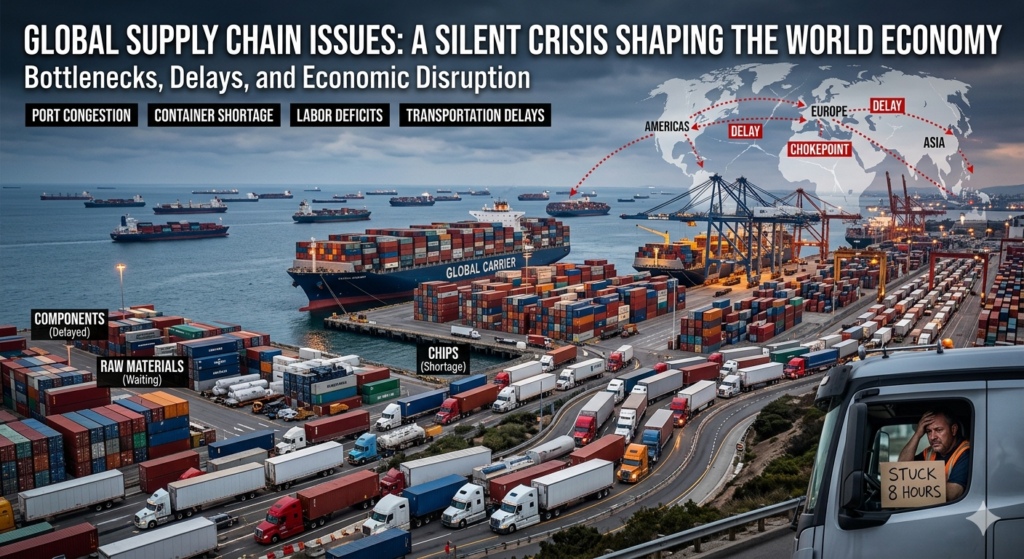
Transportation is the backbone of global trade. Delays at ports, shortage of shipping containers, limited cargo capacity, and rising freight charges have slowed the movement of goods.
Even when products are ready, reaching markets on time has become difficult. These delays increase storage costs and disrupt production schedules, affecting businesses and consumers alike.
2. Over-Reliance on Specific Regions:-
Many industries depend heavily on a few countries for critical components and raw materials. When production in these regions slows due to economic, political, or environmental reasons, global supply chains suffer.
This concentration increases risk and reduces the ability to shift production quickly during emergencies.
3. Fluctuating Energy and Input Costs:-
Manufacturing and transportation require large amounts of energy. Unstable fuel and electricity prices raise production costs and make planning difficult.
Higher costs at the production stage ultimately lead to higher prices for consumers, contributing to inflation across economies.
4. Labor Shortages:-
Several sectors are facing shortages of skilled and unskilled workers. Logistics, manufacturing, and warehousing are particularly affected. Aging populations in some regions and changing work preferences have reduced labor availability.
When factories and transport systems lack workers, productivity declines and delivery timelines suffer.
5. Policy Uncertainty and Trade Barriers:-
Sudden changes in trade policies, export restrictions, and regulatory rules create uncertainty. Businesses struggle to adjust supply plans when rules change frequently.
Such uncertainty discourages investment and complicates long-term supply chain planning.
(Economic Impact of Supply Chain Issues)
Inflationary Pressure:-
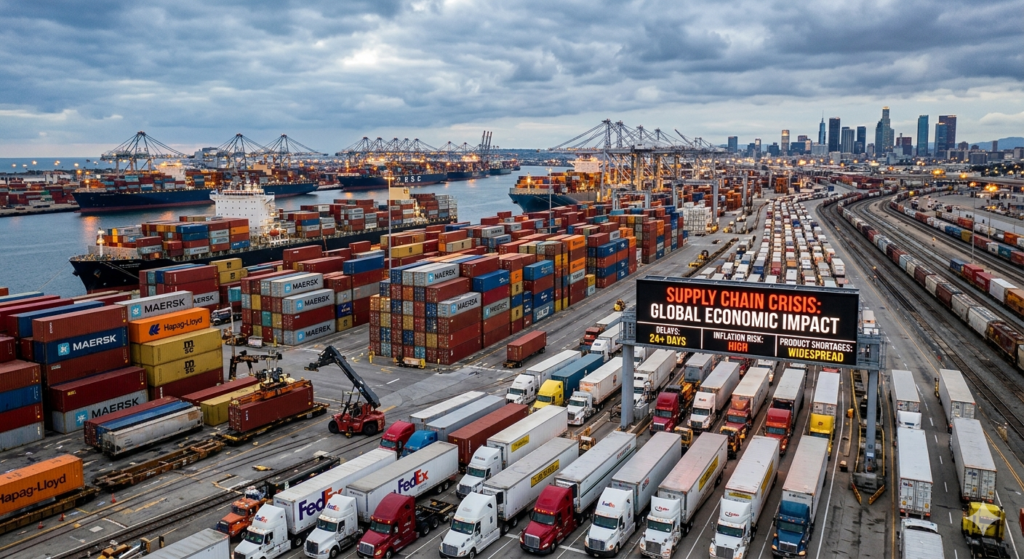
Supply shortages combined with steady demand push prices upward. This has led to rising costs of food, fuel, consumer goods, and industrial products.
Inflation caused by supply constraints is difficult to control because it does not originate from excess demand.
Slower Industrial Growth:-
Industries depend on timely access to raw materials and intermediate goods. Delays reduce production capacity and slow expansion plans.
Small and medium enterprises suffer more because they lack financial strength to absorb rising costs and delays.
Trade Imbalances:-
Countries dependent on imports face rising import bills, while exporters struggle to meet delivery commitments. This disturbs trade balances and foreign exchange stability, especially in developing economies.
Impact on Developing Countries:-
Developing nations are more vulnerable to supply chain disruptions. Limited infrastructure, higher transport costs, and dependence on external markets increase their exposure.
Delays in essential imports such as fuel, fertilizers, and machinery directly affect agriculture, manufacturing, and employment. Recovery is often slower due to limited financial resources.
Effects on Daily Life:-
Supply chain issues affect ordinary people in many ways. Prices of essential goods rise, availability becomes uncertain, and choices in the market reduce.
Delays in housing projects, higher transportation costs, and shortages of basic items increase economic pressure on households. Over time, this reduces purchasing power and living standards.
How Businesses Are Adapting???
Diversification of Suppliers:-
Companies are reducing dependence on single suppliers by sourcing from multiple regions. This strategy improves resilience and reduces risk from localized disruptions.
Maintaining Strategic Inventories:-
Instead of keeping minimal stock, firms are now holding extra inventory of critical inputs. While this increases storage costs, it helps maintain continuity during disruptions.
Use of Technology:-
Digital tools help track shipments, predict delays, and manage inventory efficiently. Data-driven decision-making allows faster responses to unexpected challenges.
Government Role in Strengthening Supply Chains:-
Governments can improve supply chain resilience by investing in transport infrastructure such as ports, roads, and rail networks. Simplifying regulations and ensuring policy stability encourages business confidence.
Support for domestic manufacturing, skill development, and logistics modernization also reduces dependence on external disruptions.
Long-Term Changes in Global Supply Chains:-
The future of supply chains is shifting from pure cost efficiency to resilience and sustainability. Companies are considering regional supply networks, cleaner production methods, and ethical sourcing.
Environmental concerns and climate risks are also influencing decisions related to transport routes and energy use.
Conclusion:-( Learning From the Crisis)
Global supply chain issues have revealed the hidden weaknesses of the modern economic system. While the disruptions have caused serious challenges, they have also provided valuable lessons.
A balanced approach—combining efficiency with flexibility, globalization with self-reliance, and growth with sustainability—is essential for the future. Strengthening global supply chains will not happen overnight, but consistent efforts can create a more stable and resilient economic system for the years ahead.