
Introduction:-
Food is one of the most important needs of human life. Every person needs healthy and nutritious food to live a healthy life. When all people have enough food to eat at the right time and at an affordable price, it is called food security. For a country like India, food security is very important because it has a large population and a strong dependence on agriculture.
Over the years, India has improved its food production and distribution system. Today, the country produces a large amount of food grains, fruits, vegetables, and other agricultural products. However, food security is not only about producing food. It is also about making sure that every family can access healthy food without facing financial difficulties.
Understanding Food Security:-
Food security means that food should be available, affordable, and accessible to everyone. It also means that food should be safe and nutritious.
A country can be considered food secure when:
People do not suffer from hunger.
Food is available throughout the year.
Families can afford nutritious meals.
Food supplies remain stable during difficult situations.
Children and adults receive proper nutrition.
Food security helps people live healthier and more productive lives.
Why Food Security Matters????
Food security affects almost every part of society. Its importance can be understood through the following points:-
Better Health:-
Healthy food provides energy and nutrients. It helps children grow properly and protects people from diseases.
Strong Economy:-
Healthy citizens can work efficiently and contribute to economic growth. A productive population strengthens the country.
Reduced Poverty:-
When people have access to affordable food, they can spend their income on education, healthcare, and other important needs.
Social Stability:-
Food shortages often create stress and uncertainty. A stable food supply helps maintain peace and stability.
Improved Quality of Life:-
Food security allows families to live with dignity and confidence about their future.
Current Food Security Scenario in India:-
India has become one of the world’s leading agricultural producers. Farmers grow a wide variety of crops including rice, wheat, pulses, sugarcane, fruits, and vegetables.
Several positive changes have improved food security in recent years:-
Increased food grain production.
Better farming techniques.
Improved irrigation facilities.
Wider reach of food distribution systems.
Growth in agricultural technology.
These developments have helped strengthen the country’s food system and support millions of households.
(The Four Foundations of Food Security)
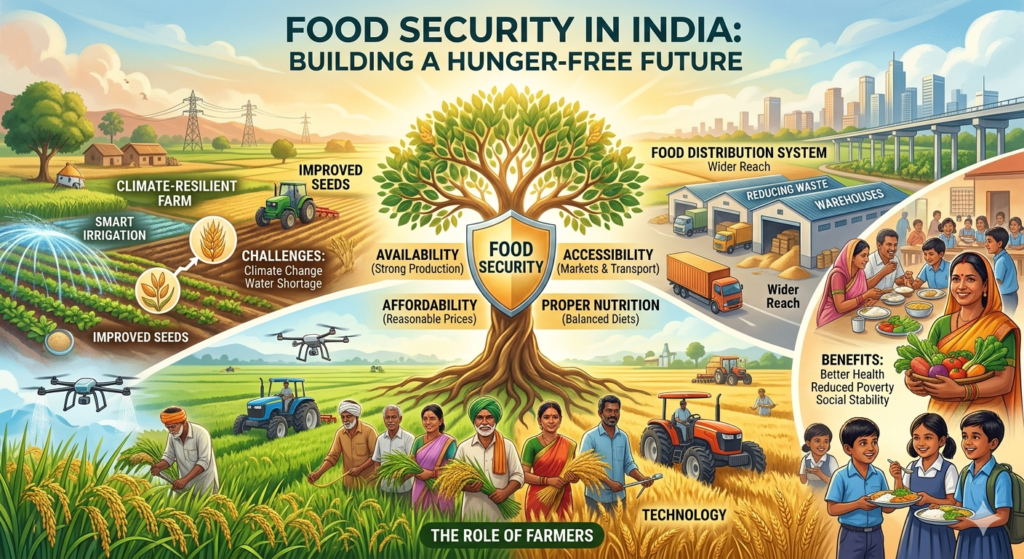
Food security stands on four important foundations.
1. Food Availability:-
Food must be produced in sufficient quantity. Strong agricultural production ensures a regular food supply.
2. Food Accessibility:-
People should be able to obtain food easily. Markets, transportation, and distribution systems play an important role.
3. Food Affordability:-
Food prices should remain reasonable so that all families can purchase basic necessities.
4. Proper Nutrition:-
People need balanced diets that include proteins, vitamins, minerals, and other nutrients for healthy living.
When these four foundations work together, food security becomes stronger.
Challenges Facing Food Security in India:-
Although India has achieved significant progress, several challenges continue to affect food security.
Climate Change:-
Unpredictable weather patterns can damage crops. Droughts, floods, and heat waves often reduce agricultural production.
Population Growth:-
As the population increases, the demand for food also rises. More food must be produced to meet future needs.
Food Waste:-
A considerable amount of food is wasted during storage, transportation, and consumption.
Malnutrition:-
Some families may have enough food but still lack essential nutrients needed for healthy growth.
Water Shortage:-
Agriculture depends heavily on water. Water scarcity can reduce crop yields and affect food production.
Small Land Holdings:-
Many farmers work on small farms, making it difficult to increase productivity and income.
The Role of Farmers in Food Security:-
Farmers are the backbone of India’s food system. They work throughout the year to grow crops and ensure food reaches markets.
Their contributions include:-
Producing food for millions of people.
Supporting rural employment.
Maintaining agricultural growth.
Adopting modern farming practices.
Without farmers, food security would not be possible.
How Technology is Improving Food Security????
Technology is helping agriculture become more efficient and productive.
Some examples include:-
Weather forecasting for better crop planning.
Improved seed varieties.
Smart irrigation systems.
Modern farming equipment.
Digital monitoring of food distribution.
These innovations help increase production and reduce losses.
Real-Life Examples of Food Security:-
Example 1: Support During Crop Failure
A farmer’s crop is damaged due to heavy rainfall. Affordable food supplies help the family meet its food needs until the next harvest.
Example 2: Nutrition for School Children
Children receiving nutritious meals at school often show better attendance, concentration, and overall health.

Example 3: Help During Natural Disasters
During floods or droughts, emergency food support helps affected families survive difficult situations.
These examples show how food security directly impacts people’s lives.
Steps to Strengthen Food Security:-
India can further improve food security through several measures:-
Reducing food wastage.
Promoting sustainable farming practices.
Expanding irrigation facilities.
Supporting small and marginal farmers.
Improving storage and transportation systems.
Encouraging balanced diets and nutrition awareness.
Conserving water and natural resources.
These efforts can create a more resilient food system for future generations.
Benefits of Strong Food Security:-
A strong food security system offers many advantages:-
Lower hunger levels.
Better public health.
Higher productivity.
Economic development.
Reduced poverty.
Improved education outcomes.
Stronger rural communities.
These benefits contribute to national development and social progress.
Future of Food Security in India:-
The future of food security depends on sustainable agriculture, modern technology, and efficient resource management. India has the potential to meet the food needs of its growing population while protecting the environment.
By investing in farmers, improving infrastructure, and reducing food losses, the country can build a secure and healthy future for all citizens.
Conclusion:-
Food security is more than just food production. It is about ensuring that every person has access to safe, affordable, and nutritious food at all times. India has made remarkable progress in agriculture, but continuous efforts are needed to overcome challenges such as climate change, food waste, and malnutrition.
A strong food security system creates healthier families, stronger communities, and a more prosperous nation. By working together and adopting sustainable solutions, India can move closer to the goal of a hunger-free future where every citizen has the opportunity to live a healthy and dignified life.