
Religious tourism is one of the oldest and most meaningful forms of travel. People visit temples, mosques, churches, monasteries, gurudwaras, and other holy places to pray, seek peace, and strengthen their faith. However, religious tourism is no longer limited to spiritual beliefs. Today, it has become an important part of the economy because every visitor contributes to local income by spending on transport, food, hotels, shopping, and other services.
In 2025–26, religious tourism is growing rapidly due to better roads, modern transport, digital booking facilities, and improved public infrastructure. Families, senior citizens, and young travellers are now combining spiritual journeys with cultural experiences. As a result, religious tourism is creating employment, encouraging small businesses, and supporting economic development in both urban and rural areas.
Why Religious Tourism Matters in the Economy????
Religious tourism is different from many other tourism sectors because it attracts visitors throughout the year. While many tourist destinations depend mainly on holidays or specific seasons, religious places receive pilgrims during festivals, special occasions, and even on normal days. This regular flow of visitors provides a stable source of income for local communities.
Its importance can be understood through the following points:-
Creates year-round economic activity.
Generates employment for local people.
Supports small and family-owned businesses.
Increases demand for transport and hospitality services.
Encourages investment in infrastructure.
Promotes local culture and traditional products.
Improves the standard of living in nearby areas.
For many towns and villages, religious tourism acts as a strong economic engine that supports thousands of livelihoods.
How Religious Tourism Supports Local Businesses???
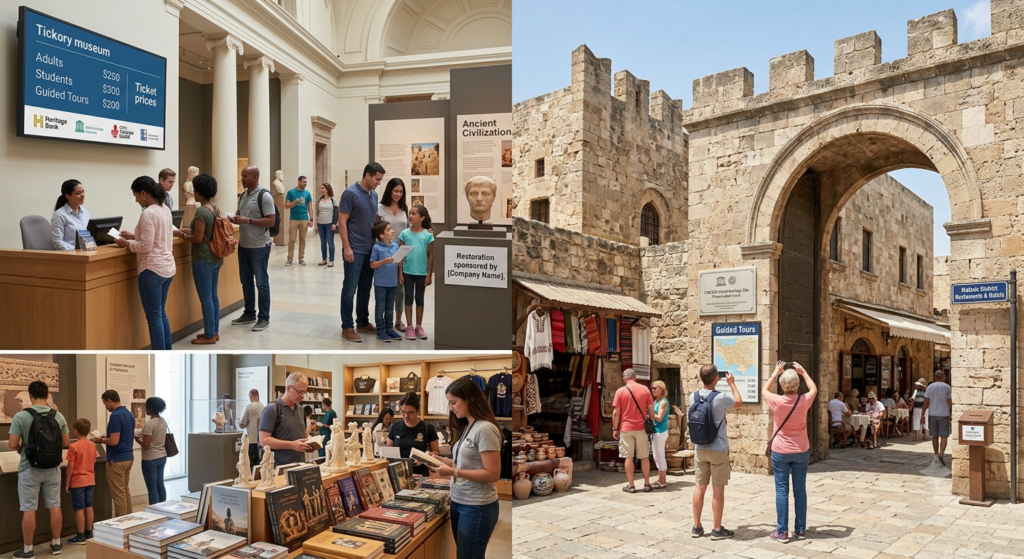
Whenever people visit a religious destination, they spend money in many different ways. This spending does not benefit only one business; instead, it reaches many sections of society.
Visitors usually pay for:-
Bus, train, taxi, or flight services.
Hotels, guest houses, or homestays.
Restaurants and local food stalls.
Flowers, sweets, and prayer materials.
Traditional clothes and souvenirs.
Local transport and parking services.
Photography and guide services.
Because of this chain of spending, income is distributed among many local workers. Even small vendors selling flowers or handmade products earn better during periods of high tourist arrivals.
Employment Opportunities Created by Religious Tourism:-
One of the biggest advantages of religious tourism is its ability to create jobs. Unlike many industries that require advanced education or large investments, this sector offers opportunities to people with different skills and backgrounds.
Employment is generated in areas such as:-
Hotels and guest houses
Restaurants and cafés
Local transport services
Travel agencies
Tour guiding
Security services
Cleaning and maintenance
Flower shops
Handicraft production
Photography and souvenir businesses
Many women and young people also start small businesses by selling homemade food, traditional crafts, or religious items. This helps improve family income and encourages self-employment.
Example:- Ayodhya
Ayodhya is one of the best examples of how religious tourism can transform a local economy. In recent years, improved roads, better public facilities, and increased tourist arrivals have created new business opportunities across the city.
Today, the growing number of visitors has benefited:-
Hotel owners
Restaurant businesses
Taxi and auto drivers
Local shopkeepers
Sweet sellers
Handicraft makers
Tour guides
Many local families who earlier depended on seasonal work now earn a more stable income because visitors come throughout the year. This shows how religious tourism can improve both employment and business growth.
Religious Tourism Encourages Rural Development:-
Many important pilgrimage sites are located in villages or small towns where industrial development is limited. Religious tourism brings new economic opportunities to these areas without requiring large factories or heavy industries.
As visitor numbers increase, several positive changes can be seen:-
Better roads and transport facilities.
Improved healthcare and sanitation.
New hotels and guest houses.
Growth of local markets.
Better communication and internet services.
Increased demand for local products.
These improvements benefit not only tourists but also the local population by creating a better quality of life and expanding economic opportunities.
Preserving Culture While Supporting the Economy:-
Religious tourism plays an important role in protecting traditional culture and local craftsmanship. Visitors often prefer buying products that represent the identity of the place they visit.
Popular local products include:-
Handmade idols
Traditional paintings
Brass and wooden handicrafts
Local textiles
Handmade jewellery
Regional sweets and food products
The growing demand for these items helps artisans continue their traditional work and pass their skills to future generations. In this way, religious tourism supports both cultural heritage and economic development.
Religious tourism is much more than a spiritual journey. It creates employment, supports local businesses, strengthens rural economies, and protects cultural traditions. The money spent by visitors reaches many people, making this sector an important contributor to economic growth. With increasing travel and better infrastructure in 2025–26, religious tourism continues to offer new opportunities for communities across the country.
Infrastructure Development Brings Long-Term Growth:-
Religious tourism does not only increase the number of visitors; it also encourages better infrastructure. When a place attracts millions of pilgrims every year, there is a greater need for good roads, railway stations, airports, clean public spaces, hospitals, and communication facilities. These improvements make travel easier and also improve the daily lives of local people.
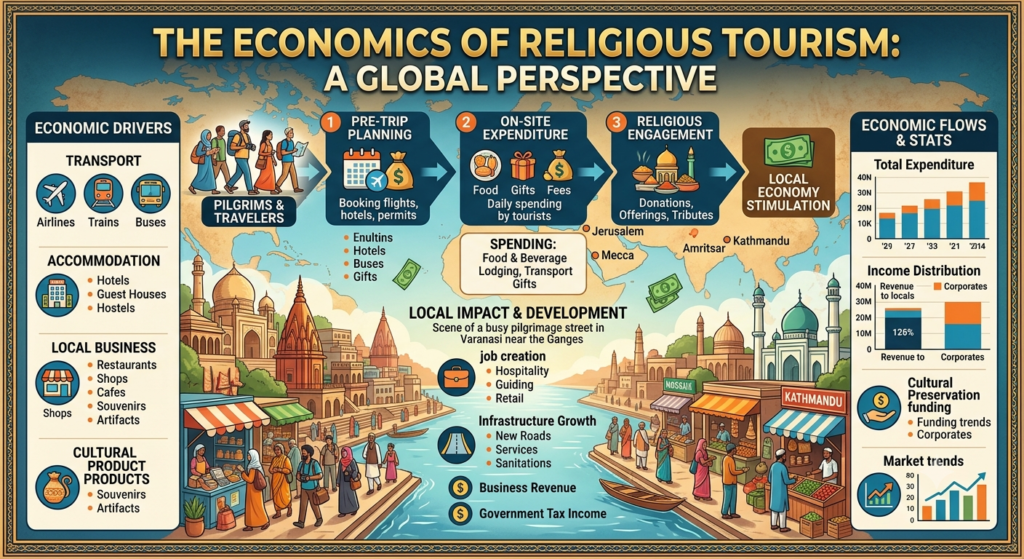
Some important developments include:-
Better roads and highways
Improved railway and airport connectivity
Clean drinking water facilities
Public toilets and sanitation systems
Street lighting and parking areas
Better healthcare services
Digital information centres
Safe and clean public spaces
Good infrastructure attracts more tourists, which further increases business opportunities and creates a cycle of economic growth.
Example:- Varanasi
Varanasi is one of the oldest living cities in the world and an important religious destination. In recent years, improved transport, cleaner public areas, and better tourism facilities have increased the number of visitors.
This growth has created economic opportunities for many local people, including:-
Boat operators
Silk weavers
Hotel owners
Restaurant workers
Tour guides
Taxi and auto drivers
Local shopkeepers
The increased tourist spending has helped many traditional businesses grow while also creating new jobs for young people.
The Role of Technology in Religious Tourism:-
Technology has changed the way people plan their religious journeys. Today, travellers can easily book hotels, check transport schedules, use digital payment methods, and find directions through mobile applications.
Technology supports the economy by:-
Making travel planning easier
Saving time and reducing confusion
Helping small businesses reach more customers
Encouraging cashless transactions
Improving visitor safety
Providing better travel information
As digital services continue to improve in 2025–26, religious tourism is becoming more organised and convenient for both visitors and service providers.
Challenges That Need Smart Solutions:-
Although religious tourism offers many economic benefits, it also creates some challenges if it is not managed properly.
Some major challenges are:-
Overcrowding during festivals
Traffic congestion
Plastic and waste pollution
Pressure on water resources
Damage to historical and religious structures
Rising prices during peak seasons
Poor crowd management in some locations
These problems can reduce the quality of the visitor experience and also affect the local environment. Proper planning is necessary to maintain a balance between tourism and conservation.
Building a Sustainable Religious Tourism Economy:-
The future of religious tourism depends on
responsible management. Economic growth should go hand in hand with environmental protection and cultural preservation.
Some important steps include:-
Promoting clean tourism campaigns
Improving waste management systems
Encouraging eco-friendly transport
Protecting heritage sites
Supporting local artisans and small businesses
Managing tourist crowds during festivals
Creating awareness about responsible travel
Sustainable tourism ensures that religious destinations remain attractive while continuing to provide income and employment for future generations.
Future Opportunities:-
Religious tourism has strong growth potential in the coming years. Rising incomes, better transport networks, digital technology, and increasing interest in spirituality are expected to attract more domestic and international visitors.
Future opportunities include:-
Heritage and cultural walks
Spiritual wellness tourism
Traditional food experiences
Local craft exhibitions
Rural homestays
Guided historical tours
Cultural festivals and community events
These activities can increase the length of tourist stays, resulting in higher spending and greater income for local businesses.
Economic Impact Beyond Tourism:-
The benefits of religious tourism extend far beyond the tourism sector. As visitor numbers increase, several other industries also grow.
These include:-
Agriculture, which supplies food to hotels and restaurants.
Handicraft industries producing traditional goods.
Construction companies building roads, hotels, and public facilities.
Transport services connecting religious destinations.
Banking and digital payment services supporting business transactions.
This shows that religious tourism creates a multiplier effect, where one visitor’s spending supports many different sectors of the economy.
Conclusion:-
Religious tourism is not only a journey of faith but also a powerful driver of economic development. It creates employment, supports small businesses, encourages infrastructure development, preserves cultural traditions, and improves the quality of life in local communities. Every visitor contributes to the economy through transport, accommodation, shopping, food, and other services, creating income for thousands of families.
At the same time, responsible planning is essential to protect religious sites and the environment. Clean surroundings, better facilities, sustainable tourism practices, and active participation from local communities can ensure long-term success.
In 2025–26, religious tourism continues to play an important role in inclusive economic growth. It connects spirituality with development by creating jobs, promoting entrepreneurship, strengthening rural economies, and preserving cultural heritage. When managed wisely, religious tourism becomes a perfect example of how faith can contribute not only to personal well-being but also to national economic progress.