
A Celebration That Does More Than Bring Happiness
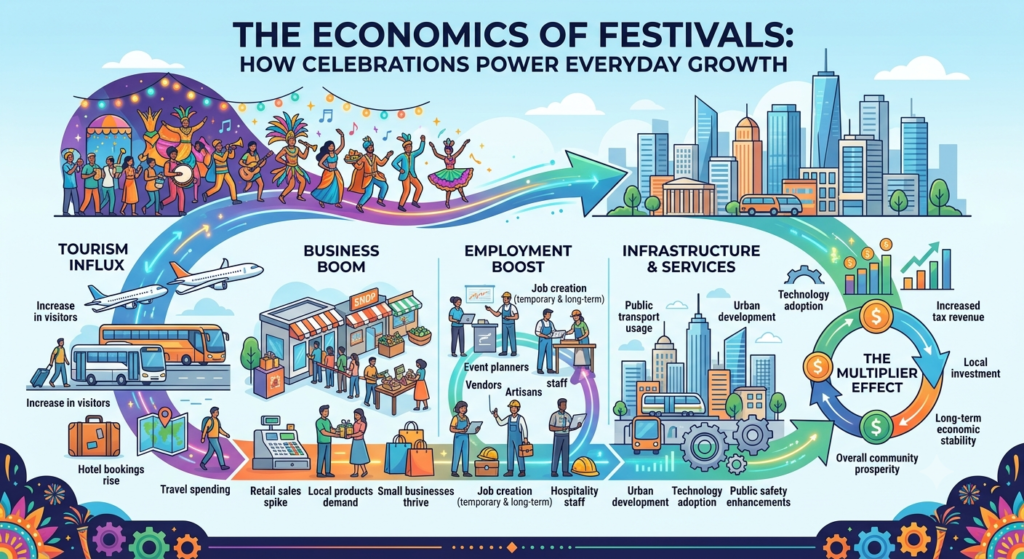
When people think about festivals, they usually imagine colourful lights, family gatherings, delicious food, and joyful moments. However, there is another side of festivals that often goes unnoticed-their contribution to the economy.
Every celebration creates opportunities for thousands of people. A simple festival shopping trip helps shopkeepers, factory workers, farmers, transport workers, delivery partners, and many others earn an income. This is why economists often see festivals as periods of increased economic activity.
India celebrates festivals throughout the year, which means economic benefits are spread across different seasons. Instead of depending on one shopping period, many businesses receive multiple opportunities to grow. In 2025–26, with rising digital payments, improving consumer confidence, and expanding online markets, festive spending continues to play an important role in supporting economic growth.
Festivals prove that traditions and business can grow together while improving the lives of millions of people.
How a Festival Begins Long Before the First Celebration?????
Most people believe that economic activity starts only when customers begin shopping. In reality, the process starts several months earlier.
Before a festival arrives:-
Farmers grow flowers, fruits, vegetables, and other seasonal products.
Textile factories increase clothing production.
Sweet makers purchase milk, sugar, and dry fruits in larger quantities.
Small workshops prepare decorative items.
Local artisans create handmade products.
Retail stores arrange fresh stock.
Transport companies prepare for higher demand.
By the time the festival begins, thousands of people have already contributed to the supply chain.
Example:-
Imagine a small family that makes clay lamps. Their work starts many weeks before the festival season. They collect raw materials, shape the lamps by hand, dry them, paint them, and finally sell them in local markets. The income earned during this period often supports their household expenses for several months. A simple purchase made by one customer becomes meaningful financial support for that family.
This example shows that festivals generate income long before celebrations actually begin.
Why People Spend More During Festivals????
Festivals create a special emotional connection with spending. Families save money throughout the year because they want to celebrate important occasions in the best possible way.
Common reasons for higher spending include:-
Buying new clothes for family members.
Purchasing gifts for relatives and friends.
Decorating homes with lights and decorative items.
Preparing traditional food and sweets.
Travelling to hometowns or tourist destinations.
Upgrading household appliances.
Buying electronic gadgets during festive discounts.
Although every purchase may seem small, together they create a huge increase in market demand.
When millions of families spend money during festivals, businesses experience higher sales, factories receive more orders, and workers earn additional income.
Every Rupee Travels Through the Economy:-
One interesting feature of festival economics is that money does not stop after a single purchase.
For example:-
A customer buys a box of sweets.
The sweet shop owner uses that money to buy more milk, sugar, dry fruits, and packaging materials.
The dairy farmer earns income from selling milk.
The transport driver earns money by delivering supplies.
The packaging company receives new orders.
Workers in each business also receive wages.
In this way, one customer’s purchase supports many different people. Economists describe this process as the circulation of money, where spending by one person becomes income for another.
Who Benefits the Most During Festival Seasons????
One of the biggest advantages of festivals is that their benefits are shared across different sectors instead of remaining limited to a single industry.
Retail Stores:-
Clothing shops, footwear stores, jewellery outlets, cosmetic shops, bookstores, furniture stores, and electronic retailers usually experience a sharp rise in customer visits during festivals.
Many businesses depend on festive sales to achieve a significant share of their annual revenue.
Food Businesses:-
Food is an important part of every celebration.
Demand increases for:-
Sweets
Bakery products
Dry fruits
Fresh fruits
Vegetables
Snacks
Beverages
Traditional homemade ingredients
Even small neighbourhood food businesses often witness their busiest period during festive weeks.
Tourism and Transport:-
Festivals encourage people to travel for family reunions, religious visits, vacations, and cultural events.
As a result:-
Railway bookings increase.
Bus services become busier.
Domestic flights carry more passengers.
Hotels receive higher bookings.
Taxi and auto drivers get more customers.
This creates additional employment opportunities across the tourism industry.
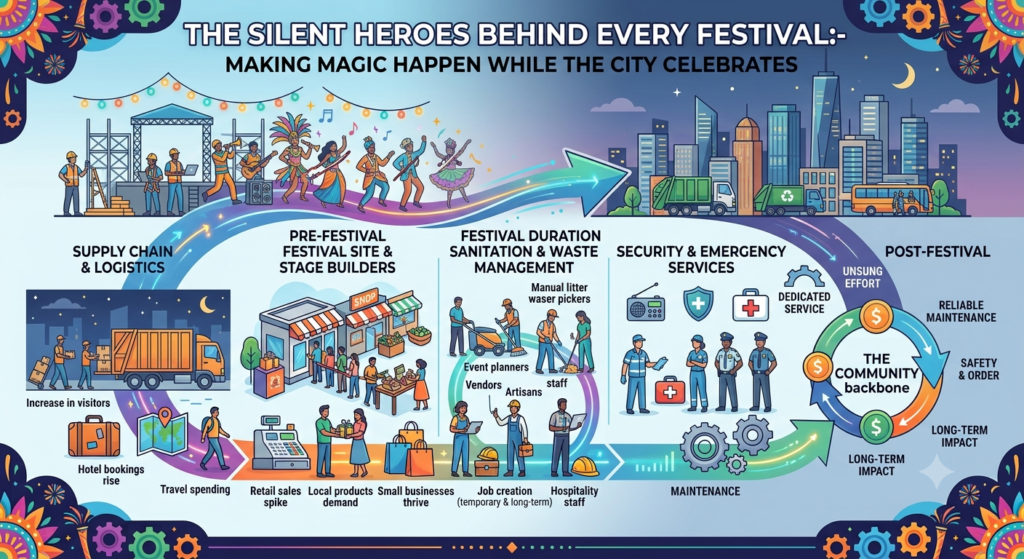
The Silent Heroes Behind Every Festival:-
When we celebrate a festival, we usually notice the decorations, gifts, and food. However, many hardworking people remain behind the scenes.
These include:-
Delivery workers
Factory employees
Farmers
Drivers
Tailors
Electricians
Event decorators
Street vendors
Cleaners
Warehouse workers
Without their contribution, festivals would not run as smoothly as they do.
Their hard work reminds us that every celebration is also an opportunity to support countless families who depend on seasonal demand for their livelihood.
Festivals are not only cultural events but also powerful economic drivers. They encourage spending, increase production, create employment, and improve the income of people across many sectors. Long before the celebrations begin, farmers, artisans, factories, transport workers, and small businesses start preparing to meet customer demand. Every purchase made during a festival becomes part of a larger economic cycle that benefits society as a whole.
Festivals in the Digital Economy:-
The way people celebrate has changed over the last few years. Earlier, most shopping happened only in local markets. Today, customers have many choices. They can buy products from nearby shops or order them online without leaving their homes.
In 2025–26, digital payments have become a normal part of festival shopping. Many customers prefer using UPI, mobile wallets, debit cards, and internet banking because these methods are fast, safe, and convenient. Small businesses are also accepting digital payments, making it easier for them to serve more customers.
Online shopping has also opened new opportunities for local sellers. A handmade product prepared in one town can now reach customers living hundreds of kilometres away. This wider market helps small businesses grow beyond their local area.
Festivals Give Strength to Small Businesses:-
Large companies certainly benefit from festive demand, but the biggest difference is often seen in the lives of small business owners.
Many people depend on festivals to earn a major part of their yearly income.
These include:-
Handicraft makers
Pottery workers
Flower sellers
Tailors
Bakers
Sweet shop owners
Gift shop owners
Local decorators
Street vendors
Home-based entrepreneurs
For many of them, good festive sales help pay school fees, household expenses, business loans, and future investments.
Example:-
A woman who prepares handmade candles from her home may receive only a few orders during normal months. During the festival season, she can receive hundreds of orders from nearby shops and online customers. This extra income helps improve her family’s financial condition and encourages her to expand her small business.
Festivals Create Employment Opportunities:-
One important economic benefit of festivals is job creation.
As customer demand increases, businesses need additional workers for a short period.
Temporary jobs are created in areas such as:-
Packaging
Delivery services
Customer support
Event management
Decoration work
Security services
Cleaning
Catering
Transportation
Warehouse management
Many students and young people also work part-time during festival seasons to earn extra income and gain work experience.
Although these jobs are temporary, they provide financial support to thousands of families every year.
Challenges That Come with Festival Spending:-
Every economic opportunity also brings certain challenges.
Some common problems include:-
Increase in the prices of some food items because of higher demand.
Heavy traffic in markets and cities.
Delay in deliveries due to increased orders.
Higher electricity consumption.
Large amounts of plastic and packaging waste.
Pressure on transport services during peak travel periods.
If these challenges are managed properly through better planning and responsible behaviour, the overall economic benefits remain much greater than the difficulties.
Why Sustainable Festivals Matter???
Economic growth should not come at the cost of the environment.
Today, many people are choosing eco-friendly ways to celebrate festivals. This not only protects nature but also creates demand for environmentally responsible businesses.
Some simple steps include:-
Using reusable decorations.
Buying products made by local artisans.
Choosing paper or cloth bags instead of plastic.
Reducing food waste.
Saving electricity wherever possible.
Supporting handmade and eco-friendly products.
This growing trend is creating a new market for green businesses while encouraging responsible consumption.
The Bigger Picture:- Festivals and India’s Economy
India is one of the fastest-growing major economies in 2025–26. Rising household incomes, better digital connectivity, expanding retail markets, and increasing consumer confidence continue to strengthen festive demand.
Festival spending supports many sectors at the same time, including:-
Agriculture
Manufacturing
Retail trade
Tourism
Hospitality
Logistics
Banking
Digital payment services
When these sectors perform well together, they contribute to stronger economic growth and higher employment.
This shows that festivals are not just cultural occasions; they also become important drivers of business activity across the country.
Simple Lessons from Everyday Life:-
The economics of festivals can easily be understood by observing our surroundings.
example:-
A fruit seller earns more because families prepare special meals.
A tailor receives many orders for new clothes.
A taxi driver gets more passengers travelling for celebrations.
A bakery sells extra cakes and snacks.
A local artist earns money by creating decorative items.
A courier worker delivers more packages than usual.
Each person benefits from the same festival in a different way. Together, these small activities create a large economic impact.
Conclusion:-
Festivals are much more than days of celebration. They bring together culture, tradition, business, and employment in a unique way. Every purchase made during a festival supports a chain of people, including farmers, workers, shopkeepers, transport providers, artisans, and small entrepreneurs.
As India continues to move forward in 2025–26, festivals remain an important source of economic energy. They encourage spending, create jobs, support local businesses, and strengthen markets across both rural and urban areas.
However, the true value of festivals lies in balancing economic growth with social responsibility. Supporting local businesses, choosing eco-friendly products, reducing waste, and spending wisely can ensure that celebrations continue to benefit both people and the environment.
In the end, festivals remind us that economic growth does not always begin in factories or financial markets. Sometimes, it begins with a family buying a small gift, a child enjoying a local fair, or a customer choosing to support a neighbourhood shop. These simple actions together help build a stronger and more inclusive economy.