
Introduction:-
Museums and heritage sites are often seen as places that protect old objects, historical buildings, and cultural traditions. However, their importance goes far beyond preserving history. They also make a valuable contribution to the economy by creating jobs, supporting tourism, encouraging local businesses, and improving education. A well-maintained museum or heritage site is not only a cultural treasure but also an economic asset that benefits people and communities.
As people become more interested in learning about history and culture, the demand for museums and heritage tourism continues to grow. Families, students, researchers, and international visitors travel to experience the stories, traditions, and architecture that represent a nation’s identity. This growing interest creates new opportunities for businesses, increases employment, and supports long-term economic development.
Today, investing in museums and heritage is not simply about protecting the past. It is also about building a stronger future where culture and economic growth move together.
Understanding Museums and Heritage:-
A museum is a place where historical objects, artworks, scientific discoveries, and cultural collections are carefully preserved and displayed for public learning. Heritage includes ancient monuments, traditional crafts, historical buildings, cultural festivals, local customs, and other valuable traditions that connect people with their history.
These places help people understand where they come from while also creating opportunities for education, tourism, and business growth.
Why Museums Are More Than Cultural Spaces???
Many people believe museums only protect history, but they also create economic value in several ways. Every visitor who enters a museum spends money directly or indirectly, helping different sectors of the economy.
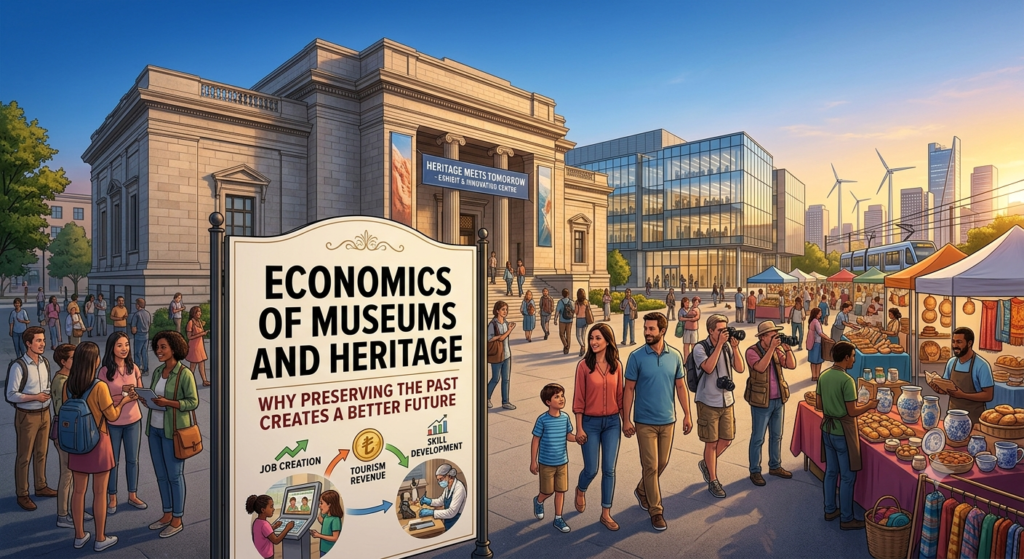
Museums support economic growth by:-
Creating employment opportunities.
Attracting domestic and international tourists.
Increasing demand for hotels, restaurants, and transport.
Supporting local handicrafts and small businesses.
Encouraging investment in nearby areas.
Promoting cultural education.
Improving the image of a country on the global stage.
This is why many governments now consider museums an important part of economic planning.
How Museums Generate Income????
Museums do not depend on only one source of revenue. A successful museum usually earns income through different activities, making it financially stronger.
Some common income sources include:-
Entry tickets.
Guided educational tours.
Gift and souvenir shops.
Cafés and food services.
Special exhibitions.
Cultural festivals.
Educational workshops.
Membership programs.
Donations and sponsorships.
Digital exhibitions and online learning programs.
Having multiple income sources helps museums continue their work even when visitor numbers change during different seasons.
The Growing Power of Heritage Tourism:-
Heritage tourism has become one of the most important parts of the tourism industry. Many travelers choose destinations because they want to experience history, architecture, art, local traditions, and cultural festivals rather than only natural attractions.
When visitors explore heritage places, they spend money on many services, including:-
Hotels and guest houses.
Restaurants and cafés.
Local transportation.
Traditional handicrafts.
Photography services.
Tour guides.
Cultural performances.
Shopping in nearby markets.
This spending creates income for local people and encourages new businesses to grow around heritage destinations.
Museums Create Employment Opportunities:-
The economic contribution of museums can also be seen through employment. Museums require professionals with different skills, creating jobs for both highly educated experts and local workers.
Direct employment includes:-
Museum curators.
Historians.
Archaeologists.
Conservation specialists.
Tour guides.
Security staff.
Event managers.
Marketing professionals.
Researchers.
Administrative employees.
Indirect employment is created through:-
Taxi and transport services.
Hotels and restaurants.
Local craft shops.
Printing businesses.
Photography services.
Cleaning and maintenance companies.
As visitor numbers increase, employment opportunities also grow, benefiting the surrounding community.
Education:- An Economic Investment
Museums are not only places for sightseeing. They are powerful learning centers where students and visitors gain practical knowledge.
Educational benefits include:-
Understanding history through real objects.
Learning about science, art, and culture.
Improving creative thinking.
Developing research skills.
Encouraging curiosity among children.
Supporting school and college education.
An educated society develops better skills, makes better decisions, and contributes more effectively to economic growth. In this way, museums also support human capital development.
Heritage Conservation Supports Local Businesses:-
Protecting heritage creates business opportunities for local communities. Traditional artists, craft makers, food vendors, and cultural performers often depend on visitors for their income.
For example, when tourists visit a heritage town, they usually buy handmade products, taste local food, hire guides, and stay in nearby hotels. This creates a chain of economic activity where many people benefit from one visitor’s spending.
As demand grows, local entrepreneurs gain confidence to expand their businesses, creating even more employment and income.
Example:-
Imagine a small historical town where an old fort is restored and opened to visitors. Before restoration, only a few people visited the area. After the site becomes popular, hotels begin to open, local restaurants receive more customers, handicraft sellers earn higher incomes, and young people find work as tour guides. Families that once depended on seasonal farming now have additional sources of income throughout the year.
This example shows that preserving heritage is not only about protecting history-it can also improve the quality of life for local communities.
Challenges That Need Attention:-
Although museums and heritage sites offer many benefits, they also face several challenges.
Some of the biggest challenges include:-
High maintenance costs.
Limited financial support.
Damage caused by pollution.
Climate-related risks.
Theft and illegal trade of historical objects.
Low public awareness.
Lack of skilled conservation professionals.
Unequal tourism development across regions.
If these challenges are not addressed, valuable cultural resources may be lost, reducing both cultural and economic benefits.
Digital Technology Is Changing Museums:-
Modern museums are no longer limited to displaying old objects inside glass cases. Technology has made museums more interactive, informative, and accessible for people of all ages.
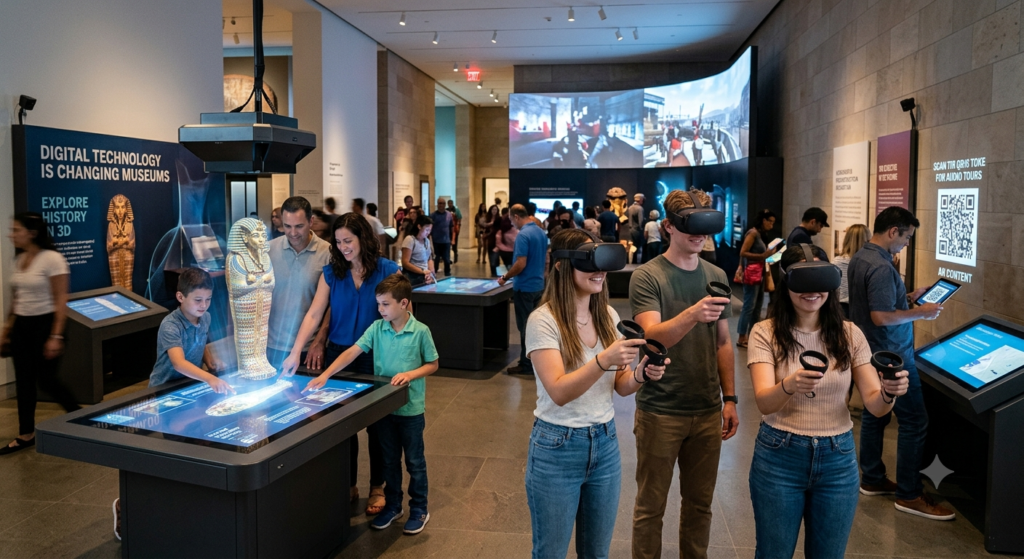
Today, many museums use:-
Virtual tours for online visitors.
Digital ticket booking.
Audio guides in different languages.
Interactive touch screens.
Mobile applications.
Digital archives.
Artificial intelligence to improve visitor experiences.
These innovations help museums reach people who cannot travel. They also create additional income through online exhibitions, virtual events, and digital learning programs. As technology continues to improve, museums can connect with larger audiences while protecting valuable collections.
Sustainable Heritage Creates Long-Term Economic Value:-
Protecting heritage should not only focus on the present generation. It should also ensure that future generations can experience the same historical places and cultural traditions.
A sustainable approach includes:-
Regular maintenance of heritage sites.
Environment-friendly tourism.
Responsible visitor management.
Protection of traditional knowledge.
Support for local communities.
Promotion of eco-friendly infrastructure around heritage locations.
When tourism grows responsibly, economic benefits continue for many years without damaging cultural resources.
The Role of Government:-
Government support plays a major role in protecting museums and heritage sites. Proper planning and investment can improve both cultural preservation and economic growth.
Important government initiatives include:-
Restoring historical buildings.
Improving roads and public transport to heritage locations.
Providing financial support for conservation projects.
Organizing cultural festivals.
Promoting heritage tourism.
Encouraging educational visits by schools and colleges.
Supporting research and documentation.
These efforts increase visitor confidence and encourage both domestic and international tourism.
How Local Communities Make a Difference???
The success of a museum or heritage site does not depend only on government support. Local communities also play an important role.
People can contribute by:-
Protecting historical places from damage.
Promoting traditional arts and crafts.
Welcoming tourists with local hospitality.
Participating in cultural festivals.
Keeping local traditions alive.
Encouraging young people to learn about their heritage.
When communities become active partners, heritage conservation becomes more successful and economically rewarding.
Example:- Traditional Craft Village
Imagine a village that is famous for traditional handwoven products. A small museum is created to display the history of this craft and explain how the products are made.
As more visitors arrive, local artisans receive more orders, new shops open, young people learn traditional skills, and families earn higher incomes. Instead of leaving the village in search of work, many people find employment within their own community.
This shows how museums can preserve culture while supporting local economic development.
Example:- A Historic City Center
Suppose an old city center is restored with clean streets, improved lighting, and well-maintained heritage buildings. Guided walking tours, cultural events, and local food festivals begin attracting visitors throughout the year.
As tourism increases:-
Hotels receive more bookings.
Restaurants welcome more customers.
Local transport services earn higher income.
Small businesses expand.
Property values improve.
New employment opportunities are created.
A single heritage project can therefore create positive effects across the entire local economy.
Future Opportunities for Museums and Heritage:-
The future of museums is becoming more innovative every year. Instead of being places that people visit only once, museums are becoming lifelong learning centers.
Some important future opportunities include:-
Smart museums using advanced digital technology.
Virtual reality learning experiences.
Online educational programs.
Digital preservation of historical records.
Better accessibility for people with disabilities.
Strong partnerships between public and private organizations.
Growth of cultural tourism in smaller towns and villages.
These developments will make museums more attractive while increasing their economic contribution.
Why Investment in Heritage Is a Smart Economic Decision???
Investing in heritage creates benefits that continue for many years. Unlike short-term projects, heritage conservation produces cultural, educational, and economic value at the same time.
Some long-term advantages include:-
Higher tourism income.
More employment opportunities.
Growth of local businesses.
Better infrastructure development.
Increased cultural awareness.
Stronger community participation.
Preservation of national identity.
Sustainable regional development.
For this reason, many experts believe that spending on heritage is not an expense but an investment in the future.
Key Takeaways:-
The relationship between museums, heritage, and the economy can be understood through a few simple points:-
Museums protect history while creating employment.
Heritage tourism supports local businesses and communities.
Technology is making museums more accessible than ever before.
Sustainable conservation ensures long-term economic benefits.
Government and local communities must work together.
Investment in heritage strengthens both culture and economic growth.
Conclusion:-
Museums and heritage are much more than reminders of the past. They are valuable resources that create opportunities for education, tourism, employment, and business development. Every restored monument, preserved tradition, and well-managed museum contributes to the economy while protecting the identity of a nation.
As technology, tourism, and public awareness continue to grow, museums will become even more important in supporting sustainable development. Protecting heritage is not only a cultural responsibility but also a practical economic strategy that benefits present and future generations alike.
When history is preserved with care and managed wisely, it becomes a source of knowledge, inspiration, and economic progress. A society that values its heritage builds a stronger future because it understands that cultural wealth and economic success can grow together.