
Introduction:-
Every morning, millions of people visit nearby vegetable shops, grocery stores, dairy booths, pharmacies, and street markets without thinking about their economic importance. These places may look ordinary, but together they form one of the strongest foundations of the economy. Every product sold, every customer served, and every small business running in a neighborhood contributes to local economic development.
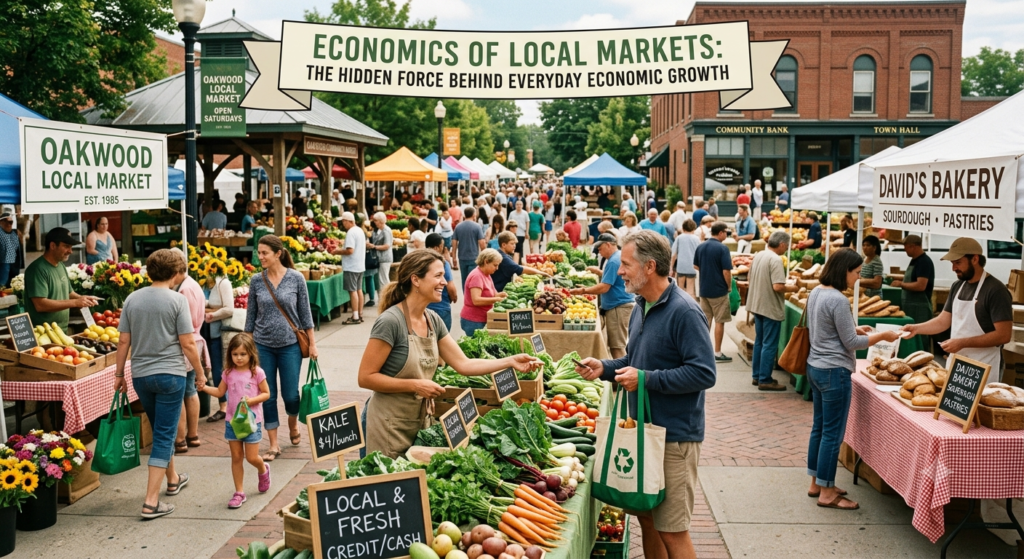
The economics of local markets explains how buying and selling within a community creates income, employment, and business opportunities. Unlike large industries that depend on national or international customers, local markets mainly serve people living nearby. They connect producers, traders, workers, and consumers in a simple but highly effective economic system.
Even in 2025–26, when online shopping and digital businesses are growing rapidly, local markets continue to remain important because they provide convenience, personal service, and fresh products while supporting thousands of small businesses.
Understanding Local Markets in Simple Words:-
A local market is a place where goods and services are exchanged within a particular area such as a village, town, or city. These markets focus on fulfilling the everyday needs of local people.
Some common examples include:-
Vegetable and fruit markets
Grocery and dairy shops
Street vendors
Weekly village markets
Local clothing stores
Tailor shops
Mobile repair centres
Bakeries
Medical stores
Small restaurants
Although each business may appear small, together they create a strong network that supports the local economy every day.
Why Local Markets Are More Important Than They Look????
Many people think economic growth only depends on large factories or multinational companies. In reality, local markets also make a significant contribution because they directly affect the daily lives of ordinary people.
Local markets help the economy by:-
Creating jobs within the community.
Supporting small business owners.
Giving farmers a nearby place to sell fresh produce.
Providing affordable goods for consumers.
Reducing transportation costs.
Encouraging self-employment.
Keeping money circulating within the same locality.
When people spend money at nearby shops, that income often stays within the community instead of moving outside the area. This creates a continuous cycle of earning and spending that benefits many families.
How Money Moves Inside a Local Market???
The economics of local markets can be understood through a simple cycle.
Imagine a customer purchases vegetables from a local seller.
The customer receives fresh vegetables.
The seller earns income.
The seller uses that income to buy more vegetables from farmers.
Farmers pay labourers and transport workers.
Those workers spend their earnings in nearby shops.
In this way, a single purchase supports several people. This continuous movement of money helps strengthen the local economy.
The Role of Demand, Supply, and Prices:-
Every local market works according to three basic economic principles.
Demand:-
Demand means the quantity of goods that customers want to buy.
For example, during summer, people buy more cold drinks, seasonal fruits, fans, and ice cream. As demand rises, shopkeepers increase their stock.
Supply:-
Supply refers to the amount of goods available for sale.
A good farming season usually increases the supply of vegetables and fruits, making them more easily available in local markets.
Price:-
Prices change according to demand and supply.
For example:-
Heavy rainfall may reduce vegetable production, causing prices to increase.
During harvest season, larger supplies often reduce prices.
These changes happen naturally and influence the buying decisions of consumers as well as the earnings of sellers.
Local Markets Create Employment Every Day:-
One of the greatest strengths of local markets is their ability to generate employment without requiring huge investments.
Direct employment includes:-
Shopkeepers
Farmers
Sales workers
Street vendors
Delivery partners
Tailors
Electricians
Mechanics
Restaurant workers
Indirect employment includes:-
Transport operators
Packaging workers
Warehouse staff
Wholesalers
Local suppliers
This employment supports people with different educational backgrounds and skill levels, making local markets an important source of livelihood.
Example:-
Consider a tea stall located near a bus stand.
Every day, passengers, office workers, and students buy tea and snacks. The tea seller earns money, purchases milk from a nearby dairy, buys sugar from the local grocery shop, and hires someone to help during busy hours.
Although the business is small, it supports several families at the same time. This simple example clearly shows how local markets create economic activity beyond just buying and selling.
Small Businesses:- The Real Heroes of Local Markets
Small businesses are the backbone of every local market. They provide essential goods and services while creating opportunities for self-employment.
Examples include:-
Grocery stores
Dairy businesses
Tailoring shops
Beauty salons
Repair centres
Flower shops
Local bakeries
Handicraft sellers
Many successful business owners begin with a single small shop. With customer trust, good service, and consistent effort, these businesses often expand over time and create additional employment.
Farmers:- (The First Link in Local Market Economics)
The success of many local markets depends on farmers. Fresh vegetables, fruits, grains, milk, flowers, and many other products reach consumers through local trading systems. When farmers receive fair prices, rural incomes improve and the entire local economy becomes stronger.
Local markets benefit farmers by:-
Reducing transportation expenses.
Helping them sell fresh products quickly.
Lowering the chances of food wastage.
Providing regular income.
Building direct connections with customers and traders.
A healthy relationship between farmers and local markets creates benefits for both producers and consumers.
Technology Is Giving Local Markets a New Direction:-
Technology has changed the way local businesses operate. Earlier, most transactions were done only with cash. Today, many shopkeepers use digital payment systems, making buying and selling easier.
During 2025–26, digital payments continue to grow rapidly across India. Even many small shops and street vendors now accept QR code payments, making transactions faster and more convenient.
Some common changes include:-
Digital payment options.
Mobile-based order booking.
Home delivery services.
Online promotion through social media.
Digital billing and record keeping.
Technology is not replacing local markets. Instead, it is helping them become more efficient and customer-friendly.
Examples That Explain Local Market Economics
Example 1:-
A fruit seller buys fresh fruits every morning from a wholesale market. During festivals and holidays, customer demand increases, leading to higher sales and better income. During the rainy season, supply may reduce, causing prices to rise.
Example 2:-
A local tailor usually receives more orders during wedding seasons and festivals. Higher demand increases earnings without opening additional branches.
Example 3:-
In many villages, weekly markets bring together farmers, artisans, and local traders. People purchase fresh products directly while sellers save transportation costs and reach many customers in one place.
These examples show that local markets are based on real human needs and everyday economic activities.
Challenges That Local Markets Still Face:-
Despite their importance, local markets face several difficulties that affect both sellers and consumers.
Some major challenges include:-
Competition from large retail stores.
Rising transportation costs.
Seasonal price fluctuations.
Limited storage facilities for fresh products.
Weather-related losses.
Lack of affordable finance for small businesses.
Inadequate market infrastructure in some areas.
Limited awareness of modern business practices.
Overcoming these challenges is important for making local markets more competitive and sustainable.
How Consumers Strengthen Local Markets????
Consumers are not just buyers-they are active participants in the local economy.
When people choose to shop from nearby businesses:-
Local employment increases.
Small businesses earn stable income.
Farmers receive better market opportunities.
Local entrepreneurship grows.
Money remains within the community.
Even a simple decision to buy vegetables or groceries from a nearby shop can positively influence many families.
Making Local Markets Stronger:-
Building stronger local markets requires combined efforts from business owners, communities, and public institutions.
Some practical measures include:-
Better roads and transportation.
Clean and organized marketplaces.
Affordable financial support for small businesses.
Skill development and business training.
Improved storage and cold chain facilities.
Better access to digital technology.
Encouraging women and young entrepreneurs.
Promoting locally produced goods.
These improvements can increase productivity, create more jobs, and improve customer satisfaction.
Local Markets and Sustainable Development:-
Local markets also contribute to environmental sustainability.
Their positive impact includes:-
Shorter transportation distances reduce fuel consumption.
Fresh local products require less long-distance storage.
Seasonal products encourage responsible consumption.
Handmade and locally produced goods reduce dependence on mass production.
Strong local economies reduce unnecessary movement of goods.
Supporting local markets is therefore beneficial for both economic growth and environmental protection.
The Future of Local Markets:-
The future of local markets is full of opportunities. As customer preferences change, local businesses are also adapting to new ways of working.
Some important future trends are:-
Wider use of digital payments.
Better customer service.
Eco-friendly packaging.
Growth of women-led enterprises.
Increasing participation of young entrepreneurs.
Better use of technology without losing personal customer relationships.
The combination of traditional business values and modern technology can help local markets remain strong in the coming years.
Conclusion
Local markets may not appear as large as shopping malls or multinational businesses, but their contribution to the economy is equally meaningful. They create employment, support farmers, encourage entrepreneurship, and provide essential goods and services that people depend on every day. Every purchase made in a local market helps keep money circulating within the community, benefiting many families instead of just one business.
In today’s rapidly changing economy, local markets are proving that growth does not always begin with large investments. It often starts with a small shop, a hardworking farmer, a street vendor, or a local entrepreneur who serves the community with dedication. By embracing modern technology while preserving trust and personal connections, local markets continue to adapt to changing times.
The economics of local markets reminds us that true economic progress begins at the grassroots level. When local businesses grow, communities become stronger, employment increases, and development becomes more inclusive and sustainable. Investing in local markets is not only an investment in the economy-it is an investment in people, livelihoods, and the future of society.