
Citizen participation is one of the strongest pillars of economic development. Discover how ordinary people contribute to economic growth through work, innovation, community support, responsible financial behaviour, and active participation in society.
Introduction:-
When people think about the economy, they usually imagine governments, banks, industries, or large companies. However, the real strength of an economy comes from its citizens. Every person who works honestly, pays taxes, starts a business, learns new skills, supports local markets, or helps the community becomes a part of economic development.
Citizen participation means that people do not remain silent observers. Instead, they become active partners in improving their country’s future. A nation grows faster when its people take responsibility, work together, and contribute through their daily actions.
In today’s world (2025–26), citizen participation has become more important than ever. Digital technology, better education, online services, and increasing public awareness have created new opportunities for people to support economic growth. Even small actions by millions of citizens can create a huge positive impact on the national economy.
What is Citizen Participation????
Citizen participation means the active involvement of people in improving both society and the economy. It is not limited to voting during elections. It includes every positive action that helps the country move forward.
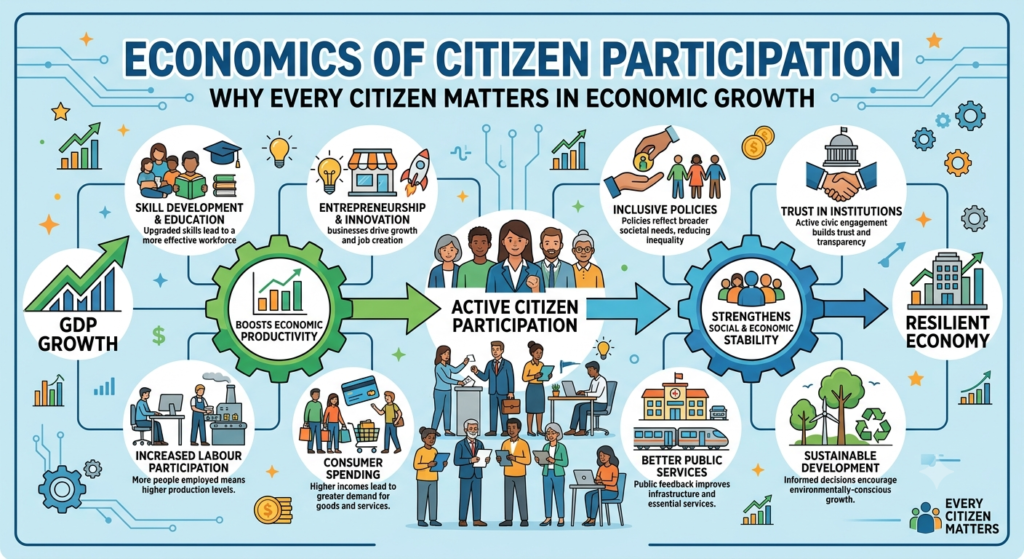
A responsible citizen can contribute by:-
Paying taxes honestly.
Following laws and financial rules.
Learning new skills.
Supporting local businesses.
Starting small enterprises.
Saving money and investing wisely.
Protecting public property.
Participating in community development.
Using digital financial services responsibly.
When millions of people perform these simple responsibilities, the economy becomes stronger, more productive, and more stable.
Why Citizen Participation is Important for Economic Growth????
Economic development becomes stronger when governments and citizens work together. Development cannot depend only on policies. People’s participation turns policies into real progress.
1. Creates Employment Opportunities:-
Small businesses started by ordinary citizens create jobs for others. A local bakery, tailoring shop, online store, or repair service may begin with one person but later provide employment to many families.
As entrepreneurship grows, unemployment falls and household incomes increase.
2. Increases National Income:-
Every worker, farmer, teacher, engineer, driver, entrepreneur, and professional contributes to the production of goods and services.
Higher production means:-
More business activity.
Higher incomes.
Better living standards.
Stronger economic growth.
When more citizens become economically active, the country’s overall income also increases.
3. Improves Public Services:-
Taxes collected from citizens help governments invest in important public facilities such as:-
Schools
Hospitals
Roads
Railways
Clean water supply
Digital infrastructure
When citizens pay taxes honestly, better public services become possible, creating a cycle of continuous development.
4. Encourages Innovation:-
Creative citizens often develop new ideas that solve everyday problems.
For example:-
A young graduate notices that local farmers struggle to sell fresh vegetables. Instead of waiting for someone else to solve the problem, the graduate creates a simple mobile application that connects farmers directly with nearby customers. Farmers receive better prices, customers get fresh products, and transportation costs are reduced.
One innovative idea improves income for many people.
How Citizens Participate in the Economy????
Citizen participation happens in many different ways. Every role in society has economic value.
Workers:-
Workers increase productivity through their skills and hard work. Whether someone works in agriculture, manufacturing, education, healthcare, or technology, every contribution supports national production.
Entrepreneurs:-
Entrepreneurs take risks, create businesses, introduce new products, and generate employment opportunities. Small businesses are often called the backbone of economic growth because they strengthen local economies.
Consumers:-
Consumers influence markets through their buying decisions. Choosing quality products, avoiding unnecessary waste, and supporting local businesses help industries grow in a sustainable way.
Students:-
Students prepare themselves for the future economy by learning new knowledge, improving practical skills, and developing innovative thinking. Today’s students become tomorrow’s skilled workforce.
Example:- (A Small Business with a Big Impact)
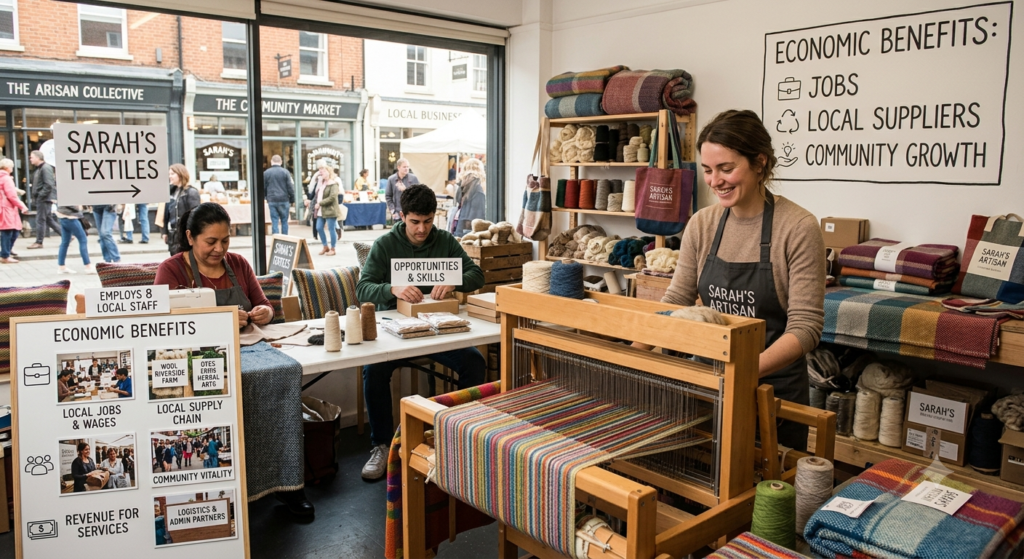
Imagine a woman living in a small town who starts a homemade snack business from her kitchen.
At first, she sells only to her neighbours. As demand increases, she hires two local women to help with cooking and packaging. Later, she begins selling through online platforms and earns customers from different cities.
Her small business creates several economic benefits:-
Generates employment.
Increases household income.
Supports local suppliers.
Encourages women entrepreneurship.
Contributes to tax revenue as the business grows.
This example shows that economic development often begins with one person’s decision to take initiative rather than waiting for opportunities.
Community Participation Creates Strong Local Economies:-
Economic development becomes more meaningful when people work together. Community participation improves not only social life but also local economic conditions.
When citizens cooperate, they solve problems faster and reduce unnecessary expenses. Small efforts by a community can create long-term economic benefits.
Some examples include:-
Organising cleanliness drives to reduce health-related costs.
Planting trees to protect natural resources.
Repairing village ponds to improve irrigation.
Supporting local schools through volunteer work.
Helping small businesses during difficult times.
These activities may seem simple, but together they strengthen the local economy and improve people’s quality of life.
Technology Has Changed Citizen Participation:-
In 2025-26, technology has made it easier for citizens to contribute to economic development.
Today people can:-
Make secure digital payments.
Learn new skills through online courses.
Sell products through online marketplaces.
Access government services digitally.
Apply for jobs online.
Start small businesses with very little investment.
Technology saves time, increases transparency, and creates new income opportunities for people living in both cities and villages.
Example:- (A Farmer Who Used Technology)
A farmer in a rural area started using weather forecasts and digital farming information before planting crops.
He also began selling his produce directly to buyers through online platforms instead of depending only on middlemen.

As a result:-
Crop planning improved.
Income increased.
Transportation costs were reduced.
Wastage became lower.
His family achieved better financial stability.
This example shows that when citizens adopt new ideas, both individual families and the economy benefit.
Challenges to Citizen Participation:-
Although citizen participation has many benefits, several challenges still reduce people’s contribution to economic development.
Lack of Awareness:-AB
Many people do not know how their everyday actions affect the economy.
Unemployment:-
Without stable jobs, people find it difficult to contribute fully to economic growth.
Low Financial Literacy:-
Limited knowledge about savings, investment, insurance, and budgeting prevents many families from making better financial decisions.
Digital Divide:-
Some rural and remote areas still have limited internet access and digital skills.
Lack of Public Trust:-
People participate more actively when they believe that public resources are used honestly and efficiently.
How Citizen Participation Can Be Improve????
Every country can encourage greater participation through practical steps.
Some important measures are:-
Improve quality education.
Increase financial literacy programmes.
Promote skill development.
Support entrepreneurship.
Expand digital infrastructure.
Encourage volunteer activities.
Strengthen local decision-making.
Create more employment opportunities.
Reward innovative community initiatives.
These efforts help citizens become confident partners in national development.
Long-Term Economic Benefits:-
Active citizen participation creates lasting economic advantages.
Some major benefits include:-
Higher employment.
Better productivity.
Increased national income.
Stronger local businesses.
Faster innovation.
Better public services.
Improved infrastructure.
Reduced poverty.
Greater social responsibility.
Sustainable economic growth.
A country where citizens actively participate is usually more prepared to face economic challenges and recover from crises.
The Future of Citizen Participation:-
The future economy will depend not only on government policies but also on the involvement of ordinary people.
Artificial intelligence, digital technology, climate change, and changing job markets are transforming the world. Citizens who continue learning, adapting, and working responsibly will help build stronger and more competitive economies.
Young people, women, entrepreneurs, farmers, workers, students, and professionals all have an important role in shaping the future. Every positive action-whether learning a new skill, starting a business, protecting the environment, or supporting local communities-adds value to the economy.
Economic progress is not created in a single day. It grows through millions of responsible decisions made by ordinary citizens every day.
Conclusion:-
Citizen participation is one of the strongest foundations of a successful economy. Governments can create policies and businesses can make investments, but lasting development is possible only when citizens actively participate in the nation’s progress.
Every honest worker, responsible taxpayer, skilled student, innovative entrepreneur, dedicated farmer, and active community member contributes to economic growth in a meaningful way.
As we move through 2025-26 and beyond, the importance of citizen participation will continue to grow. A nation where people work together, support innovation, respect public resources, and take responsibility for their actions builds not only a stronger economy but also a more equal, sustainable, and prosperous society.
True economic development begins when every citizen believes that even a small contribution can create a big difference.