
Introduction:-
In many Indian households, saving money is considered an important habit. People are often taught from a young age that it is wise to keep some money aside for the future. Even when income is limited, families try to manage their expenses carefully and save whatever they can.
In recent years, lifestyles have changed and people have more opportunities to spend money. Technology, online shopping, and modern living have made spending easier. However, despite these changes, saving money still remains a strong financial habit in Indian society.
Many families believe that saving helps them stay secure during difficult times and allows them to achieve long-term goals. Whether it is children’s education, buying a house, medical needs, or retirement planning, savings play a very important role in family life.
A Tradition That Continues Across Generations:-
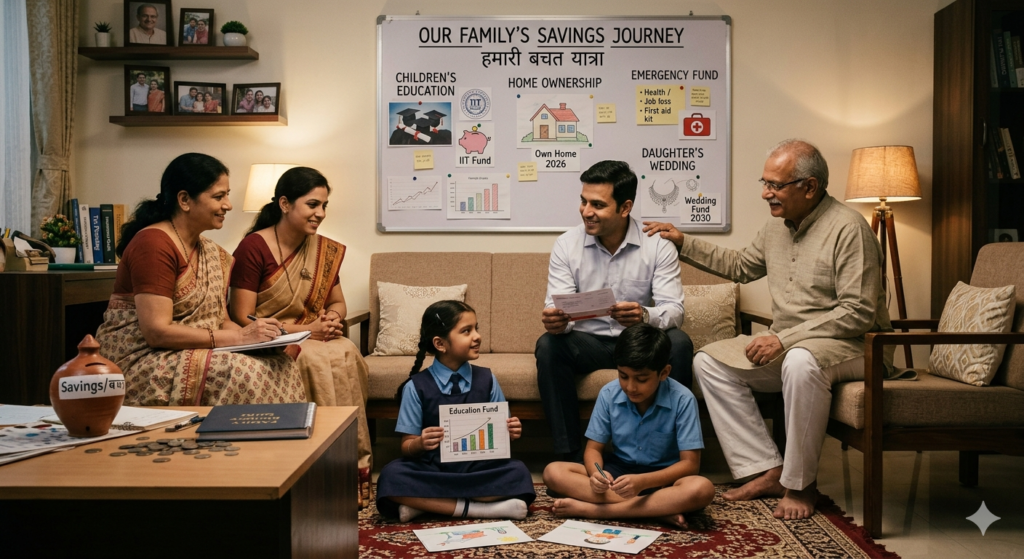
One major reason why Indian families prefer saving is the influence of tradition. In many homes, elders often guide younger members about the importance of money management.
Parents usually teach their children that money should not be wasted on unnecessary things. Instead, they encourage them to think carefully before spending. This advice slowly builds a mindset where saving becomes a natural habit.
For example:-many children learn to save small amounts of money in piggy banks or small savings boxes. Over time, this practice helps them understand the value of money. When they grow up and start earning, they continue following the same financial discipline.
Because of this cultural influence, the habit of saving is passed from one generation to another.
Planning for Important Life Goals:-
Indian families usually plan their finances by thinking about future responsibilities. There are many important events in life that require financial preparation.
Education is one of the biggest priorities. Parents often want to provide good schooling and higher education for their children. As education costs continue to rise in the current economic environment, families understand the need to start saving early.
Marriage is another event that many families prepare for financially. In many communities, weddings involve large expenses. To avoid financial pressure at the last moment, families prefer saving gradually over several years.
Buying a house is also a major goal for many households. Property prices have increased in many cities, which makes long-term financial planning even more important.
Because of these responsibilities, saving money becomes a practical necessity rather than just a choice.

Preparing for Uncertain Situations:-
Life is unpredictable, and unexpected situations can arise at any time. Medical emergencies, job loss, business difficulties, or sudden family needs can create financial stress.
Savings help families deal with such challenges more easily. When people have some money set aside, they feel more confident about handling emergencies.
In the current economic environment, uncertainty in job markets and rising living costs have made many families more cautious about spending. As a result, the importance of emergency savings has increased even more.
Having financial reserves gives people peace of mind and reduces dependence on loans during difficult times.
Limited Dependence on Social Support Systems:-
In some developed countries, strong social security systems provide financial support to people during unemployment, retirement, or health problems. These systems reduce the need for personal savings.
In India, although various government programs exist, many families still prefer to rely mainly on their own financial planning. People feel more secure when they have personal savings to support them in the future.
This mindset encourages individuals to save regularly during their working years so they can manage their expenses comfortably later in life.
Preference for Safe Financial Choices:-
Another reason for strong saving habits in India is the preference for safe financial options. Many families prefer stability over high risk when it comes to managing money.
Bank deposits remain one of the most common saving methods because they provide security and predictable returns. Small savings schemes and retirement plans are also widely used by households looking for long-term financial stability.
Gold also plays an important role in financial planning. In many families, gold is not only used for jewelry but is also considered a reliable store of value. Buying gold during festivals and special occasions is a tradition in many households.
Property investment is another popular choice. Owning land or a house is often seen as both an achievement and a secure financial asset.
These safe options make people feel comfortable about saving their money.
Influence of Family Structure:-
Family structure has also played an important role in shaping saving habits. Traditionally, many Indian families lived in joint family systems where multiple generations shared the same household.
In such systems, financial responsibilities were larger because the income had to support many family members. This situation encouraged careful spending and regular saving.
Even though urban lifestyles have increased the number of nuclear families, the financial values learned from joint family traditions continue to influence people’s thinking.
The idea of supporting family members and planning for collective well-being still remains strong.
Economic Growth and Responsible Spending:-
India’s economic growth over the past decades has improved income levels for many people. However, higher income has not completely changed the traditional approach toward money.
Many families still prefer to maintain a balance between spending and saving. When income increases, they often allocate a portion for future investments instead of increasing their spending too much.
This balanced approach helps households maintain financial stability. It also protects them from financial stress during difficult periods.
Responsible spending combined with regular saving creates long-term financial security.
Changing Financial Habits Among Young People:-
The younger generation is also adapting to modern financial systems. Today, young professionals have access to digital banking, online investment platforms, and financial planning tools.
These technologies allow them to manage their money more efficiently. Many young people are exploring new investment options such as retirement funds and long-term investment plans.
However, even with these modern methods, the basic principle remains the same. Most people still believe that saving is essential for financial stability.
The difference is that younger generations are combining traditional saving habits with modern financial strategies.
Rising Costs and Financial Awareness:-
In the current economic environment, rising living costs have increased awareness about financial planning. Expenses related to housing, healthcare, transportation, and education have grown steadily in recent years.
Because of these increasing costs, families understand that future financial needs may be higher than before. Saving regularly helps them prepare for these challenges.
Inflation also encourages people to think carefully about their spending decisions. By saving and investing wisely, families can protect their financial stability over time.
Conclusion:-
The strong saving habit in Indian families is shaped by culture, responsibility, and the desire for financial security. From childhood lessons to long-term planning, people learn that saving money helps protect their future.
Even though modern lifestyles and economic growth have increased spending opportunities, the importance of saving remains deeply rooted in society.
Families continue to save for education, healthcare, housing, and retirement. This careful financial approach helps them face uncertainties and achieve long-term goals.
In the coming years, saving methods may evolve with new financial technologies and investment options. However, the basic idea of preparing for the future will continue to guide financial decisions in Indian households.
For many people, saving is not just about managing money-it is about creating stability, protecting the family, and building a secure future.