
Fuel Price Fluctuations in India and the World:- Why They Keep Changing
Fuel prices are something we all notice, even if we don’t actively follow economic news. The moment petrol or diesel becomes expensive, we feel it in our daily lives. Whether it’s filling up a bike, running a car, or paying for groceries, fuel prices quietly affect everything.
In 2026, fuel price fluctuations continue to be a regular topic of discussion. Prices are not extremely unstable, but they are definitely not fixed either. Sometimes they rise slowly, sometimes they stay steady for months, and sometimes they increase suddenly due to global reasons.
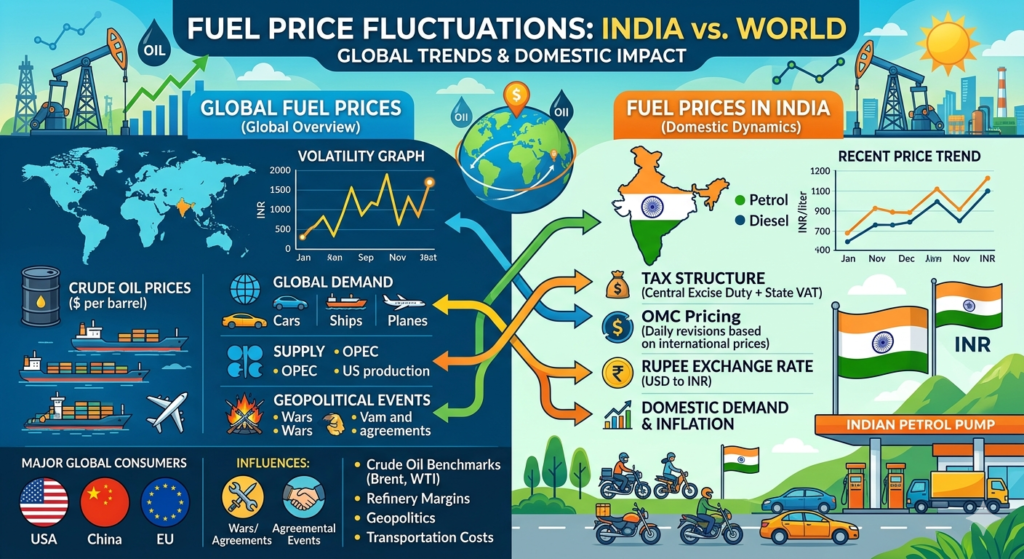
What Does Fuel Price Fluctuation Actually Mean????
Fuel price fluctuation simply means the regular increase and decrease in the cost of petrol, diesel, and other fuels. These changes happen because fuel prices depend on many factors — some inside the country and many outside.
India imports a large amount of crude oil. Crude oil is the raw material used to produce petrol and diesel. Since we depend on imports, whatever happens in the global oil market automatically affects our country.
That’s why fuel pricing is not just a local issue. It is connected to global events.
The Global Oil Market:- The Main Driver
The biggest factor behind fuel price changes is the international crude oil price.
When global oil demand increases – for example, when economies grow or industries expand – prices rise. When demand slows down or production increases, prices may fall.
In 2025 and early 2026, global crude oil prices have shown moderate fluctuations. There have been periods of stability, but also moments of tension due to international conflicts and supply concerns. Even small disruptions in oil-producing regions can push prices higher because the global market reacts quickly.
Sometimes oil-producing nations adjust their production levels to balance the market. When supply is limited, prices go up. When production increases, prices may ease.
This constant adjustment is why fuel prices never stay completely stable.
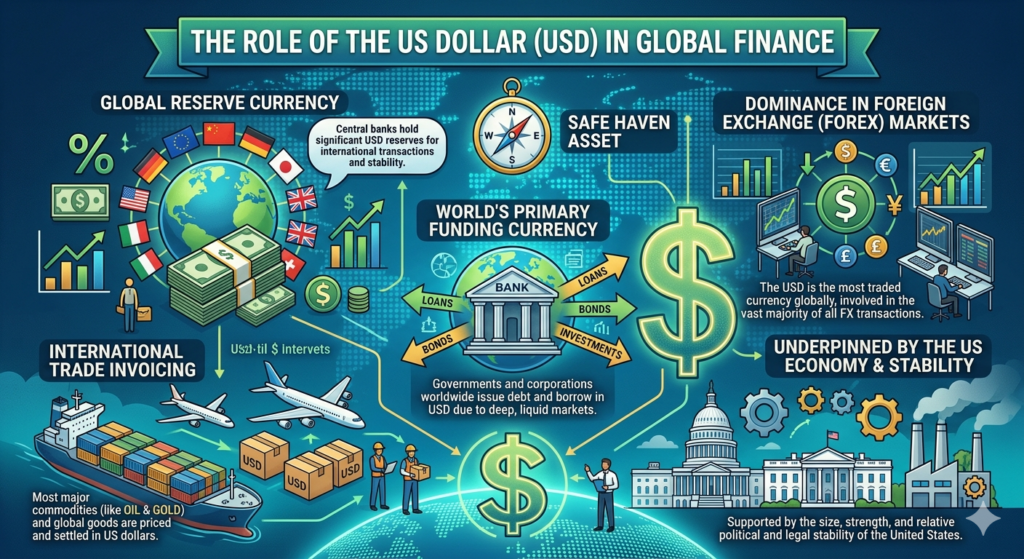
The Role of the US Dollar:-
Many people don’t realize how important currency exchange is in fuel pricing.
Oil is traded globally in US dollars. So India has to pay in dollars when importing crude oil. If the Indian rupee becomes weaker compared to the dollar, importing oil becomes more expensive.
This means even if international crude oil prices remain stable, fuel prices in India can still increase due to currency changes.
In 2026, exchange rate movements continue to influence the final price we pay at petrol pumps.
Why Fuel Prices in India Feel High:-
One major reason fuel prices in India often feel expensive is taxation.
The price we pay at the pump includes:-
Cost of crude oil
Refining charges
Transportation cost
Central government taxes
State government VAT
Dealer commission
Taxes form a significant part of the total price. That is why even when global crude prices fall slightly, we may not see a big reduction at petrol pumps.
This sometimes creates frustration among people, especially when they hear that crude oil prices have fallen internationally.
Recent Price Situation (2025–2026):-
In many Indian cities during late 2025 and early 2026, petrol prices have mostly remained in the range of ₹90 to ₹107 per litre, depending on the state. Diesel prices have generally stayed between ₹80 and ₹95 per litre.
There have not been extreme crashes or record-breaking spikes recently, but prices have remained sensitive to global developments.
India’s fuel demand, especially diesel, has remained strong due to transportation, agriculture, and industrial activities. Strong demand usually supports steady pricing.
So overall, we are seeing controlled but continuous movement – not dramatic instability, but not complete stability either.
How It Affects Daily Life???
Fuel price changes may seem like just numbers, but their impact is everywhere.
1. Transportation Becomes Costlier:-
Higher fuel prices increase bus fares, taxi rates, and goods transport charges.
2. Daily Goods Become Expensive:-
When transport costs rise, the price of vegetables, groceries, construction materials, and essential goods also increases.
3. Pressure on Household Budgets:-
Families who travel daily by two-wheelers or cars feel the impact immediately. Monthly expenses rise, and savings may reduce.
4. Inflation Effect:-
Fuel is linked to almost every sector. When fuel becomes expensive, it indirectly contributes to overall inflation.
Personally, I feel fuel prices are one of those things that quietly influence the entire economy without most people noticing the full chain reaction behind it.
Why Prices Don’t Drop Quickly????
Many people expect fuel prices to fall immediately when global oil prices decrease. But price reductions often take time because of:-
Tax structure
Exchange rate impact
Pricing adjustments
Market balancing
Fuel pricing is a layered system, not a simple direct formula.
Long-Term Changes in Energy Use:-
Looking ahead, the energy sector is slowly changing.
India is increasing ethanol blending in petrol, such as E20 fuel. This reduces dependence on imported crude oil. The government is also encouraging electric vehicles and renewable energy sources.
Globally, many countries are shifting towards cleaner energy. However, fossil fuels still play a major role in transportation and industry.
This means fuel prices will likely continue to fluctuate in the coming years.
What Can We Expect in the Future????
Fuel prices in 2026 and beyond will depend on:-
Global oil production decisions
Political stability in oil-producing regions
Exchange rate movements
Domestic taxation policies
Growth of alternative energy
If global supply remains stable and demand is balanced, prices may remain steady. But sudden global events can still cause temporary increases.
Fuel pricing is connected to global economics, not just local politics.
Conclusion:-
Fuel price fluctuations are a reality of today’s interconnected world. India, being a major oil-importing country, naturally feels the impact of global market changes.
Instead of looking at fuel prices as sudden surprises, it helps to understand the larger picture behind them. Once we understand the reasons – global supply, currency value, taxation, demand – the movement makes more sense.
Fuel prices may rise or fall, but awareness gives clarity. And clarity helps us plan better.