
Food is one of the basic needs of every person, and farmers play the biggest role in providing it. From rice and wheat to vegetables and fruits, agriculture supports daily life as well as the economy. However, one common thing people notice is that crop prices never stay the same. Sometimes vegetables become so cheap that farmers suffer heavy losses, while at other times the same vegetables become too expensive for common people to buy easily. This constant rise and fall in agricultural prices is known as crop price fluctuation.
Crop price fluctuation is a major issue because it affects everyone differently. Farmers lose income when prices fall too much, while consumers struggle when food prices increase suddenly. In recent years, this problem has become more serious due to climate change, increasing farming costs, transportation problems, and changing market conditions.
Many people believe crop prices change only because of traders, but the reality is much more complex. There are several important reasons behind fluctuating crop prices, and each factor directly affects the agricultural system.
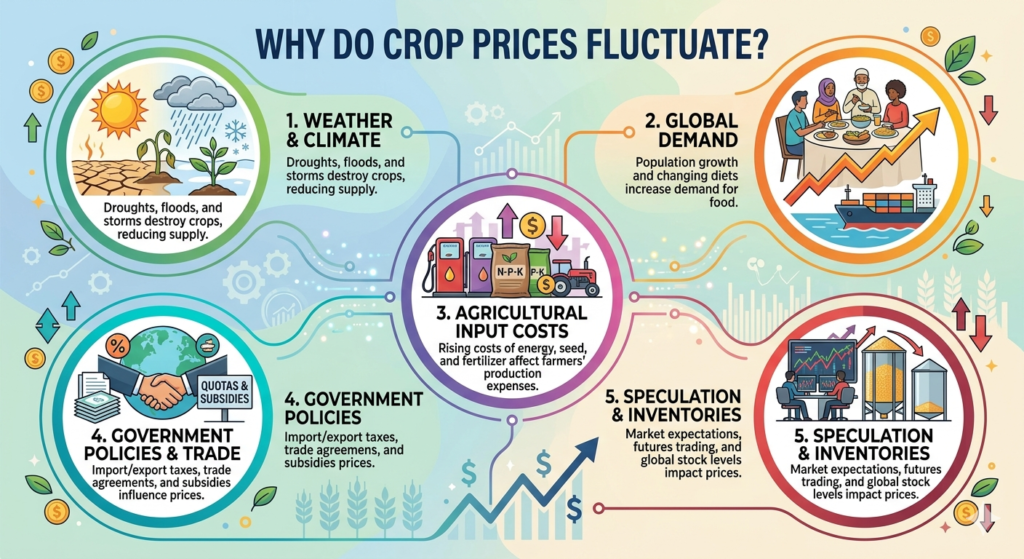
Main Reasons Behind Crop Price Fluctuation
Some of the biggest reasons are:-
Demand and supply imbalance
Weather and climate conditions
Rising farming costs
Poor storage facilities
Transportation problems
Role of middlemen
Government policies
International market changes
Seasonal farming patterns
All these factors together decide whether crop prices will rise or fall.
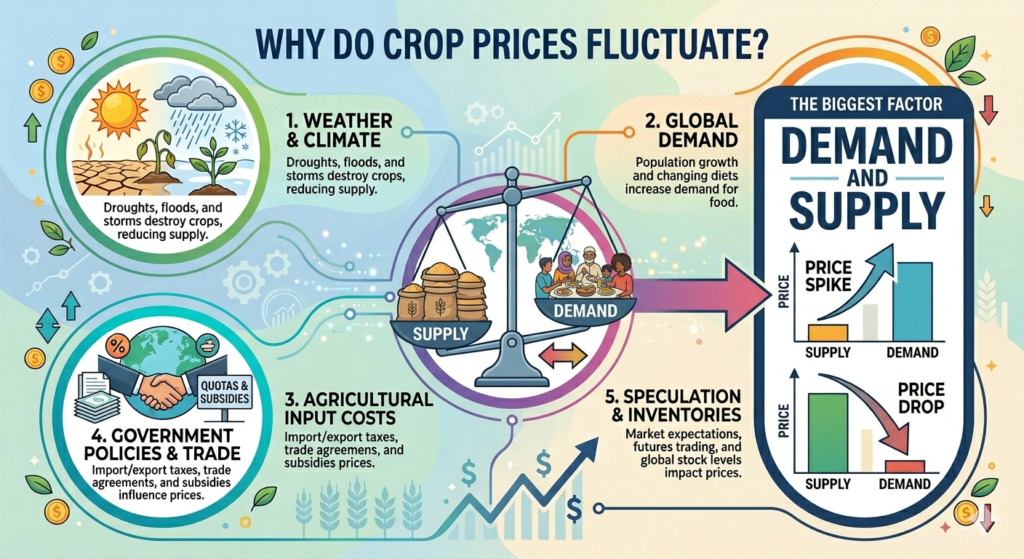
Demand and Supply:- The Biggest Factor
Demand and supply are the main reasons behind changing crop prices. When production becomes higher than demand, prices fall. When production becomes lower and demand remains high, prices rise quickly.
Example:-
During a good tomato season, farmers from many states bring tomatoes to markets at the same time. Because supply becomes very high, traders offer lower prices. Farmers are forced to sell cheaply because tomatoes spoil quickly.
In some regions during recent years:-
Farmers sold tomatoes at very low prices
Transportation costs became higher than profits
Many vegetables were thrown away because selling them was not profitable
On the other hand, when heavy rain damages tomato crops, supply decreases and prices suddenly increase in cities. Sometimes tomato prices even cross ₹80–₹100 per kilogram.
This shows how strongly supply and demand control crop prices.
(Weather Conditions Affect Agriculture Directly)
Agriculture depends heavily on nature. Even a small weather change can affect crop production.
Weather problems that affect farming:-
Floods
Droughts
Heatwaves
Unseasonal rainfall
Storms
Hailstorms
For example, rising temperatures during wheat harvesting in some areas reduced wheat production. As supply became lower, wheat prices increased in markets.
Heavy rainfall also damages vegetables and fruits. Floods destroy farms and roads, making transportation difficult. Even when crops are available in villages, they may not reach cities on time.
Result:-
Less supply in markets
Higher prices for consumers
Financial losses for farmers
Climate change has made farming more uncertain than before. Farmers now face unexpected weather patterns almost every year.
(Farming Has Become More Expensive)
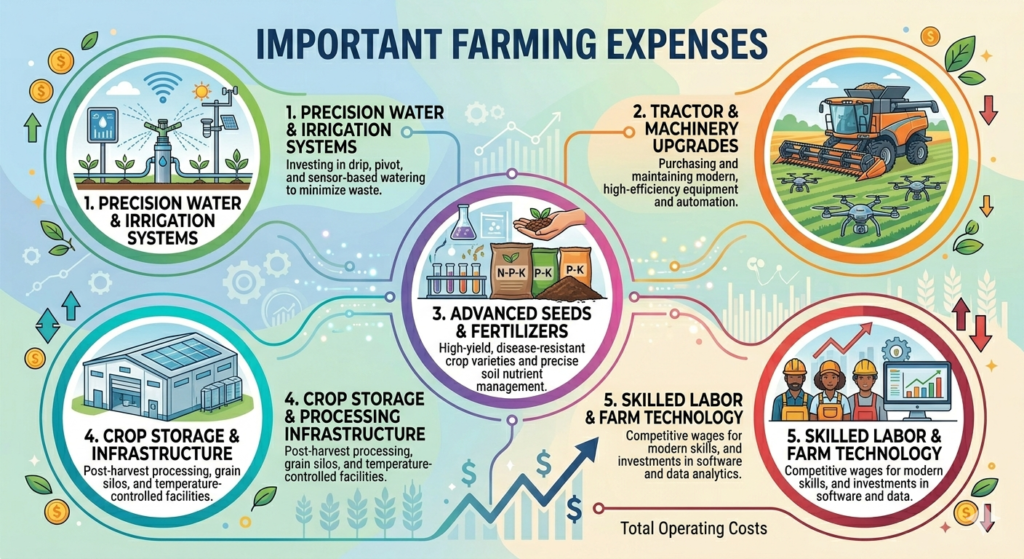
Modern farming requires large investment. Farmers spend money on many things before crops finally reach markets.
Important farming expenses:-
Seeds
Fertilizers
Pesticides
Labor wages
Electricity
Irrigation
Fuel and diesel
Tractors and machinery
Fuel prices especially affect agriculture because transportation and farming machines depend on diesel.
Real-life situation:-
A farmer growing onions spends money for months on seeds, fertilizers, irrigation, and labor. If onion prices suddenly fall after harvesting, the farmer may not even recover the total farming cost.
Small farmers face the biggest difficulties because they have limited savings and often depend on loans.
(Poor Storage Facilities Increase Problems)
Storage is another major reason behind crop price fluctuation. Many crops spoil quickly because proper warehouses and cold storage systems are not available everywhere.
Crops that need proper storage:-
Potatoes
Onions
Tomatoes
Fruits
Green vegetables
Farmers often sell crops immediately after harvesting because they fear spoilage.
What happens because of poor storage
Huge supply enters markets together
Prices suddenly fall
Farmers get lower profits
After a few months, supply becomes lower because much of the crop has already spoiled or been sold. Prices then rise sharply.
According to recent agricultural estimates, a large quantity of fruits and vegetables still gets wasted before reaching consumers due to weak storage and transport systems.
(Transportation Problems Also Affect Prices)
Transportation plays a very important role in agriculture. Crops must reach markets quickly and safely.
Problems faced during transportation:-
Poor roads
Traffic delays
High fuel prices
Flooded highways
Lack of refrigerated vehicles
For example, if trucks carrying vegetables are delayed because of floods or fuel shortages, fewer vegetables reach city markets.
Result:-
Supply decreases
Prices increase rapidly
Consumers pay more
Transportation costs are also added to market prices, which directly affects consumers.
(Role of Middlemen in Agricultural Markets)
In many places, farmers do not directly sell crops to consumers. Middlemen and traders become part of the supply chain.
Sometimes middlemen help farmers, but in many situations they earn more profit while farmers receive lower prices.
Example:-
A farmer may sell tomatoes for ₹10 per kilogram
Consumers in cities may buy the same tomatoes for ₹40–₹50 per kilogram
This difference happens because:-
Transportation charges are added
Storage costs increase prices
Traders keep profit margins
Many farmers also lack proper market information. They may not know the current prices in nearby cities, so they sell crops at lower rates.
Digital farming apps are helping farmers slowly, but awareness is still limited in many villages.
(Government Policies Affect Crop Prices)
Government decisions also influence agricultural prices.
Important government actions include:-
Minimum Support Price (MSP)
Import and export rules
Subsidies on fertilizers and electricity
Food storage policies
Minimum Support Price helps farmers by giving fixed prices for certain crops. This protects them from extreme losses.
However, sudden policy changes can also affect markets. For example:-
Increased imports can reduce local crop prices
Export restrictions can reduce farmer profits
Changes in subsidy policies can increase farming costs
Governments often try to balance farmer income and affordable food prices for consumers.
(International Markets Influence Local Prices)
Agriculture today is connected to global markets. Events happening in other countries can also affect local crop prices.
International factors include:-
Global food shortages
Wars and conflicts
Transportation disruptions
Currency exchange rates
International demand for crops
For example, if major wheat-producing countries face drought, global wheat prices rise. This also affects local wheat markets.
Similarly, rising fuel prices worldwide increase transportation and farming costs in many countries.
Because of globalization, local farmers are now connected to international economic conditions as well.
(Seasonal Farming Creates Natural Price Changes)
Agriculture is seasonal, so price changes are natural during different times of the year.
During harvest season:-
Supply becomes high
Prices usually fall
After the season ends:-
Supply becomes lower
Prices rise again
Example:-
Mangoes are cheaper during peak summer because production is high. After summer ends, mango prices increase because supply becomes limited.
The same pattern is seen in onions, potatoes, vegetables, and fruits throughout the year.
(Effects of Crop Price Fluctuation)
Crop price fluctuation affects both farmers and consumers.
Effects on farmers:-
Low income
Debt problems
Financial stress
Farming losses
Uncertainty about future crops
Effects on consumers:-
Expensive food
Increased household expenses
Difficulty for poor families
Effects on the economy:-
Food inflation
Market instability
Problems for food industries
Rural economic pressure
In many villages, young people are slowly losing interest in farming because agricultural income has become uncertain.
How Can Crop Price Fluctuation Be Reduced?????
Several steps can help create a more stable agricultural system.
Important solutions:-
Better irrigation systems
Improved storage facilities
Modern farming technology
Crop insurance for farmers
Better roads and transportation
Accurate market information
Strong farmer cooperatives
Stable government policies
Farmers should also be encouraged to grow different crops instead of depending on only one crop. This can reduce financial risk.
Technology can also help farmers understand weather conditions and market prices more easily.
Conclusion:-
Crop price fluctuation is a serious issue influenced by many factors such as demand and supply, weather conditions, farming costs, transportation, storage problems, government policies, and international markets. Agriculture depends on both nature and market systems, which is why prices continue to rise and fall.
Farmers work hard throughout the year, but unstable prices often create financial uncertainty in their lives. Consumers also face difficulties when food prices become too high.
A stronger agricultural system with better storage, transportation, technology, and market transparency can help reduce sudden price fluctuations. Farmers need fair prices for their hard work, and consumers need affordable food for daily life.
Understanding the real reasons behind crop price fluctuation helps people understand the importance of agriculture and the challenges faced by farmers every season.