
Urbanization and Its Impact on the Economy
Introduction:-
Urbanization is one of the most significant transformations in the modern world. It refers to the movement of people from rural areas to cities in search of better opportunities. This process has accelerated rapidly in recent years, especially in developing nations.
People migrate to cities for employment, education, healthcare, and improved living standards. As cities expand, they become the main centers of economic activity. Urbanization not only drives economic growth but also brings certain challenges that need careful management.
The Current Scenario of Urbanization:-
In today’s time, more than half of the global population lives in urban areas, and this share continues to grow. Cities are no longer just places to live-they are the engines of economic development.
Urban centers concentrate industries, services, financial activities, and technological advancements. This concentration creates opportunities but also increases pressure on urban systems.
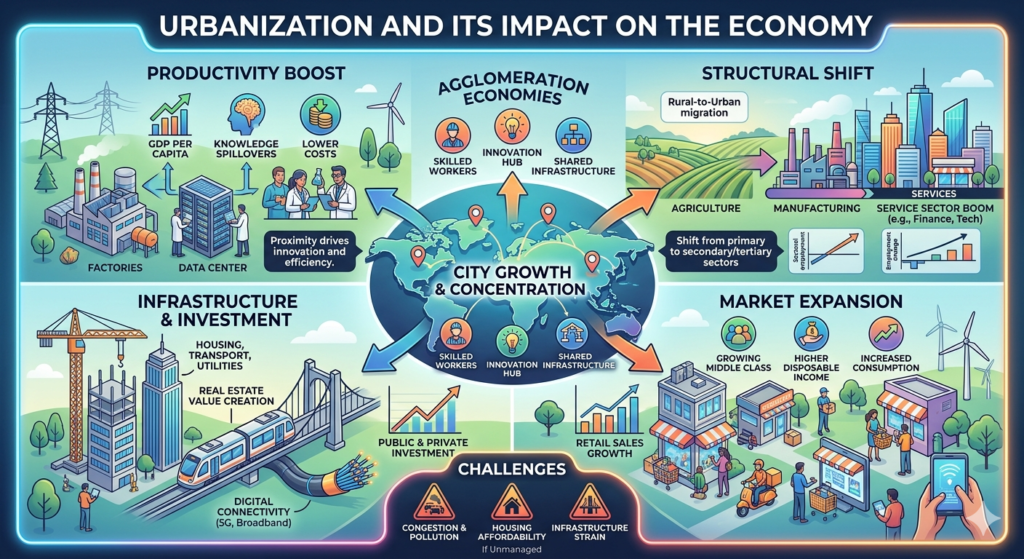
(Positive Economic Effects of Urbanization)
Urbanization contributes significantly to economic progress by increasing productivity, generating employment, and encouraging innovation.
Expansion of Employment Opportunities:-
Cities offer diverse job opportunities across multiple sectors such as manufacturing, services, technology, construction, and retail.
For example, individuals moving from rural areas often find better-paying jobs in urban industries, which helps improve their income and standard of living.
Growth of Businesses and Economic Activities:-
Urban areas provide a favorable environment for businesses due to better infrastructure, connectivity, and access to a large customer base.
For instance, small businesses like food stalls, retail shops, or service providers can earn higher profits in cities because of greater demand.
Development of Infrastructure:-
Urbanization leads to the development of advanced infrastructure such as transportation systems, electricity supply, communication networks, and digital connectivity.
This improved infrastructure supports economic activities and increases overall efficiency.
Promotion of Innovation and Technology:-
Cities act as centers of innovation where skilled individuals, educational institutions, and companies interact. This environment encourages the creation of new ideas, technologies, and business models.
For example, many startups and digital platforms originate in urban areas where resources and talent are easily accessible.
(Impact on Income and Living Standards)
Urbanization generally results in higher income levels and improved living conditions.
Improved Quality of Life:-
Urban residents often benefit from:-
Better educational institutions
Advanced healthcare services
Improved transportation
Modern housing facilities
These factors contribute to an overall better standard of living.
Economic Inequality:-
Despite these benefits, urbanization also leads to income inequality. While some individuals achieve high earnings, others remain in low-paying or unstable jobs.
For example, workers in informal sectors may lack job security and financial stability.
(Negative Economic Consequences of Urbanization)
Urbanization also creates several challenges that can affect economic stability if not addressed properly.
Unemployment and Informal Sector Growth:-
Not all migrants are able to secure stable employment. Many people work in informal jobs with low wages and no long-term security.
Rising Cost of Living:-
The cost of living in cities is significantly higher than in rural areas. Expenses related to housing, transportation, food, and healthcare can be a burden.
For example, a large portion of income may be spent on rent, reducing savings and financial security.
Pressure on Urban Infrastructure:-
Rapid population growth puts heavy pressure on infrastructure and public services. Cities often struggle to provide adequate water supply, sanitation, transportation, and waste management.
This can reduce productivity and affect overall economic performance.
Growth of Informal Settlements:-
High living costs force many people to live in overcrowded and poorly developed areas.
For instance, inadequate housing and lack of basic facilities can negatively impact health and work efficiency.
(Effects on the Rural Economy)
Urbanization also has both positive and negative impacts on rural areas.
Positive Effects:-
Migration reduces pressure on land and local resources
Workers send money back to their families, supporting rural income
Negative Effects:-
Shortage of labor in agriculture
Decline in rural productivity and development
For example, when young workers leave villages, farming activities may slow down due to lack of manpower.
(Role of Government in Managing Urbanization)
Effective governance is essential to ensure that urbanization contributes positively to the economy.
Key Measures:-
Generating employment opportunities
Investing in infrastructure development
Providing affordable housing
Promoting skill development programs
For example, vocational training programs can help individuals gain the skills required for better employment in urban areas.
(Future Trends of Urbanization)
Urbanization is expected to continue growing in the future, making cities even more important for economic development.
Key trends include:-
Development of smart cities
Expansion of digital and service-based economies
Increased focus on sustainable growth
For example, the use of technology in managing traffic, energy, and waste can improve efficiency and reduce environmental impact.
(Need for Sustainable Urban Development)
While urbanization drives economic growth, it must be balanced with environmental and social considerations.
Important Steps:-
Reducing pollution levels
Encouraging public transportation
Promoting clean and renewable energy
Preserving green spaces
For example, increased use of public transport systems can reduce traffic congestion and air pollution.
Conclusion:-
Urbanization is a powerful force shaping modern economies. It creates employment opportunities, supports business growth, and improves living standards. However, it also presents challenges such as inequality, high living costs, and pressure on infrastructure.
With proper planning and management, urbanization can lead to sustainable and inclusive economic development. Ultimately, the goal should not only be the expansion of cities but also the improvement of people’s lives and the creation of a balanced and resilient economy.