
Introduction:- A New Opportunity Hidden in Age
When people hear the word “old age,” they often think about retirement, health problems, or dependency. But today’s reality is changing. Many senior citizens are healthy, financially active, digitally connected, and ready to contribute to society. They are not only living longer but also spending, investing, travelling, learning new skills, and even starting new businesses.
This change has given rise to a new economic concept called the Silver Economy.
The Silver Economy is not just about caring for older people. It is about creating products, services, jobs, and business opportunities that improve the lives of senior citizens while also supporting economic growth. For a country like India, where the elderly population is growing every year, this sector can become one of the strongest pillars of future development.
Instead of treating ageing as a challenge, India has the opportunity to turn it into an economic advantage.
What is the Silver Economy????
The Silver Economy includes all economic activities connected with people aged 60 years and above. It covers every product and service that helps older people live a healthier, safer, and more comfortable life.
It is much bigger than healthcare. It also includes:-
Healthcare and medical services
Retirement planning
Banking and insurance
Smart housing
Digital technology
Tourism and travel
Fitness and wellness
Home care services
Transportation
Education and skill development
In simple words, the Silver Economy allows senior citizens to remain active participants in society instead of becoming only dependent on others.
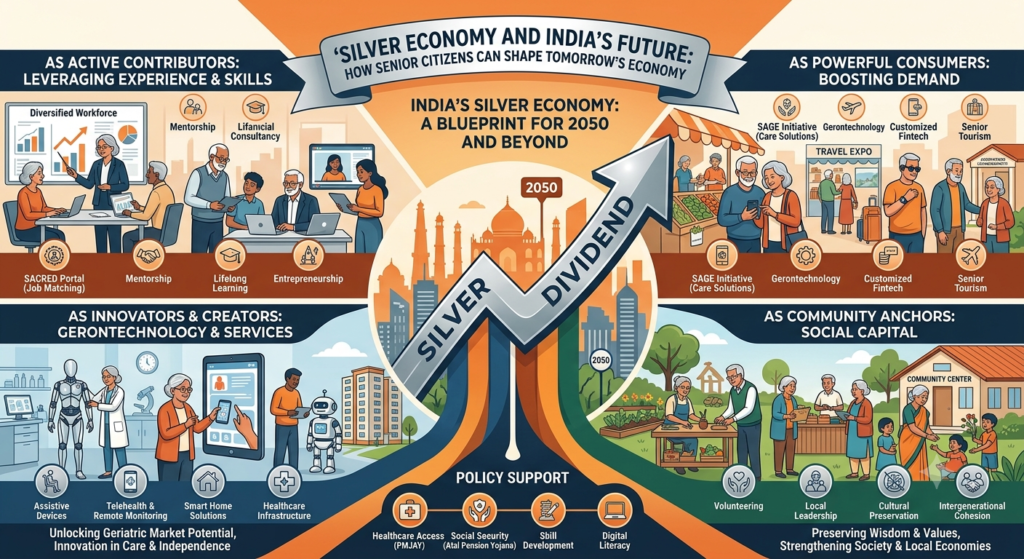
Why is the Silver Economy Becoming Important in India????
India is known as one of the youngest countries in the world, but this picture is slowly changing. Better healthcare, improved nutrition, and higher life expectancy mean that the number of elderly people is increasing every year.
During 2025–26, India continues to witness a steady rise in its senior citizen population. This growing group is creating demand for healthcare, financial services, age-friendly housing, digital support, and wellness products.
This changing population is opening new opportunities for businesses, entrepreneurs, investors, and service providers.
The Main Reasons Behind This Change:-
1. Longer and Healthier Lives:-
People today are living much longer than previous generations because of better medical treatment, improved awareness, and healthier lifestyles.
Longer life means people continue spending, learning, travelling, and contributing to the economy even after retirement.
2. Better Financial Planning:-
Many senior citizens now save money throughout their working lives. After retirement, they continue using their savings for healthcare, travel, home improvement, hobbies, and family needs.
This regular spending supports many industries and creates new business opportunities.
3. Digital India is Reaching Older People:-
Smartphones have become common even among elderly citizens.
Today many senior citizens use:-
Digital payments
Online banking
Video calls
Health consultation apps
Online shopping
Government digital services
As digital confidence grows, businesses are designing simpler and safer platforms specially for older users.
4. Families and Society Are Changing:-
Earlier, large joint families looked after elderly members at home. Today many young people move to different cities for education and jobs.
Because of this, there is increasing demand for:-
Home healthcare
Assisted living
Emergency support services
Senior-friendly housing
Community care centres
This creates employment while improving the quality of life for elderly people.
Industries That Will Benefit the Most:-
The Silver Economy is creating opportunities across many sectors.
(Healthcare)
Healthcare will remain the largest part of this economy.
Growing demand includes:-
Regular health check-ups
Home nursing
Telemedicine
Physiotherapy
Mental health support
Affordable medicines
Preventive healthcare
Healthcare businesses that provide affordable and accessible services will continue growing.
(Banking and Financial Services)
Senior citizens require financial security after retirement.
Important services include:-
Pension management
Health insurance
Safe investment plans
Digital banking assistance
Financial planning
Fraud protection services
Banks that offer simple and secure services for elderly customers can build long-term trust.
(Smart Housing)
Safe homes improve independent living.
Important features include:-
Lift facilities
Wheelchair-friendly design
Non-slip flooring
Emergency alarm systems
Medical support nearby
Barrier-free entrances
Such housing projects are becoming increasingly important in urban India.
(Tourism and Leisure)
Retirement often gives people time to explore new places.
Senior citizens now spend money on:-
Religious tourism
Nature trips
Cultural tours
Wellness holidays
Family vacations
Every trip supports hotels, restaurants, transport services, local markets, and small businesses.
(Technology)
Technology is becoming an important companion for elderly people.
Useful innovations include:-
Health monitoring devices
Smart watches
Medicine reminder applications
Emergency alert systems
Voice-controlled home devices
Online doctor consultation
Simple technology helps senior citizens stay independent for a longer period.
(Examples That Explain the Silver Economy)
Example:-
After retirement, a former engineer starts giving technical advice to young startup founders. His knowledge helps new businesses avoid mistakes and grow faster.
This shows that experience itself becomes an economic resource.
Example:-
An elderly couple plans a cultural tour across different states. During the journey they spend money on hotels, transport, local food, shopping, and sightseeing.
One simple holiday creates income for hundreds of workers connected with tourism.
Why the Silver Economy is Good for Everyone????
The Silver Economy is not only beneficial for senior citizens. It creates advantages for the entire country.
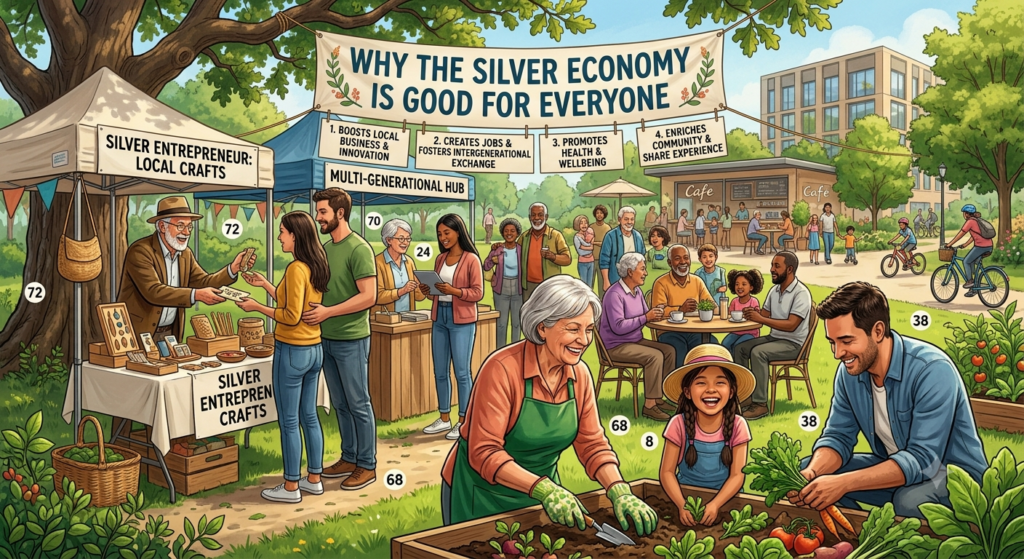
Some important benefits are:-
Creates new employment opportunities.
Encourages innovation in healthcare and technology.
Increases demand for goods and services.
Supports local businesses.
Promotes financial inclusion.
Improves the quality of life of elderly people.
Uses the knowledge and experience of retired professionals for national development.
Challenges That India Must Overcome:-
The Silver Economy has great potential, but India must solve several challenges before it can fully benefit from it.
1. Unequal Access to Healthcare:-
Many elderly people living in villages and small towns still struggle to get quality healthcare. Hospitals, specialist doctors, and emergency services are often concentrated in cities.
Improving healthcare in rural areas will ensure that every senior citizen receives proper medical support, regardless of where they live.
2. Financial Insecurity:-
Not every older person has a pension or regular retirement income. A large number of workers spend their lives in the informal sector, where retirement benefits are limited.
As a result, many senior citizens continue working because of financial need rather than personal choice.
3. Digital Literacy Gap:-
Technology has made life easier, but not every elderly person feels confident using smartphones or online services.
Common difficulties include:-
Online banking
Digital payments
Mobile applications
Online healthcare services
Cybersecurity awareness
Simple training programs can help senior citizens use technology safely and independently.
4. Shortage of Elderly Care Services:-
As the number of older people grows, the demand for trained caregivers, nurses, physiotherapists, counsellors, and home-care professionals also increases.
India needs more skilled workers in elderly care to meet future demand.
5. Social Isolation:-
Many young people move to different cities or countries for education and employment. As a result, some elderly parents live alone.
Loneliness can affect both physical and mental health. Community centres, social clubs, and neighbourhood support systems can help senior citizens remain active and connected.
Opportunities Waiting for India:-
If India invests in the Silver Economy today, it can create millions of new opportunities in the coming years.
Healthcare Innovation
The growing need for healthcare can encourage:-
Better hospitals
Affordable medical equipment
Digital health services
Home healthcare
Preventive healthcare programs
This will improve both public health and economic growth.
Employment Generation
The Silver Economy can create jobs in many fields, such as:-
Healthcare
Nursing
Physiotherapy
Insurance
Tourism
Wellness
Digital services
Financial planning
Home-care assistance
Young people can find meaningful careers while serving the needs of an ageing population.
New Business Opportunities:-
Entrepreneurs can introduce products specially designed for senior citizens.
Examples include:-
Easy-to-use smartphones
Comfortable furniture
Smart health devices
Walking aids
Healthy food products
Fitness programs
Senior-friendly travel packages
Innovation in these areas can support both startups and established businesses.
What Should India Do Next????
To build a strong Silver Economy, India should focus on long-term planning.
Some important steps include:-
Expand quality healthcare in both urban and rural areas.
Improve pension and social security coverage.
Promote financial awareness among senior citizens.
Increase digital literacy through simple training.
Encourage companies to design age-friendly products.
Build safer public transport and accessible infrastructure.
Support research and innovation related to healthy ageing.
Create flexible work opportunities after retirement.
Encourage active ageing through sports, learning, volunteering, and community participation.
These measures can help senior citizens remain independent, productive, and respected.
Key Takeaways:-
The Silver Economy is much more than healthcare.
India’s ageing population is creating new economic opportunities.
Senior citizens are becoming active consumers, investors, mentors, and entrepreneurs.
Healthcare, technology, finance, tourism, and housing will benefit the most.
Better planning today can create a stronger economy tomorrow.
Conclusion:-
The future of India will not depend only on its young population but also on how well it supports and values its senior citizens. The Silver Economy offers an opportunity to combine experience with innovation, creating benefits for individuals, businesses, and society.
As life expectancy increases, the role of older people is changing. They are no longer only recipients of care-they are active consumers, skilled professionals, investors, mentors, and decision-makers. Their experience can guide younger generations, while their spending and participation can strengthen many sectors of the economy.
If India continues investing in quality healthcare, financial security, digital inclusion, age-friendly infrastructure, and lifelong learning, the Silver Economy can become one of the country’s strongest growth engines in the coming decades.
A nation truly progresses when every generation has the opportunity to live with dignity, contribute with confidence, and grow together. The Silver Economy reflects this vision by proving that experience is not a burden-it is one of the greatest assets for building India’s future.