
Indian Middle Class Consumption Behaviour
Introduction:-
The Indian middle class has become one of the most important groups in the country’s economy. A large part of the demand for goods and services comes from middle-income households. Whether it is daily groceries, education expenses, electronic products, or travel plans, middle-class families contribute significantly to market consumption.
Over the last few years, the consumption behaviour of this group has been changing. Higher income levels, urban lifestyles, digital technology, and rising living costs have all influenced how people spend their money. At the same time, many families still follow the traditional habit of saving before spending.
Because of this mix of modern aspirations and financial caution, the spending behaviour of the Indian middle class is quite balanced and unique.
Growth of the Middle Class in India:-
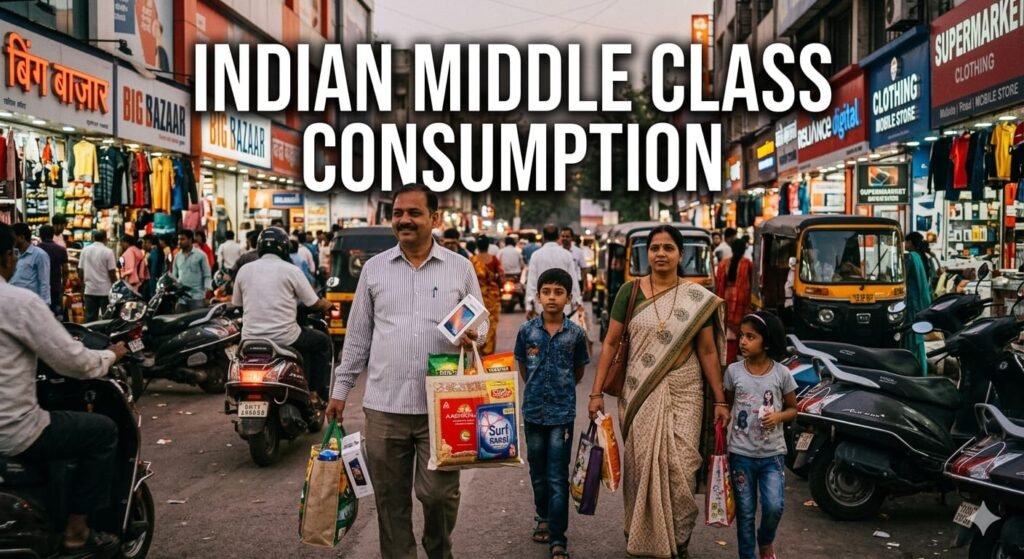
India has experienced steady growth in its middle-class population over the past two decades. Economic development, expansion of service industries, and better employment opportunities have helped many families move into the middle-income category.
This group has strong influence on consumer markets because their spending covers many sectors such as housing, transportation, education, healthcare, and consumer goods.
Some important points about the growth of the middle class include:-
The middle class now represents a significant share of the country’s population.
Urbanization has increased the number of middle-income households.
Higher education and professional jobs have improved income levels.
Consumer markets are expanding mainly because of middle-class demand.
Because of these factors, businesses and industries often focus their products and services on middle-class consumers.
Major Categories of Middle-Class Spending:-
The spending pattern of middle-class families usually focuses on a few major categories. Most household income is divided between essential needs and lifestyle improvements.
Essential Spending:-
Essential spending takes the largest portion of income. These are the basic expenses that every family needs to manage regularly.
Important essential expenses include:-
Food and groceries
Housing rent or home loan payments
Electricity and utility bills
Transportation costs
Healthcare expenses
Food remains one of the biggest monthly expenses for most households. Rising food prices can therefore have a direct impact on the overall family budget.
Education Expenses:-
Education has always been a top priority for middle-class families in India. Parents believe that good education can provide better opportunities for their children in the future.
Common education-related spending includes:-
School or college fees
Books and study materials
Tuition classes and coaching programs
Skill development courses
Many families are willing to spend a large part of their income on education because they consider it an investment rather than an expense.
Housing and Property:-
Owning a house is one of the biggest financial goals for many middle-class households. Because of this, housing plays a major role in their consumption behaviour.
Housing-related spending often includes:-
Rent payments in urban areas
Home loan installments
Property maintenance expenses
Home furniture and appliances
In many cities, housing costs take a large share of household income, which sometimes limits spending in other areas.
Lifestyle Spending Is Increasing:-
Compared with earlier generations, today’s middle class is more open to spending on lifestyle products and services. Rising incomes and changing lifestyles have encouraged families to improve their living standards.
Some common lifestyle expenses include:-
Smartphones and electronic gadgets
Internet and digital services
Personal vehicles
Dining out occasionally
Entertainment and leisure activities
However, even while spending on lifestyle products, most families still try to maintain financial discipline and avoid unnecessary expenses.
Impact of Rising Living Costs:-
One major factor influencing consumption behaviour is the increasing cost of living. When prices of essential goods rise, middle-class families often adjust their spending patterns.
Typical reactions to rising prices include:-
Reducing non-essential purchases
Delaying expensive purchases
Comparing prices before buying products
Looking for discounts or offers
This cautious approach helps families maintain financial stability even when economic conditions become challenging.
Role of Digital Technology:-
Digital technology has changed the way middle-class consumers buy products and services. Smartphones and internet access have made online shopping easier and more convenient.
Some major effects of digital technology on consumption behaviour include:-
Online price comparison before purchasing
Increased use of digital payments
Access to a wider range of products
Home delivery services for convenience
Because of these benefits, many middle-class consumers prefer digital platforms for shopping and payments.
Strong Habit of Saving:-
One unique feature of the Indian middle class is its strong saving culture. Even when income levels improve, most families prefer to keep a portion of their earnings for future needs.
Savings are usually kept for important purposes such as:-
Children’s education
Medical emergencies
Retirement planning
Future investments
Common saving options include bank deposits, gold purchases, insurance plans, and investment schemes. This habit of saving often influences how much families are willing to spend on consumption.
Changing Attitude Toward Credit:-
In earlier years, many middle-class households avoided borrowing money except for major purchases like buying a house. However, this attitude is slowly changing.
Today, many consumers use financial options such as:-
Credit cards
Consumer loans
Easy monthly installment plans
These options make it easier to purchase expensive products without paying the full amount immediately. However, most families still try to keep their borrowing under control.
Differences Between Urban and Small Cities
Consumption patterns are not exactly the same across all regions. There are noticeable differences between urban areas and smaller towns.
Urban Areas:-
Urban middle-class households generally show:-
Higher lifestyle spending
Greater use of digital services
Strong demand for branded products
Frequent online shopping
Smaller Cities and Towns
In smaller cities, consumption patterns often include:-
Higher focus on savings
Lower but gradually increasing lifestyle spending
Growing adoption of online shopping
Preference for affordable products
As digital access improves and incomes rise, these differences are gradually becoming smaller.
Influence of Young Consumers:-
Young professionals are playing an important role in shaping middle-class consumption behaviour. Their spending habits are slightly different from those of older generations.
Younger consumers often prefer:-
Technology products and gadgets
Online entertainment and streaming services
Travel and new experiences
Digital payment systems
Their growing purchasing power is influencing many industries and changing consumer trends.
Challenges Affecting Consumption:-
Even though consumption levels are rising, middle-class households still face several financial challenges.
Some major challenges include:-
Rising housing costs in cities
Increasing education expenses
Higher healthcare costs
Job uncertainty in some sectors
Because of these challenges, many families prefer careful financial planning and avoid unnecessary spending.
Future Trends in Middle-Class Consumption:-
In the coming years, the consumption behaviour of the Indian middle class is expected to evolve further. As income levels improve and technology becomes more widespread, consumer demand will likely continue to grow.
Possible future trends include:-
Greater use of digital platforms for shopping
Higher spending on education and healthcare
Increased demand for quality products
Growing interest in travel and lifestyle experiences
The middle class will continue to remain one of the most important drivers of consumer demand in India.
Conclusion:-
The consumption behaviour of the Indian middle class reflects a balance between aspiration and financial caution. Families aim to improve their living standards by purchasing modern goods and services, but they also maintain a strong focus on saving and financial security.
Essential expenses such as food, housing, education, and healthcare still dominate household budgets, while lifestyle spending is gradually increasing. Factors like digital technology, rising incomes, and changing lifestyles are influencing how families manage their spending.
As the middle-class population continues to grow, its consumption behaviour will remain a key factor shaping the future direction of the Indian economy.