
Introduction:-
The monsoon season plays a very important role in the Indian economy. Every year, people from different sectors wait for the arrival of monsoon rains because they affect farming, water supply, business activities, employment, and overall economic growth. For a country where millions of people still depend on agriculture for their livelihood, rainfall is much more than a weather event. It is an important factor that influences the financial condition of both rural and urban areas.
A good monsoon can bring prosperity to farmers, increase production, create jobs, and support economic growth. On the other hand, poor or irregular rainfall can lead to crop losses, water shortages, rising prices, and financial difficulties. This is why the monsoon is often considered one of the most important natural factors affecting the economy.
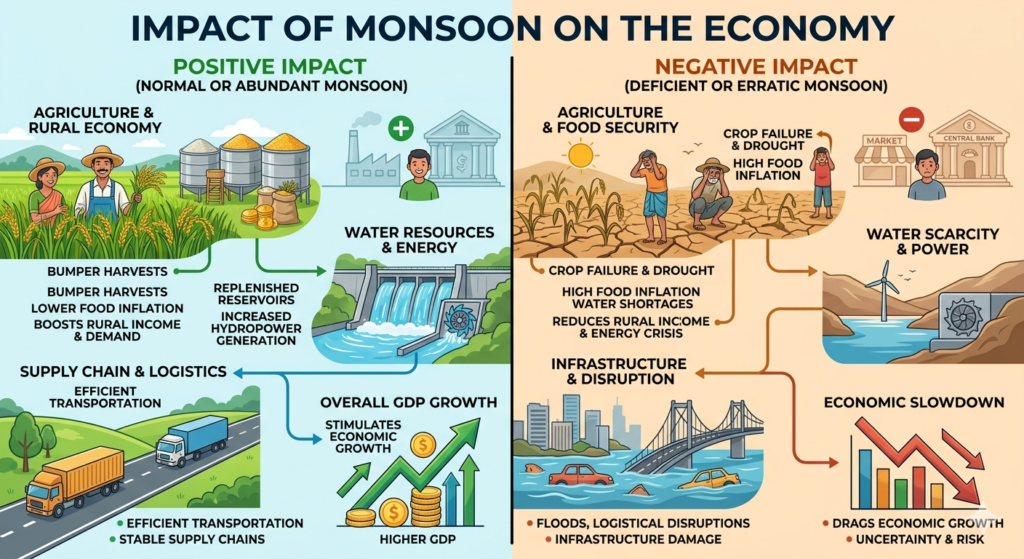
The Strong Connection Between Monsoon and Economy:-
The economy is made up of different sectors such as agriculture, industry, services, trade, and transportation. The monsoon directly or indirectly affects all of these sectors.
Some major economic areas influenced by monsoon include:-
Agriculture and farming
Rural income
Food prices
Employment opportunities
Industrial production
Water resources
Consumer spending
Economic growth
Because of this wide impact, the performance of the monsoon is closely watched every year.
Agriculture:- (The Sector Most Dependent on Monsoon)
Agriculture is the sector that depends the most on monsoon rainfall. Even today, many farmers rely on rainwater to grow crops. Adequate rainfall helps farmers prepare their fields, sow seeds on time, and achieve better harvests.
Major crops such as rice, cotton, soybean, maize, sugarcane, and pulses require sufficient water during their growing period. When rainfall is normal and evenly distributed, crop production usually increases.
A good agricultural season provides several benefits:-
Higher crop yields
Better quality produce
Reduced risk of crop failure
Increased availability of food
For example, if farmers receive timely rainfall during the sowing season, they can cultivate larger areas of land and expect better results at harvest time.
Better Income for Farmers:-
One of the biggest advantages of a good monsoon is the increase in farmers’ income. When crops grow successfully, farmers earn more from selling their produce in markets.
Higher income allows farmers to:-
Invest in better farming equipment
Purchase quality seeds
Improve irrigation facilities
Repay loans
Support their families
When the financial condition of farmers improves, it creates positive effects throughout the economy. Farmers become more confident about spending money, which increases demand for various products and services.
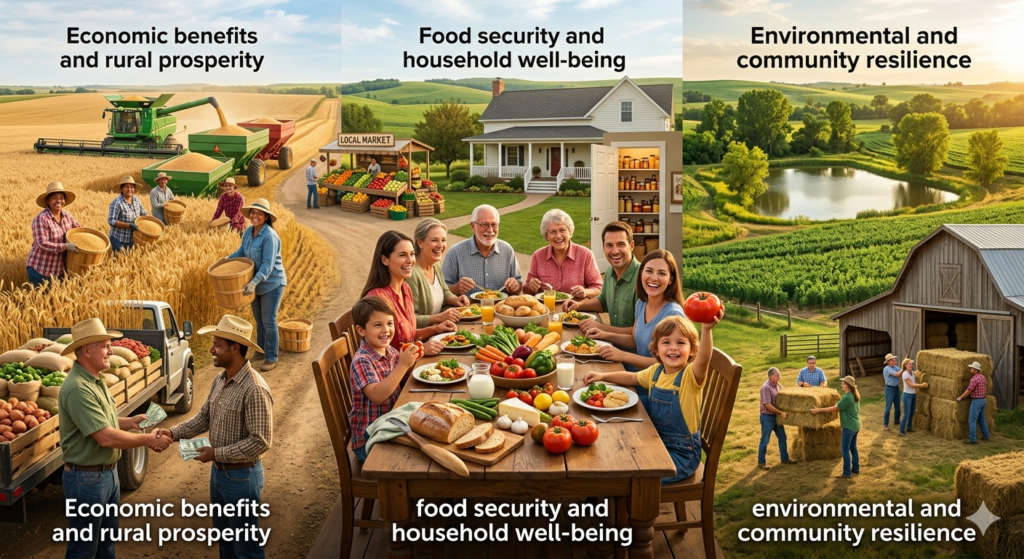
Growth in Rural Markets:-
A successful monsoon does not benefit only farmers. It also helps local businesses in villages and small towns.
When rural households earn more money, they spend it on:-
Clothing
Household items
Mobile phones
Motorcycles
Home improvements
Educational needs
This increase in spending helps shop owners, manufacturers, transport operators, and service providers.
For example, a farmer who earns a good profit from his crop may decide to buy a new motorcycle. This purchase supports the automobile industry and creates business opportunities for dealers and service centers.
Impact on Food Prices:-
Food prices are closely connected to agricultural production. When crop output is high, markets receive a larger supply of food products.
As a result:-
Food shortages decrease
Prices remain stable
Consumers benefit from affordable products
Items such as vegetables, fruits, grains, and pulses become more easily available.
However, poor rainfall can reduce crop production. Lower supply often causes prices to rise, making food more expensive for consumers. Therefore, a healthy monsoon helps maintain price stability in the economy.
Employment Opportunities Created by Monsoon:-
The monsoon season creates employment opportunities for millions of people.
Agricultural activities during the rainy season include:-
Land preparation
Seed sowing
Weeding
Crop maintenance
Harvesting
These activities require a large workforce, especially in rural areas.
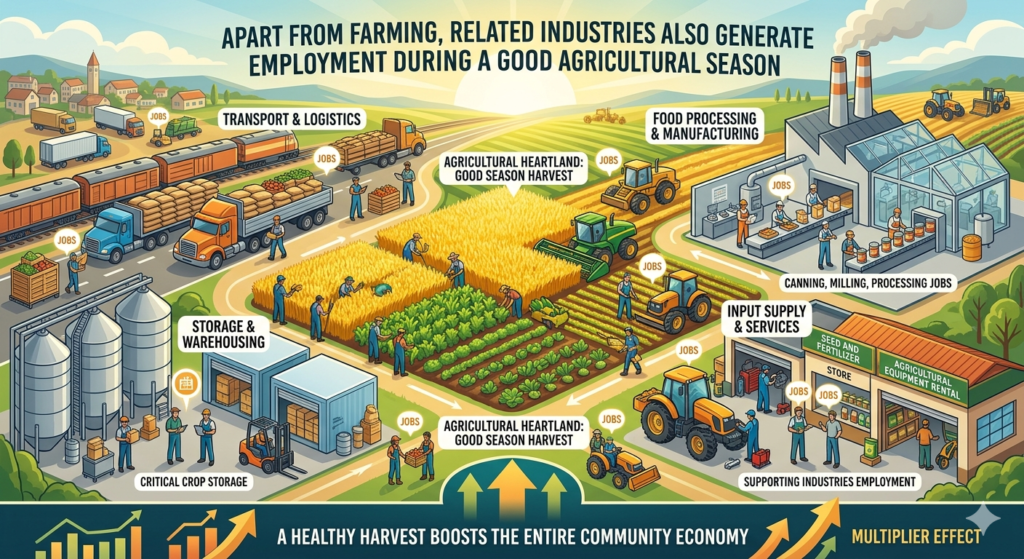
Apart from farming, many related industries also generate employment during a good agricultural season. These include:-
Transportation services
Food processing units
Packaging industries
Agricultural equipment manufacturing
Storage and warehousing services
Thus, the benefits of a good monsoon extend far beyond farms.
Importance of Monsoon for Water Resources:-
Rainfall is one of the primary sources of freshwater in India. Monsoon rains help fill reservoirs, dams, lakes, rivers, and groundwater sources.
Adequate water availability is important for:-
Drinking purposes
Agriculture
Industries
Electricity generation
Many cities depend on water stored during the monsoon season. If rainfall is below normal, water shortages may occur in the following months.
A strong monsoon ensures that water resources remain sufficient for different economic activities throughout the year.
Support for Industrial Development:-
Many industries depend either directly or indirectly on agriculture. Therefore, the performance of the monsoon affects industrial growth as well.
Some industries that benefit from a good monsoon include:-
(Food Processing Industry)
Higher agricultural production provides more raw materials for food processing companies.
(Fertilizer Industry)
Farmers often buy more fertilizers when rainfall conditions are favorable.
(Agricultural Machinery Industry)
Increased farm income encourages purchases of tractors, pumps, and modern equipment.
(Consumer Goods Industry)
Rural consumers spend more money on daily-use products when their earnings improve.
As industrial demand increases, production levels rise and economic activity becomes stronger.
Contribution to National Economic Growth:-
Economic growth depends on production, consumption, investment, and employment. The monsoon influences all these factors.
A favorable monsoon contributes to:-
Higher agricultural output
Increased rural demand
Better employment opportunities
Stable food prices
Stronger business performance
When these factors work together, overall economic growth receives a boost.
This is one of the reasons why economists often consider monsoon forecasts while assessing future economic performance.
Challenges of Weak Monsoon:-
Not every monsoon season brings positive results. Poor rainfall can create several economic problems.
(Some major challenges include):-
Reduced Agricultural Production:-
Lack of rainfall can damage crops and lower farm output.
Financial Stress on Farmers:-
Crop failures may reduce income and increase debt burdens.
Increase in Food Inflation:-
Lower food supply often results in higher prices.
Water Scarcity:-
Insufficient rainfall can reduce water levels in reservoirs and groundwater sources.
Lower Consumer Spending:-
When rural income declines, spending on goods and services also decreases.
These challenges can slow down economic growth and affect millions of people.
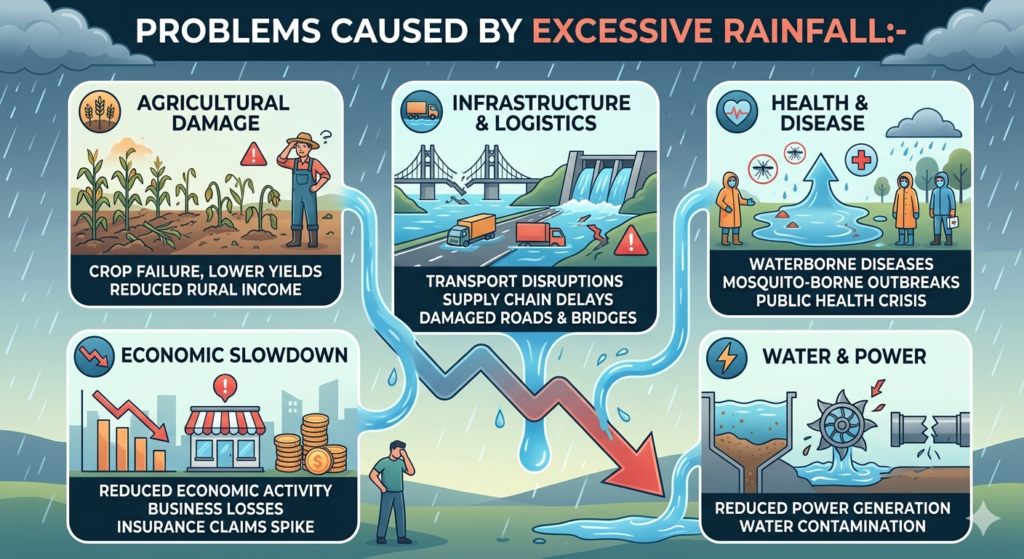
roblems Caused by Excessive Rainfall:-
While insufficient rainfall is harmful, excessive rainfall can also create difficulties.
Heavy rains may cause:-
Floods
Crop destruction
Damage to roads and bridges
Disruption of transportation
Loss of property
For example, continuous flooding can destroy standing crops just before harvest. This not only affects farmers but also reduces food supply in markets.
Therefore, balanced and well-distributed rainfall is more beneficial than extremely heavy rainfall.
Climate Change and Changing Monsoon Patterns:-
Climate change has increased uncertainty in weather conditions across the world. In recent years, rainfall patterns have become less predictable.
Some common changes include:-
Delayed monsoon arrival
Uneven rainfall distribution
Longer dry spells
Sudden heavy downpours
These changes create challenges for agriculture and economic planning.
To reduce risks, greater attention is being given to:-
Water conservation
Modern irrigation systems
Climate-smart agriculture
Better weather forecasting
Sustainable farming practices
These measures can help improve resilience against changing weather conditions.
(Real-Life Example of Monsoon’s Economic Impact)
Imagine a village where most families depend on farming.
If rainfall is good:-
Farmers harvest more crops.
Income levels increase.
Families spend more money.
Local shops earn higher profits.
Transport services receive more business.
Small industries experience greater demand.
As money circulates within the economy, multiple sectors benefit.
Now imagine the opposite situation. If rainfall is poor, crop production falls, income decreases, spending slows down, and businesses receive fewer customers. This simple example shows how strongly the economy depends on monsoon performance.
Conclusion:-
The monsoon is one of the most important factors influencing the Indian economy. Its impact can be seen in agriculture, employment, water resources, industrial production, consumer spending, and overall economic growth. A good monsoon supports farmers, strengthens rural markets, controls food prices, and contributes to economic stability. At the same time, weak or excessive rainfall can create serious economic challenges.
As the country continues to develop, effective water management, sustainable farming, and climate adaptation will become increasingly important. While technology and infrastructure have reduced some dependence on rainfall, the monsoon remains a powerful force that shapes economic conditions every year.
In conclusion, the relationship between monsoon and the economy is deep and long-lasting. A healthy monsoon not only brings rain to the fields but also brings opportunities, growth, and prosperity to millions of peoples across the country .