
Discover how traditional knowledge supports economic growth through farming, handicrafts, herbal medicine, tourism, and sustainable businesses. Learn why ancient wisdom remains valuable in today’s economy.
Introduction:-
Can knowledge that is hundreds of years old still create jobs and improve the economy??The answer is yes. Traditional knowledge has helped communities live, work, and solve everyday problems for generations. Long before modern technology, people learned how to grow crops, protect natural resources, make useful products, and treat common illnesses by carefully observing nature and sharing their experiences.
Today, traditional knowledge is becoming more important than ever. As people look for eco-friendly products, organic food, natural healthcare, and sustainable lifestyles, many traditional practices are gaining new value. These practices not only protect culture but also create employment, increase income, and support local businesses.
In 2026, sustainable development has become a global priority. Governments, businesses, and consumers are paying more attention to products and services that are environmentally friendly and socially responsible. Traditional knowledge fits perfectly into this changing world because it combines practical experience with the responsible use of natural resources. When combined with modern technology and better market access, it can become a powerful engine for economic growth.
What is Traditional Knowledge????
Traditional knowledge is the practical knowledge, skills, and techniques that are passed from one generation to another through experience and practice. It is developed by local communities over many years and is closely connected with nature, culture, and daily life.
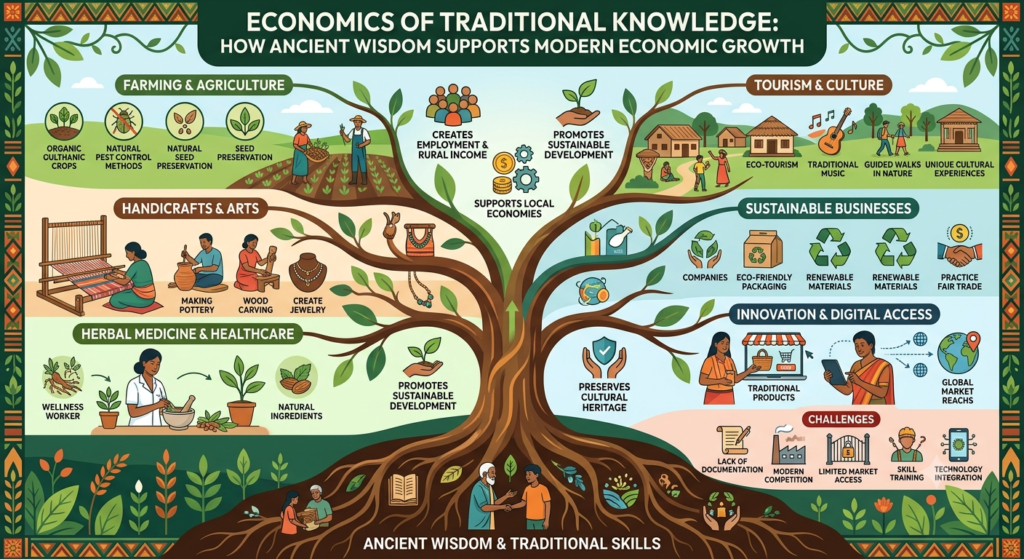
Some common examples include:-
Organic farming methods
Herbal medicine
Rainwater harvesting
Traditional irrigation systems
Bamboo and wood craftsmanship
Handloom weaving
Pottery and clay products
Natural food preservation techniques
Local architecture suitable for climate conditions
Although these methods are old, many of them continue to provide effective and sustainable solutions today.
Why Traditional Knowledge is Economically Important????
Traditional knowledge contributes to the economy in many direct and indirect ways.
1. Creates Employment:-
Traditional occupations such as handicrafts, weaving, pottery, bamboo work, food processing, and herbal product preparation provide employment to millions of people, especially in rural areas.
2. Supports Small Businesses:-
Many families run small businesses using traditional skills. Handmade products require relatively low investment and can generate regular income.
3. Encourages Sustainable Development:-
Traditional practices usually depend on renewable resources and environmentally friendly methods. They reduce pollution and help conserve natural resources for future generations.
4. Strengthens Rural Economy:-
Traditional knowledge creates additional income opportunities beyond farming. This reduces unemployment and improves rural living standards.
5. Preserves Cultural Heritage:-
Traditional products reflect the history and identity of local communities. Preserving these skills also protects cultural diversity while creating economic opportunities.
Major Economic Sectors Benefiting from Traditional Knowledge:-
Agriculture:-
Many farmers still use traditional seed selection, crop rotation, compost preparation, and natural pest control methods. These techniques improve soil fertility, reduce farming costs, and decrease dependence on expensive chemical inputs.
Example:-
A farmer prepares organic compost using crop waste and animal manure instead of chemical fertilizers. This lowers production costs while improving soil quality over time.
Handicrafts and Cottage Industries:-
Handmade products such as pottery, bamboo baskets, wooden furniture, embroidery, handloom fabrics, and traditional paintings create employment and generate income for local artisans.
Example:-
A family produces handmade bamboo baskets using skills passed down through generations. By selling these products in urban markets and through online platforms, they earn a stable income while preserving their traditional craft.
Herbal Medicine:-
Many medicinal plants used by local communities have economic value. The growing demand for natural healthcare products has increased opportunities for farmers and small producers working with medicinal herbs.
Example:-
A village community cultivates medicinal plants and prepares herbal products using traditional methods. Rising consumer interest in natural wellness products helps increase their earnings.
Tourism:-
Traditional culture attracts visitors who want to experience local food, music, festivals, crafts, and village life. This creates employment in transportation, hospitality, guiding services, food preparation, and handicraft sales.
Example:-
A rural village organizes cultural festivals where visitors enjoy traditional performances, local cuisine, and handmade products. The event provides additional income for many local families.
Economic Benefits of Traditional Knowledge:-
Traditional knowledge provides long-term economic advantages.
Some important benefits include:-
Generates employment opportunities.
Supports women entrepreneurs.
Encourages self-employment.
Promotes sustainable resource management.
Reduces production costs.
Increases rural household income.
Supports exports of handmade products.
Encourages innovation based on local knowledge.
Protects biodiversity.
Strengthens local economies.
These benefits show that traditional knowledge is not only valuable for preserving culture but also for building stronger and more resilient economies.
Challenges Facing Traditional Knowledge:-
Despite its importance, traditional knowledge faces several challenges.
Lack of Documentation:-
Many traditional practices are shared orally. As older generations grow older, valuable knowledge may disappear if it is not properly recorded.
Modern Lifestyle Changes:-
Young people often prefer modern occupations and move to cities, reducing the number of people learning traditional skills.
Limited Market Access:-
Many artisans produce high-quality products but struggle to reach larger markets due to poor marketing, transportation, and branding.
Financial Constraints:-
Small producers often lack access to affordable loans, modern equipment, and business training.
Cheap Machine-Made Alternatives:-
Factory-produced products are often cheaper than handmade goods, making it difficult for traditional artisans to compete.
How Technology Can Strengthen Traditional Knowledge???
Technology should not replace traditional knowledge. Instead, it should help preserve and expand it.
Modern technology can support traditional knowledge by:-
Selling products through online marketplaces.
Using digital payments for easier transactions.
Improving product packaging and branding.
Recording traditional techniques digitally.
Providing online skill development programs.
Connecting artisans with national and international customers.
This combination of traditional skills and modern technology creates better economic opportunities.
Role of Government and Communities:-
Both governments and local communities play an important role in protecting traditional knowledge.
Some useful initiatives include:-
Skill development programs
Financial support for artisans
Promotion of rural tourism
Better market access
Business training
Support for women entrepreneurs
Protection of intellectual property
Awareness campaigns about traditional products
These efforts help traditional occupations remain profitable and attractive for younger generations.
Future Opportunities:-
The future of traditional knowledge looks very promising because consumer preferences are changing rapidly.
People now increasingly prefer:-
Organic food
Eco-friendly products
Handmade goods
Sustainable tourism
Natural healthcare products
Environment-friendly farming
Young entrepreneurs are also combining traditional skills with innovation, digital marketing, and modern business ideas. This combination creates new employment opportunities while protecting valuable cultural traditions.
As global demand for sustainable products continues to grow, traditional knowledge can become an even stronger contributor to economic development.
Frequently Asked Questions (FAQs):-
1. What is traditional knowledge????
Traditional knowledge includes the skills, practices, and experiences developed by local communities and passed from one generation to another.
2. Why is traditional knowledge important for the economy????
It creates employment, supports entrepreneurship, promotes sustainable development, and strengthens rural economies.
3. How does traditional knowledge help sustainable development????
It encourages responsible use of natural resources, protects biodiversity, reduces pollution, and promotes environmentally friendly production methods.
4. Can traditional knowledge create jobs???
Yes. Traditional farming, handicrafts, eco-tourism, herbal medicine, and food processing provide employment for millions of people.
5. What are the biggest challenges???
The main challenges include modernization, poor documentation, limited market access, financial constraints, and competition from machine-made products.
Conclusion:-
Traditional knowledge is much more than a collection of old customs. It is a valuable economic resource that creates employment, supports entrepreneurship, strengthens rural economies, and promotes sustainable development. It teaches people how to use natural resources wisely while preserving cultural identity and protecting the environment.
In today’s fast-changing world, traditional knowledge should not be seen as outdated. Instead, it should be recognized as a practical solution for building a greener, more inclusive, and more resilient economy. By combining traditional wisdom with modern technology, education, innovation, and better market opportunities, societies can create long-term economic growth without losing their cultural heritage.
Investing in traditional knowledge today is not only a way to preserve the past but also a smart step toward building a stronger and more sustainable future for the generations to come.