
Introduction:-
Public libraries are often seen as places where people borrow books, but their role is much bigger than that. In today’s knowledge-driven world, libraries help students learn, job seekers build careers, entrepreneurs find ideas, and communities grow together. They provide equal access to information, which is one of the most valuable resources in any economy.
A public library is not simply a building with books. It is a place where education, technology, and opportunity come together. Whether someone wants to prepare for an examination, improve digital skills, start a business, or simply develop a reading habit, a library offers support without asking for high fees.
From an economic point of view, public libraries are a smart public investment. The money spent on libraries may seem like an expense today, but the benefits continue for many years through better education, higher productivity, improved employment, and stronger communities. This is why many economists consider public libraries an important part of long-term economic development.
What Is the Economics of Public Libraries
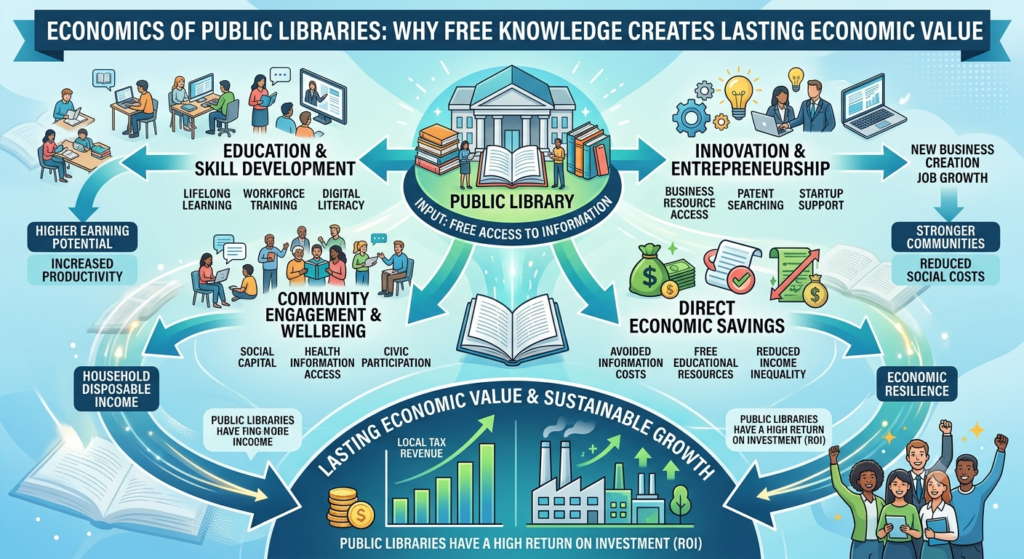
The economics of public libraries explains how public spending on libraries creates value for society and the economy. Unlike private businesses, libraries do not exist to earn profits. Their main goal is to improve public welfare by making knowledge available to everyone.
The economic value of a library is measured through its impact on education, employment, skill development, digital inclusion, innovation, and social progress. Every book read, every student helped, and every new skill learned contributes to the country’s future growth.
In simple words, public libraries transform public investment into educated citizens, skilled workers, and informed communities.
Why Public Libraries Are More Important Than Ever???
The modern economy depends on knowledge and information. People who continue learning throughout life are more likely to find better opportunities and adapt to changing technologies. Public libraries make this possible by providing free access to reliable learning resources.
Today, libraries support:-
Students preparing for school, college, and competitive examinations.
Job seekers searching for employment opportunities.
Entrepreneurs researching new business ideas.
Children developing reading habits.
Senior citizens staying mentally active.
Citizens improving digital and financial literacy.
Because libraries serve every age group, their economic value reaches far beyond education alone.
Major Economic Benefits of Public Libraries:-
1. Building Human Capital:-
Human capital means the knowledge, skills, and abilities of people. A country with educated citizens usually experiences higher productivity and stronger economic growth.
Public libraries improve human capital by giving people free access to books, research materials, digital learning resources, and educational programs. Better education leads to better career opportunities, higher incomes, and improved living standards.
2. Reducing the Cost of Learning:-
Education can become expensive when students need textbooks, reference books, journals, and study guides. Public libraries reduce this financial burden by providing these resources at little or no cost.
This allows families to spend less on educational materials while still receiving quality learning opportunities.
Example:-
A university student preparing for civil service examinations may require many books that are costly to purchase. By using a public library, the student can study the same subjects without spending a large amount of money. The savings can be used for other educational needs.
3. Supporting Employment:-
Finding a job today often requires internet access, computer skills, and updated information. Many public libraries provide computers, internet connections, career guidance, and quiet study spaces.
People use libraries to:-
Search for jobs.
Create professional resumes.
Apply for online vacancies.
Prepare for interviews.
Learn new technical skills.
These services increase employability while reducing job-search expenses.
4. Promoting Digital Inclusion:-
Although technology has become an essential part of life, not everyone owns a computer or has access to high-speed internet. Public libraries help bridge this digital divide.
Modern libraries provide:-
Free Wi-Fi.
Computer access.
Digital learning platforms.
Online educational resources.
Basic computer training.
This ensures that people from different economic backgrounds have equal opportunities to participate in the digital economy.
5. Encouraging Entrepreneurship:-
Every successful business starts with good information. Libraries provide books and learning materials on business planning, marketing, accounting, customer service, and financial management.
A person planning to start a small business can use these resources to understand market demand, reduce risks, and make informed decisions before investing money.
Example:-
A young woman planning to open a home-based bakery visits her local library to learn about budgeting, food safety, digital marketing, and customer preferences. The knowledge she gains helps her manage her business more confidently while avoiding common mistakes.
Social Benefits That Also Strengthen the Economy:-
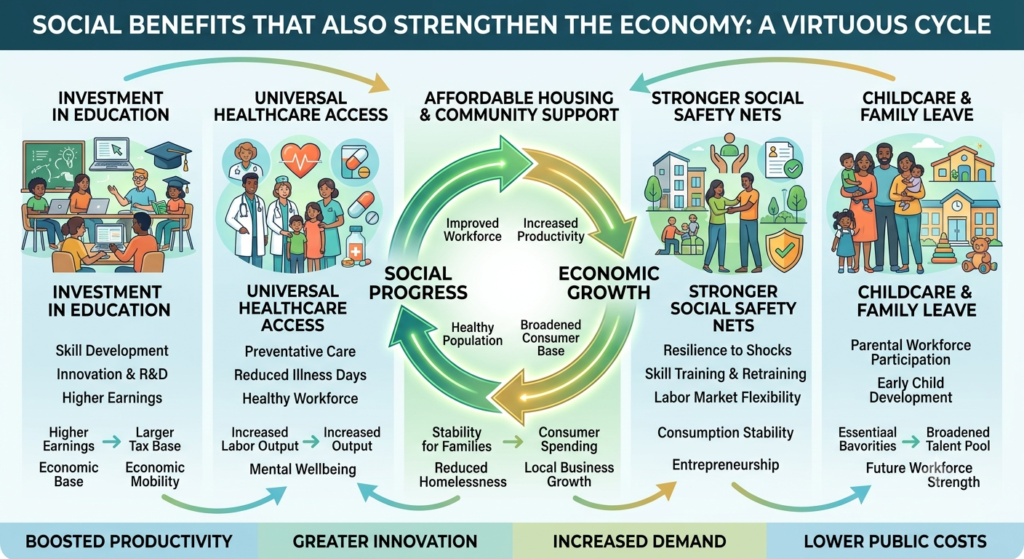
The value of public libraries is not limited to financial savings. They also create social improvements that eventually support economic development.
Some important social benefits include:-
Increasing literacy rates.
Encouraging lifelong learning.
Improving reading habits among children.
Providing safe learning spaces.
Supporting community interaction.
Promoting equal access to knowledge.
Reducing educational inequality.
Encouraging responsible citizenship.
When people become more educated and informed, they make better personal, financial, and professional decisions. Over time, this creates a healthier and more productive economy.
Public Libraries in the Digital Age:-
Public libraries are changing with time. Today, they are not limited to printed books. Many libraries now provide digital services that help people learn in faster and smarter ways. Readers can access e-books, online journals, digital newspapers, educational videos, and research materials using computers or mobile devices. Some libraries also organize workshops on computer skills, financial literacy, communication, and career development.
This transformation has increased the economic value of libraries because they now prepare people for the modern job market. A library is becoming a complete learning centre where traditional knowledge and digital education work together.
Challenges Faced by Public Libraries:-
Although public libraries offer many benefits, they still face several challenges that reduce their overall impact.
Limited Funding:-
Many libraries do not receive enough financial support to buy new books, improve technology, or maintain buildings. As a result, readers may not always find updated learning materials.
Lack of Awareness:-
Many people believe that libraries are useful only for students. In reality, libraries benefit people of every age by supporting learning, employment, business, and personal development.
Technology Gap:-
Some libraries still have limited internet facilities or a small number of computers. In today’s digital world, improving technological infrastructure has become essential.
Low Reading Habits:-
The growing use of social media and entertainment platforms has reduced the habit of reading books among many people. Libraries need creative activities that encourage more visitors, especially young readers.
Examples:-
1:- A Student’s Success
A school student from a low-income family regularly visits a public library after classes. The library provides textbooks, reference books, and internet access for online learning. Without spending extra money, the student performs well in examinations and earns a scholarship for higher education.
2:- A Job Seeker
A graduate who does not own a laptop uses the computers available in a public library to prepare a resume, apply for jobs, and attend online skill-development courses. Within a few months, the person secures employment because of improved skills and better preparation.
3:- A Small Business Owner
A local handicraft seller learns digital marketing and basic accounting through books and training sessions available in the public library. After promoting products online, the business reaches more customers and increases its income.
Current Trends in 2026:-
The role of public libraries continues to expand as education and technology become more important.
Some important trends include:–
Growing digital book collections.
Greater focus on computer and digital literacy.
More career guidance and employment support.
Skill-development workshops for youth.
Community learning programmes for children and senior citizens.
Better use of technology for managing library services.
Increased demand for lifelong learning opportunities.
These developments show that libraries are no longer only reading spaces but complete knowledge centres that support economic and social progress.
How Public Libraries Can Become More Effective????
The impact of public libraries can become even stronger through several practical improvements.
Increase investment in digital infrastructure.
Regularly update books and learning resources.
Organize career guidance and entrepreneurship programmes.
Introduce financial literacy and digital skills workshops.
Create children’s reading clubs and community learning activities.
Improve facilities for people with disabilities.
Expand online library membership and digital services.
Encourage partnerships with schools, colleges, and local communities.
These steps will help libraries meet the changing needs of society while increasing their contribution to economic development.
Conclusion:-
Public libraries are much more than places where books are stored. They are centres of education, opportunity, innovation, and community development. By providing free access to knowledge, they reduce educational inequality, improve digital literacy, support employment, encourage entrepreneurship, and strengthen human capital.
Although libraries require public investment, the long-term economic and social returns are far greater than the initial cost. Every student who learns, every job seeker who finds employment, and every entrepreneur who gains knowledge through a public library contributes to a stronger economy.
As the world continues to move towards a knowledge-based economy, public libraries will become even more valuable. Investing in libraries is not simply an investment in books or buildings it is an investment in people, ideas, innovation, and the future. A society that values public libraries creates informed citizens, stronger communities, and sustainable economic growth for generations to come.