
eCommerce Growth in India:- How Online Shopping is Changing Our Daily Life
Introduction:-
In the last few years, I have noticed a big change in the way people around me shop. Earlier, going to the market was a regular habit. Weekends meant crowded shops, bargaining, and carrying shopping bags home. But today, things are different. Now most people simply open an app on their phone, scroll through products, compare prices, and place an order within minutes.
eCommerce in India is not just growing as a business sector; it is changing lifestyles. From metro cities to small towns, online shopping has become common. In this article, I will explain how eCommerce is growing in India, what factors are supporting this growth, what the current situation looks like in 2026, and what we can expect in the future.
Present Situation of eCommerce in India (2026):-
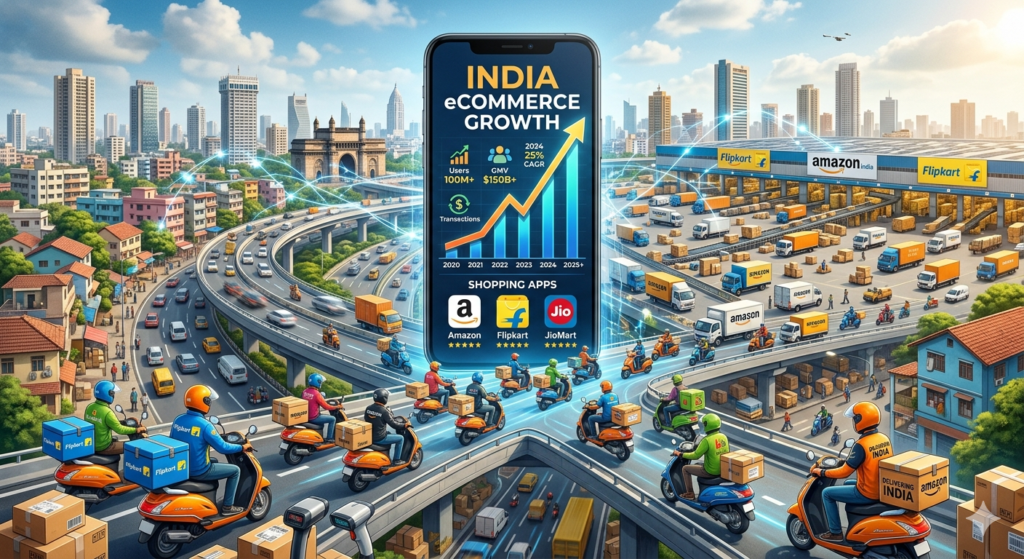
As of 2026, India’s eCommerce market is estimated to be around 125 to 130 billion US dollars. This number clearly shows how fast the sector is expanding. Just a few years ago, the market size was much smaller. Experts believe that if this speed continues, the market could cross 300 billion US dollars by 2030.
India is now counted among the fastest-growing digital markets in the world. Every year, millions of new users start shopping online. What makes this growth special is that it is not limited to big cities anymore. Smaller towns and semi-urban areas are contributing a large share of new customers.
Why eCommerce is Growing So Fast????
There are many reasons behind this rapid growth. Let us understand them in simple words.
1. Affordable Internet and Smartphones:-
One of the biggest reasons is cheap internet. India offers some of the lowest mobile data costs globally. Because of this, even middle-class and rural families can afford internet services.
At the same time, smartphones have become more affordable. Almost every young person today owns a smartphone. With easy access to shopping apps, people can buy products anytime and from anywhere.
2. Easy Digital Payment Options:-
Online payments have become very simple. Systems like UPI and digital banking allow instant money transfer. People no longer feel afraid of paying online. Transactions are fast, secure, and convenient.
Cash on delivery is also available, which increases trust among first-time buyers. Over time, as people gain confidence, they shift to full digital payments.
3. Improved Delivery and Logistics:-
Earlier, delivery services were limited to big cities. Now, companies have built strong logistics networks across the country. Products can reach small towns within a few days.
In metro cities, same-day and next-day delivery options are common. Recently, quick commerce services have started delivering groceries within 10 to 30 minutes in many urban areas. This level of speed attracts more customers.
4. Attractive Discounts and Festival Sales:-
Another major reason for growth is discounts. Online platforms regularly offer sales during festivals and special events. Customers can compare prices easily and choose the best deal.
Many times, products are available online at lower prices compared to physical stores. This price advantage encourages more people to shop digitally.
Growth in Tier 2 and Tier 3 Cities:-
One of the most interesting trends is the rise of online shopping in smaller cities. Earlier, metro cities dominated online orders. But now, more than half of new customers are coming from Tier 2 and Tier 3 cities.
People in small towns now trust online platforms. Regional language support on apps has also helped. When customers can browse in their own language, they feel more comfortable placing orders.
This shift shows that digital awareness is spreading across the country, not just in big urban areas.
Most Popular Online Categories:-
Different types of products are growing at different speeds.
Fashion and clothing remain the most popular category.
Mobile phones and electronics have strong demand.
Grocery delivery has grown significantly after the pandemic years.
Beauty and personal care products are also increasing in demand.
Home appliances and furniture sales are expanding online.
In my opinion, grocery delivery is one of the biggest changes because earlier people preferred buying daily essentials from nearby shops. Now even vegetables and milk are ordered online.
Support for Small Businesses and Startups:-
eCommerce growth is not only benefiting customers but also small sellers. Earlier, a small shop owner could sell only within their local area. Now, with online platforms, even a small business can reach customers across India.
Home-based entrepreneurs, handicraft makers, and small manufacturers are using digital platforms to grow their income. This has increased employment and encouraged new startups.
It also reduces the need for heavy investment in physical stores. A seller can start with a small budget and grow gradually.
Government Initiatives and Digital Push:-
Government efforts to promote digital systems have also supported eCommerce growth. Better internet connectivity in rural areas and strong digital payment systems have made online trade easier.
Programs encouraging startups and digital businesses have created a positive environment for growth. As digital awareness increases, more people feel confident using online services.
Challenges That Still Need Attention:-
Even though the sector is growing rapidly, some problems still exist.
Managing product returns increases costs for companies.
Delivery in very remote areas is still difficult.
Online fraud and data privacy issues remain concerns.
Heavy competition reduces profit margins for businesses.
Companies are working on better technology, stronger security systems, and improved supply chains to handle these challenges.
Employment Opportunities:-
The growth of eCommerce has created many job opportunities. Jobs are available in warehousing, packaging, delivery services, customer support, digital marketing, and technology development.
Many young people are working as delivery partners or in logistics services. This sector has provided income opportunities for lakhs of families.
Future Outlook of eCommerce in India:-
Looking at the current trend, the future appears very bright.
In the coming years, we can expect:-
Faster delivery systems using automation and AI
More personalized shopping experiences
Growth in rural online markets
Expansion of cross-border trade
More eco-friendly packaging solutions
India has a young population and increasing income levels. As digital literacy improves, online shopping will become even more common.
My Personal View:-
In my opinion, eCommerce has made life easier and more convenient. It saves time, offers more choices, and allows price comparison. However, traditional markets will not disappear completely. Many people still enjoy offline shopping experiences.
The real future may be a balance between online and offline shopping, where customers choose according to their needs.
Conclusion:-
To conclude, eCommerce growth in India represents a major shift in the retail system. With a market size already above 125 billion dollars and strong growth expected in the coming years, the sector is moving forward rapidly.
Affordable internet, easy digital payments, better delivery networks, and strong customer demand are the main drivers of this expansion. At the same time, small businesses and job seekers are also benefiting from this digital transformation.
Although some challenges remain, the overall direction is positive. India is steadily moving toward a more digital economy, and eCommerce is playing a central role in this journey.
In simple words, online shopping is no longer just an option – it has become an important parts of modern indian life.