
Why Do We Never Have Enough?????
Think about your daily life for a moment. Every morning, we use water, electricity, fuel, food, internet, and transportation. These things make our lives comfortable, but have you ever wondered what would happen if one of them suddenly became unavailable?????
Imagine a city where water is supplied only for a few hours every day. People would start storing water, businesses would face difficulties, and farmers would worry about their crops. This is a simple example of resource scarcity.
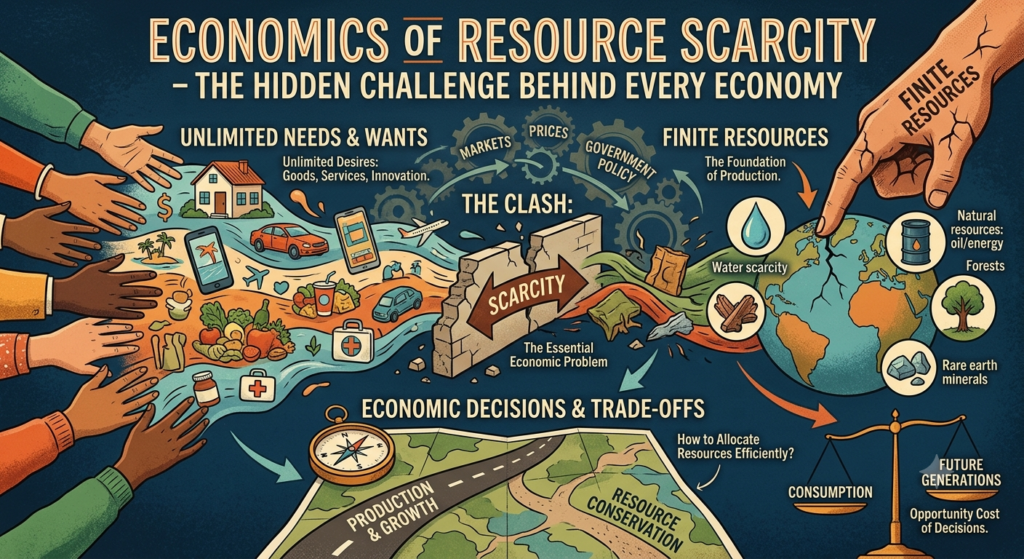
Resource scarcity is not only about running out of natural resources. It is about making choices because the resources we have are limited, while our needs continue to grow. This simple idea is the foundation of economics and affects every country, business, and family.
What Is Resource Scarcity????
Resource scarcity means that the available resources are not enough to satisfy all human wants at the same time.
Resources include everything that helps produce goods and services.
Some important resources are:-
Natural resources like water, forests, land, sunlight, coal, oil, and minerals.
Human resources such as workers, teachers, doctors, engineers, and skilled professionals.
Capital resources like factories, machines, roads, and technology.
Financial resources including money, savings, and investments.
Because these resources are limited, people cannot have everything they want. They must decide what is more important and what can wait.
This is why economics is often called the science of making choices.
Why Does Resource Scarcity Exist?????
Scarcity is not created by only one reason. Many factors work together to increase this challenge.
1. Human Wants Never End:-
As people earn more money, they also expect a better lifestyle.
Today people want:-
Better healthcare
Better education
Bigger homes
Faster internet
Modern technology
Comfortable transportation
New wants keep replacing old ones, but available resources do not increase at the same speed.
Example:-
A student may want a laptop, smartphone, coaching classes, books, and online courses at the same time. However, if the family’s budget is limited, all these needs cannot be fulfilled together.
2. Natural Resources Are Limited:-
Many natural resources take thousands or even millions of years to form.
Coal, petroleum, natural gas, and several minerals cannot be replaced quickly after they are used.
If these resources are consumed without proper planning, future generations may face serious shortages.
This is why responsible use of natural resources has become an important economic goal.
3. Population Is Growing Faster Than Resources:-
The world’s population continues to increase, and every new person needs food, water, electricity, housing, education, healthcare, and employment.
As demand grows, pressure on resources also increases.
More people mean:-
Higher food demand
Greater electricity consumption
More vehicles on roads
More houses to build
More industries to support
If production cannot keep up with demand, scarcity becomes more visible.
4. Climate Change Is Making Resources Less Reliable:-
Climate change is changing rainfall patterns, increasing temperatures, and creating more frequent floods and droughts.
These changes reduce agricultural production and affect water availability.
Farmers often face crop losses because weather conditions have become less predictable.
As food production becomes difficult, prices can rise, creating economic pressure on households.
5. Unequal Distribution of Resources:-
Resources are not equally available everywhere.
Some countries have large oil reserves.
Some have fertile agricultural land.
Others depend heavily on imports because they lack important natural resources.
Even within a country, one region may have enough water while another faces shortages throughout the year.
This unequal distribution creates economic differences between regions.
The Biggest Economic Question:- How Should Limited Resources Be Used?????
Every family, business, and government faces one common challenge-
How can limited resources satisfy unlimited needs????
Because resources are scarce, difficult decisions must be made every day.
Governments decide whether more money should go to education, healthcare, defence, or infrastructure.
Businesses decide whether to invest in new technology or hire more workers.
Families decide whether to save money, buy a vehicle, renovate their home, or invest in children’s education.
Every decision involves giving up another opportunity.
This is the real economic impact of scarcity.
Resource Scarcity Around Us:-
Many people believe scarcity is only about oil or minerals.
In reality, it exists everywhere.
Some common examples include:-
A family planning monthly expenses with a limited salary.
Students managing limited study time before examinations.
Water shortages during summer.
Long traffic jams because road space is limited.
Electricity demand increasing during heat waves.
Hospitals facing a shortage of doctors in remote areas.
These examples prove that scarcity is not just an economic theory-it is a part of everyday life.
Current Situation (2026):-
In today’s world, resource scarcity has become an even bigger concern.
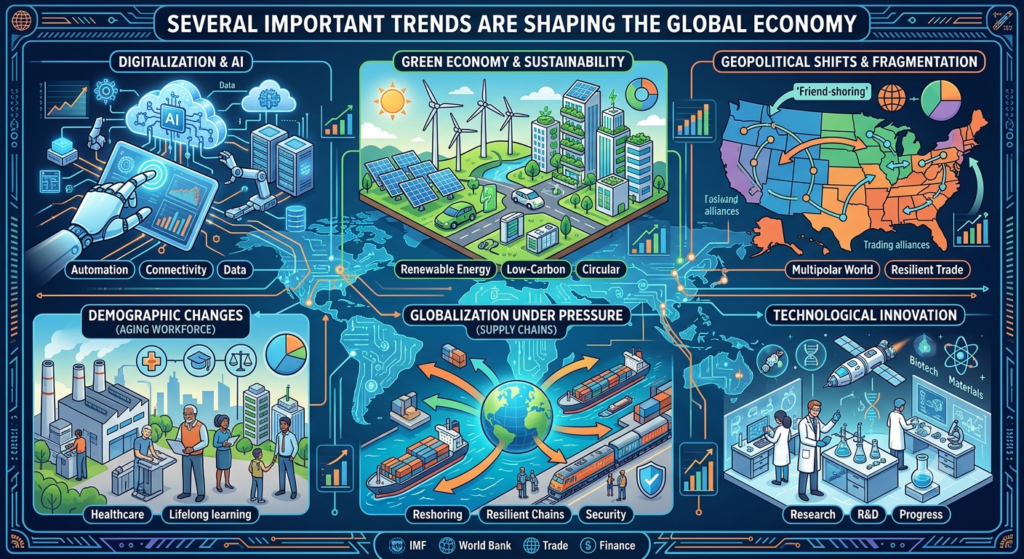
Several important trends are shaping the global economy:-
Demand for electricity continues to rise because of digital technology and industrial growth.
Clean drinking water has become more valuable in many regions.
Demand for critical minerals used in electric vehicles, batteries, and renewable energy systems is increasing rapidly.
Many countries are investing in renewable energy to reduce dependence on limited fossil fuels.
Sustainable use of resources has become an important part of long-term economic planning.
These developments show that resource scarcity is no longer only an environmental issue. It is now one of the biggest economic challenges of the modern world.
How Resource Scarcity Affects the Economy????
Resource scarcity influences every economic activity. From the price of vegetables in a local market to the cost of fuel and electricity, scarcity affects both producers and consumers.
1. Prices Start Rising:-
When the supply of a resource becomes limited but demand remains high, prices usually increase.
For example, if rainfall is poor and crop production falls, fruits and vegetables become more expensive. Families then have to spend a larger part of their income on food.
This shows how scarcity directly affects the cost of living.
2. Production Becomes More Expensive:-
Factories need electricity, fuel, machines, workers, and raw materials to produce goods.
If any of these resources become scarce, production costs increase. Businesses may reduce production or increase product prices to recover their expenses.
As a result, consumers often pay more for everyday products.
3. Economic Growth Can Slow Down:-
Every country wants faster economic growth, but growth depends on the availability of resources.
If industries face shortages of energy, water, skilled workers, or raw materials, production slows down. This can reduce investment, lower employment opportunities, and affect overall economic development.
4. Scarcity Encourages Innovation:-
Scarcity is not always negative. It also pushes people to think creatively.
When resources become expensive or limited, businesses look for smarter and more efficient solutions.
Examples are:-
Using solar and wind energy instead of only fossil fuels.
Developing water-saving irrigation systems.
Recycling materials instead of producing everything from new resources.
Building energy-efficient homes and factories.
Innovation helps economies produce more while using fewer resources.
Examples of Resource Scarcity
Example 1:- Water Conservation
A farmer changes from traditional flood irrigation to drip irrigation. The new method uses much less water while producing almost the same amount of crops.
This saves water, reduces costs, and improves productivity.
Example 2:- Household Budget
A family has a fixed monthly income. After paying for rent, food, education, and electricity, very little money remains for entertainment.
The family must decide which expenses are necessary and which can be delayed.
This is resource scarcity at the household level.
Example 3:- Renewable Energy
Many homes now install solar panels to reduce electricity bills. Although the initial investment is higher, dependence on limited fossil fuels decreases over time.
This is an example of using technology to reduce the effects of scarcity.
Current Economic Trends (2026):-
The world economy is changing quickly, and resource management has become more important than ever.
Some major developments include:-
Countries are investing more in renewable energy projects.
Water conservation has become a national priority in many regions.
Demand for minerals used in electric vehicles and battery technology continues to grow.
Industries are adopting modern technology to reduce waste and improve efficiency.
Sustainable development has become an important part of economic planning for long-term growth.
These trends show that future economic success will depend not only on producing more but also on using resources wisely.
How Governments Can Reduce Resource Scarcity???
Governments play an important role in managing limited resources.
Some effective measures include:-
Promoting renewable sources of energy.
Protecting forests and natural ecosystems.
Improving water conservation through better infrastructure.
Investing in education and skill development.
Encouraging scientific research and technological innovation.
Supporting recycling and waste management.
Creating policies that promote sustainable production and responsible consumption.
Good planning helps balance economic growth with environmental protection.
What Can Individuals Do????
Resource conservation is not only the government’s responsibility. Every individual can make a difference through small daily actions.
Some simple steps are:-
Switch off lights and electrical appliances when not in use.
Use water carefully and avoid unnecessary wastage.
Reduce the use of single-use plastic.
Recycle paper, metal, and glass whenever possible.
Prefer public transport, cycling, or carpooling.
Buy only what is needed instead of wasting resources.
Learn new skills to improve personal productivity and contribute more effectively to the economy.
Small habits, when followed by millions of people, can create a significant positive impact.
Why Efficient Use of Resources Is the Key to Development????
Economic progress does not depend only on having abundant natural resources. Many successful economies have shown that careful planning, innovation, skilled people, and efficient resource management can create long-term prosperity.
When resources are used wisely:-
Productivity increases.
Waste decreases.
Businesses become more competitive.
Living standards improve.
Future generations receive a healthier environment and stronger economy.
Efficient resource management is therefore one of the strongest foundations of sustainable development.
Conclusion:-
Resource scarcity is a reality that every economy must face. Human wants continue to grow, but natural, financial, and human resources remain limited. Because of this, making the right choices becomes essential.
Instead of seeing scarcity only as a problem, it should be viewed as an opportunity to improve efficiency, encourage innovation, and promote responsible decision-making. Governments, businesses, and individuals all share the responsibility of protecting valuable resources.
A successful economy is not the one that consumes the most resources. It is the one that uses its available resources in the smartest and most sustainable way. As the world moves toward a future focused on sustainability and innovation, understanding the economics of resource scarcity will become even more important for economic stability, environmental protection, and long-term human well-being.