
Introduction:-
The retail industry has changed rapidly in recent years. Earlier, most people depended on local markets, supermarkets, and shopping malls for shopping. Today, customers can order products online within minutes using smartphones and laptops. Because of this change, online retail and offline retail have become two major parts of the modern economy.
Online retail provides convenience, fast delivery, and digital access, while offline retail offers trust, physical product experience, and direct customer interaction. Both systems are important because they influence employment, business growth, technology, transportation, and consumer spending.
Today, many consumers use both shopping methods according to their needs and preferences.
What is Online Retail
Online retail refers to buying and selling products through the internet. Customers use websites or mobile applications to search for products, compare prices, place orders, and make digital payments. Products are then delivered to their homes.
Online shopping has become very popular because it saves time and offers convenience. Customers can shop anytime without visiting crowded markets.
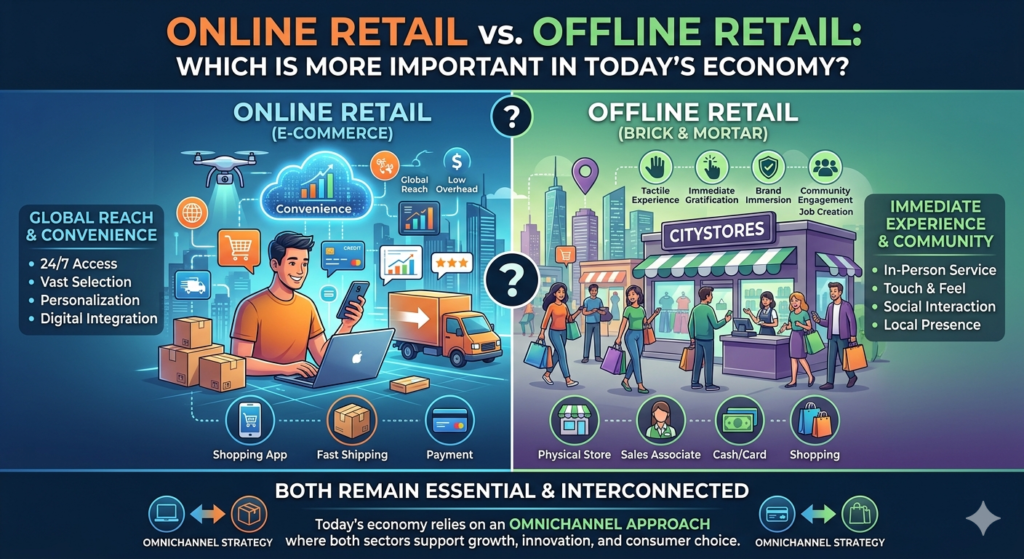
Today, people buy many products online, such as:-
Clothes and footwear
Electronics and mobile phones
Grocery items
Medicines
Books and stationery
Furniture and home products
The growth of smartphones, internet access, and digital payment systems has helped online retail grow rapidly.
Many online companies also use technologies such as artificial intelligence and data analysis to improve customer experience. Customers often receive product suggestions based on their interests and previous searches.
What is Offline Retail
Offline retail is the traditional method of shopping through physical stores, local markets, malls, and supermarkets. Customers personally visit shops, check products directly, and purchase them immediately.
Even after the growth of digital shopping, offline retail remains very important in the economy.
Many people still prefer physical stores because they can inspect products before purchasing them.
For example:-
Customers often try clothes before buying.
Furniture buyers prefer checking quality physically.
Grocery shoppers like selecting fresh products themselves.
Jewelry customers usually trust direct inspection more than online images.
Offline shopping also provides a social experience because families and friends often enjoy visiting markets together.
Growth of Online Retail:-
Online retail has become one of the fastest-growing sectors in the world economy.
Current market trends show that online shopping continues to increase every year because customers prefer faster and easier shopping options.
Online grocery delivery services, fashion shopping, and electronics sales have especially grown in urban areas.
Festival sales and discount offers also attract millions of customers. Many people wait for online sales because products are often available at lower prices.
Social media has also increased online shopping growth. Customers now discover products through advertisements, videos, and influencer promotions.
During recent health emergencies, online shopping became even more popular because people preferred home delivery instead of visiting crowded places.
Why Offline Retail Still Matters???
Even though online retail is growing quickly, offline retail still plays a major role in the economy.
One important advantage of offline shopping is instant product availability. Customers can take products home immediately without waiting for delivery.
Offline retail also creates strong customer trust because buyers can physically inspect products before making payments.
Traditional retail is especially important in rural and semi-urban areas where internet access is still developing.
Local stores and markets also create employment opportunities for millions of people, including:-
Sales workers
Street vendors
Shop owners
Security staff
Transport workers
Many small shops provide personalized customer service, which increases customer loyalty.
Major Differences Between Online and Offline Retail:-
Online retail mainly depends on internet technology, while offline retail depends on physical stores.
In online shopping, customers order products digitally and wait for delivery. In offline shopping, customers can inspect products personally and purchase them instantly.
Online shopping is available twenty-four hours a day, while offline stores operate during fixed business hours.
Online platforms usually provide a wider variety of products because they are not limited by physical store space. Offline stores may offer limited stock depending on storage capacity.
Customer interaction is also different. Online retail mainly uses digital communication, while offline retail provides direct face-to-face interaction.
Another difference is pricing. Online platforms often provide discounts and cashback offers, while offline stores usually have less flexibility because of higher operating costs.
(Advantages of Online Retail)
1. Convenience and Time Saving:-
Customers can shop anytime from anywhere.
2. Large Product Variety:-
Online platforms offer products from many brands and categories.
3. Easy Price Comparison:-
Consumers can compare prices quickly and choose better deals.
4. Attractive Discounts:-
Online sales, cashback offers, and coupons attract customers.
5. Home Delivery Services:-
Products are delivered directly to customers’ homes.
(Disadvantages of Online Retail)
1. Delivery Delays:-
Shipping delays sometimes create customer dissatisfaction.
2. Risk of Fraud:-
Fake websites and online scams remain major concerns.
3. No Physical Inspection:-
Customers cannot touch or test products before purchasing.
4. Return Problems:-
Returning damaged or incorrect products may take time.
(Advantages of Offline Retail)
1. Physical Product Checking:-
Customers can inspect quality directly before buying.
2. Instant Purchase:-
Products can be taken home immediately.
3. Better Customer Trust:-
Face-to-face interaction increases confidence.
4. Personalized Service:-
Shopkeepers can guide customers directly.
5. Supports Local Economy:-
Offline retail creates employment and supports small businesses.
(Disadvantages of Offline Retail)
1. Limited Product Availability:-
Stores may not always have every product or size.
2. Higher Operating Costs:-
Rent, salaries, and maintenance increase business expenses.
3. Time Consumption:-
Traveling and shopping physically often takes more time.
4. Limited Shopping Hours:-
Customers cannot shop at all times.
Economic Impact of Online and Offline Retail:-
Both online and offline retail contribute significantly to economic growth.
Online retail has created jobs in:-
Delivery services
Warehousing
Packaging
Digital marketing
Customer support
At the same time, offline retail remains one of the largest employment sectors in many countries.
Retail businesses also contribute to government revenue through taxes and commercial activities.
Competition between online and offline retail has improved product quality, customer service, and pricing strategies.
Technology and Future Trends:-
Technology is transforming both online and offline retail.
Online businesses now use:-
Artificial intelligence
Personalized recommendations
Automated warehouses
Data analysis systems
Offline stores are also improving through:-
Digital billing systems
Contactless payments
Loyalty programs
Smart inventory management
Many businesses now combine both systems through hybrid retail models.
For example, customers can order products online and collect them from stores.
Experts believe this hybrid retail system may become the future of the retail industry.
Conclusion:-
Online retail and offline retail are both important parts of the modern economy. Online shopping provides convenience, speed, and wider product choices, while offline shopping offers trust, direct interaction, and physical product experience.
Instead of replacing each other completely, both systems are growing together according to customer needs.
The future of retail will depend on technology, customer satisfaction, and business adaptability. Companies that successfully combine online convenience with offline trust are likely to succeed in the coming years.
Today, retail is not only about selling products. It has become an important industry influencing employment, technology, business growth, and economic development across the world.