
Urbanization and Its Impact on the Economy
Urbanization is a major change that is shaping the modern world. It means the movement of people from villages to cities in search of better opportunities. In countries like India, this process is happening very fast. Urbanization is not only about people shifting places, but it also plays a very important role in economic development.
At present, around 35% of India’s population lives in urban areas, and this is expected to reach nearly 40% by 2030. At the global level, more than 55% of people already live in cities, and this number may increase to about 68% by 2050. Despite having a smaller share of population, Indian cities contribute nearly 65–70% of the total GDP, which clearly shows their importance in the economy.
Why Urbanization is Growing So Fast????
The main reason behind urbanization is better economic opportunities. In rural areas, most people depend on agriculture, which often gives low and uncertain income due to factors like weather and market prices. On the other hand, cities provide jobs in industries, offices, shops, and services.
For example, many people from states like Bihar and Uttar Pradesh move to cities like Delhi, Mumbai, and Bengaluru to work in construction, factories, or service jobs. These jobs may not be perfect, but they usually provide more income than farming.
Another reason is better facilities. Cities offer good schools, hospitals, transport, and internet services. Young people especially move to cities because they want a better career and lifestyle.
How Urbanization Helps Economic Growth????
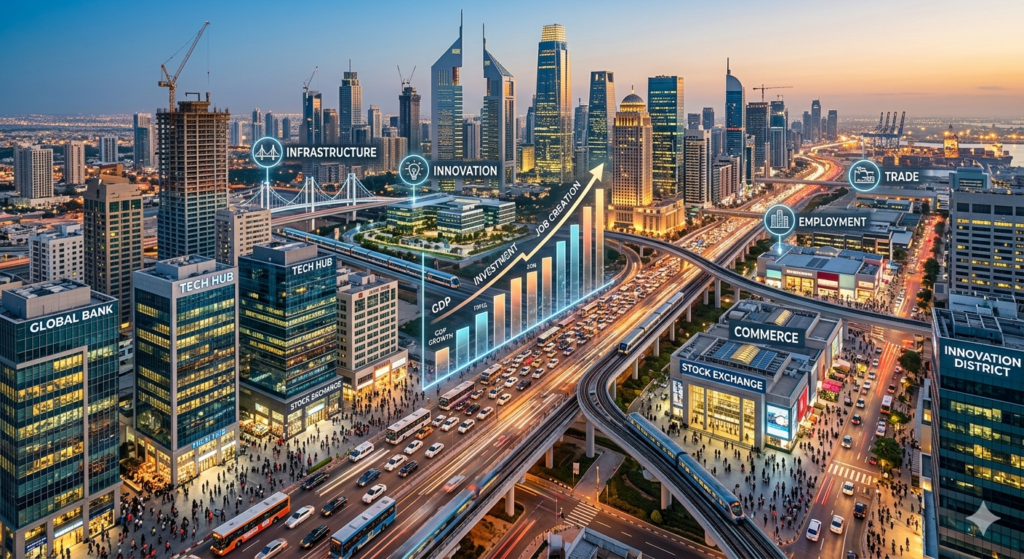
Urbanization is a strong engine of economic growth. When people move to cities, the demand for goods and services increases. This leads to higher production and business expansion.
Industries grow faster in cities because they get better infrastructure like roads, electricity, and transport. For example, cities like Pune and Chennai have become major industrial hubs, attracting both national and international companies.
Urbanization also creates jobs. Construction of buildings, roads, and metro systems provides employment to many workers. At the same time, growth in markets, malls, and online delivery services creates jobs in retail and logistics.
Growth of the Service Sector:-
One of the biggest benefits of urbanization is the growth of the service sector. Today, the service sector contributes more than 50% of India’s GDP, and most of it is concentrated in urban areas.
Cities like Bengaluru, Hyderabad, and Gurugram are known for IT and corporate jobs. The IT industry alone employs millions of people and contributes significantly to exports.
For example, a young graduate from a small town can move to Bengaluru and work in a software company, earning much more than what they could earn in their village. This not only improves their life but also supports the overall economy.
Rise in Income and Spending:-
Urbanization increases income levels. People working in cities generally earn more, which increases their spending capacity. They spend more on housing, food, transport, education, and entertainment.
For example, the rise of food delivery apps, online shopping, and ride services in cities shows how urban demand is growing. This increased consumption supports businesses and creates more jobs.
This cycle of earning and spending helps in continuous economic growth.
Innovation and Better Productivity:-
Cities are centers of innovation. People from different backgrounds come together, share ideas, and create new solutions. This leads to the development of new technologies and businesses.
For example, many successful startups in India started in urban areas where founders had access to resources, funding, and skilled workers.
Urban workers are also more productive because they use modern machines, better technology, and have access to training. Higher productivity means more output, which benefits the economy.
Problems Created by Urbanization:-
Even though urbanization has many advantages, it also creates serious challenges.
One major problem is unemployment. Not everyone who moves to the city gets a good job. Many people end up working in informal sectors like street vending or daily wage labor, where income is low and uncertain.
Another big issue is slums. Around 17% of India’s urban population lives in slum areas. These areas have poor housing, lack of clean water, and bad sanitation. This affects people’s health and reduces their ability to work properly.
For example, in cities like Mumbai and Delhi, many workers live in crowded slum areas due to high rent. This shows the gap between income and living cost.
Pressure on Infrastructure:-
Urbanization puts heavy pressure on city infrastructure. Roads become crowded, public transport becomes overloaded, and basic services may not meet demand.
Traffic congestion is a common problem in cities. People spend hours traveling, which reduces productivity and wastes fuel.
Water shortage and electricity problems are also common in many urban areas. These issues increase the cost of living and reduce economic efficiency.
Environmental Issues:-
Urbanization also harms the environment. Cities produce a large amount of pollution due to vehicles, industries, and construction activities.
Air pollution is a major problem in cities like Delhi, especially during winter. It affects people’s health and increases medical expenses.
Green spaces are also decreasing due to rapid construction. Trees are cut down to build roads and buildings, which disturbs the natural balance and contributes to climate change.
Growing Inequality:-
Urbanization often increases inequality. Some people earn high salaries and live a comfortable life, while others struggle to meet basic needs.
The cost of living in cities is very high. Rent, food, education, and healthcare are expensive. Poor people find it difficult to survive in such conditions.
This creates a wide gap between rich and poor, which is not good for balanced economic development.
Impact on Rural Areas:-
Urbanization also affects villages. When young people move to cities, villages lose their workforce. This can reduce agricultural production.
However, there is also a positive effect. People working in cities send money back to their families in villages. This improves rural income and supports local development.
For example, a worker in Delhi may send money to their family in the village, which helps in education, healthcare, and daily expenses.
Role of Government:-
Government plays a key role in managing urbanization. Proper planning is necessary to reduce its problems.
Investment in infrastructure like roads, metro systems, and housing is very important. Affordable housing can reduce the growth of slums.
Government should also create job opportunities in rural areas so that people do not migrate unnecessarily.
Programs related to smart cities, digital services, and public transport can improve urban living and support economic growth.
Sustainable Urbanization:-
Urbanization should be sustainable for long-term development. This means growth should happen without harming the environment.
Use of renewable energy, proper waste management, and protection of green spaces are necessary.
Public transport should be improved so that people use buses and metro instead of private vehicles. This will reduce pollution and traffic.
Sustainable cities are not only better for the environment but also more efficient economically.
Conclusion:-
Urbanization is a powerful force that drives economic growth. It increases production, creates jobs, improves income, and promotes innovation. At the same time, it brings challenges like unemployment, pollution, inequality, and pressure on resources.
The future depends on how well urbanization is managed. With proper planning, investment, and policies, its benefits can be increased and its problems can be controlled.
In simple words, urbanization is an opportunity for growth. If handled properly, it can improve both the economy and people’s quality of life. But if ignored, it can create serious social and economic problems.