
Rural Development vs Growth in India
If you ever sit in a train and travel from a big city to a rural area in India, you will notice the change slowly. Tall buildings turn into small houses, highways turn into narrow roads, and busy markets turn into quiet fields. This journey itself explains a big reality of India – the country is growing fast, but development is not equal everywhere.
India today is one of the fastest-growing economies in the world. In 2023–24, the growth rate was around 7–8%, which is considered very strong. Cities are expanding, new companies are opening, and technology is improving daily life. But when we compare this with rural areas, we see that progress is slower and uneven. This difference is what we call the gap between economic growth and rural development.
What is Economic Growth????
Economic growth means an increase in the total income of a country. It is measured through GDP. When GDP increases, it shows that more goods and services are being produced.
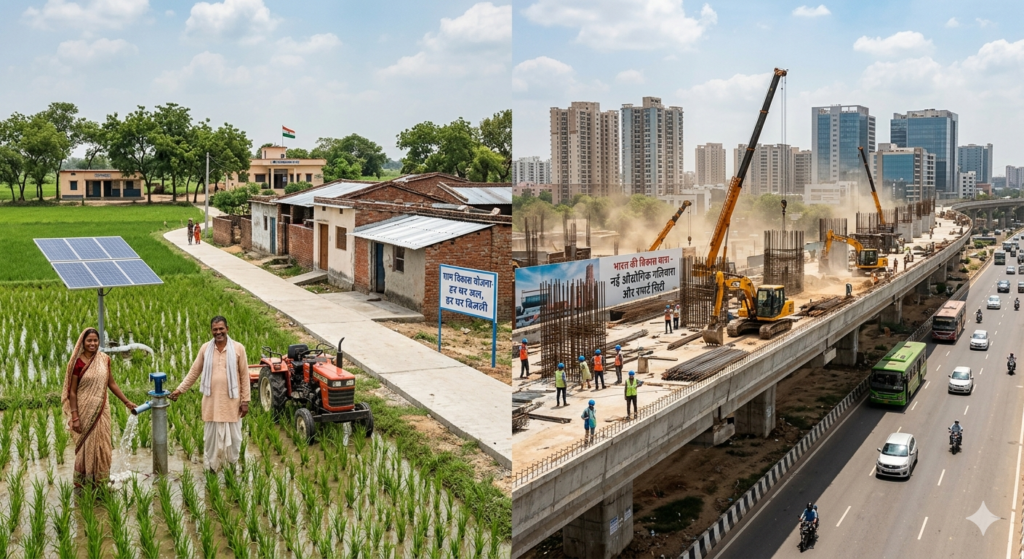
In India, growth mainly comes from:-
Service sector like IT, banking, and communication
Industries and manufacturing
Urban businesses and startups
Today, the service sector contributes more than 50% of India’s GDP, while agriculture contributes only about 15–16%. This clearly shows that most growth is happening in areas connected to cities.
Growth leads to better income, more jobs in certain sectors, and improved infrastructure. But it does not show whether people in villages are living better lives.
What is Rural Development????
Rural development is about improving the daily life of people living in villages. It focuses on both economic and social progress.
It includes:-
Roads, electricity, and transport
Clean drinking water and sanitation
Schools and healthcare services
Job opportunities
Better housing and living standards
For example, if a village gets a good road, farmers can sell their crops easily, students can reach school on time, and medical help becomes accessible. This is real development.
So, economic growth increases income, but rural development improves life.
India’s Rural Reality:-
Even today, India is largely rural. Around 64–65% of the population lives in villages. However, their share in income is much smaller.
Around 40–45% of people depend on agriculture for work
But agriculture contributes only 15–16% to GDP
This means many people are working in a sector where income is low. Because of this, rural families often earn less than urban families.
In fact, average income in cities is usually 2–3 times higher than in villages. This creates inequality and shows that growth has not been shared equally.
At the ground level, rural areas still face:-
Limited job options
Dependence on farming
Lower quality of education and healthcare
Less developed infrastructure
A Simple Real-Life Example
Imagine a student in a city attending online classes with fast internet, while a student in a village struggles with poor network or no device. Both are equally capable, but opportunities are different.
Or think about a farmer who grows vegetables but cannot sell them at a good price because there is no proper transport. At the same time, the same vegetables are sold at high prices in cities.
These examples show that growth is happening, but development is not reaching everyone equally.
Positive Changes in Rural India:-
It is also important to see the positive side. Rural India has changed a lot in recent years.
Most villages now have electricity connections
Road networks have improved
Mobile phones are widely used
Housing and sanitation facilities have improved
Digital services are also reaching villages. People now use:-
Online payments
Mobile banking
Internet for education and information
For example, many farmers check weather updates and market prices on their phones before selling crops. This helps them make better decisions.
Women in villages are also becoming more active. Many are running small businesses like stitching, food preparation, or local shops. This is improving both income and confidence.
Why Growth Does Not Ensure Development???
Economic growth does not automatically lead to rural development because growth is often limited to certain sectors and regions.
For example:-
IT companies create jobs mainly in cities
Big industries are located near urban areas
High-paying jobs require skills that many rural people do not have
So, even if the economy grows, rural areas may not benefit directly.
Another example is infrastructure. A new airport or metro system increases growth, but it mainly benefits cities. Villages far away do not gain much from it.
This is why growth can increase overall income but still leave some areas behind.
Why Rural Development is Important???
Rural development is necessary for the country’s overall progress.
1. Reducing Migration:-
Many people move from villages to cities for jobs. This creates overcrowding and pressure on urban areas.
2. Reducing Inequality:-
Development in rural areas can reduce the income gap between different regions.
3. Using Full Potential:-
Rural youth have talent and energy. With proper education and opportunities, they can contribute more.
4. Balanced Growth:-
A country cannot grow fully if a large part of its population is left behind.
New Opportunities in Villages:-
Rural India is slowly changing with new types of opportunities.
Small businesses are increasing
Local services are growing
Digital work is becoming possible
For example, many young people in villages now work as delivery agents, mobile repair workers, or online sellers. These jobs were not common earlier.
Another example is farmers selling products directly through digital platforms, which helps them earn better prices.
These changes show that rural areas have strong potential if given proper support.
Challenges That Still Exist:-
Despite progress, several challenges remain:-
Lack of regular employment
Dependence on farming and weather conditions
Poor quality of education and healthcare
Weak implementation of policies
Differences in development between regions
These problems slow down rural development and increase the gap with urban areas.
What Needs to Be Done????
To connect growth with development, India needs to focus on:-
Better education and skill development in villages
More job opportunities beyond agriculture
Strong healthcare systems
Effective implementation of policies
Promotion of modern farming techniques
Improved digital access and awareness
Development should aim to make villages independent and capable.
Conclusion:-
India is growing fast, but growth alone is not enough. True progress means improving the lives of all people, not just increasing income.
Today, cities are moving ahead quickly, while villages are improving slowly. The goal should be to reduce this gap and ensure that development reaches every corner of the country.
Real success will come when:-
Rural and urban people have equal opportunities
Basic facilities are available everywhere
Income differences are reduced
In simple words, economic growth makes the country stronger, but rural development makes people’s lives better.
For India to become truly developed, both must go together – so that progress is shared by every village, every family, and every individual.