
Introduction:-
A country’s true progress is not only seen in its ideas, but in how well those ideas are supported on the ground. Infrastructure is that support system. It is the invisible force that connects people to opportunities, villages to cities, and dreams to reality.
In India, infrastructure development is no longer a slow and routine process. It has become a dynamic and fast-moving force that is shaping the country’s economic future. From modern highways to digital networks, a silent transformation is taking place across the nation.
Why Infrastructure Matters More Than Ever???
Infrastructure is the base on which all sectors depend. Without it, growth remains limited.
It plays a major role in:-
Increasing speed and efficiency in economic activities
Reducing costs of transportation and logistics
Creating employment at different levels
Improving access to essential services
Supporting industrial and agricultural growth
Today, infrastructure is not just about development; it is about competitiveness in a fast-changing world.
A Shift in India’s Development Approach:-
India has moved from slow and scattered development to a more focused and integrated approach. The emphasis is now on building faster, better, and smarter.
Different sectors like roads, railways, energy, and logistics are being planned together to ensure smooth coordination. Investment levels have increased, and the use of technology has improved project execution.
This shift has made infrastructure development more efficient and result-oriented.
(Key Areas Driving Transformation)
1. Roads and Expressways:-
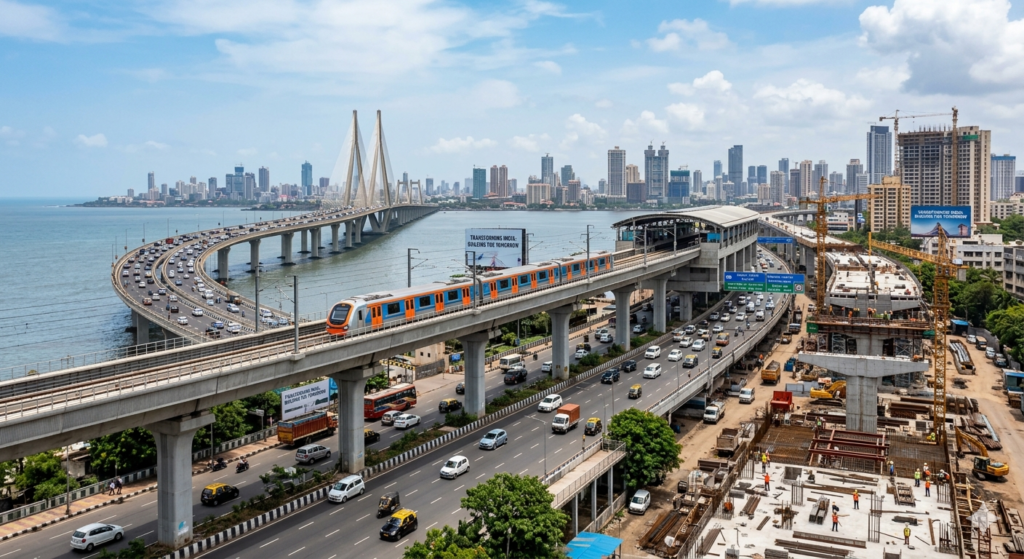
India is witnessing rapid expansion in road infrastructure. High-quality highways and expressways are connecting major economic centers.
Travel that once took long hours is now faster and smoother. Rural roads are also improving, bringing villages closer to markets, schools, and healthcare services.
This has created better mobility and opened new economic opportunities.
2. Railways and Urban Mobility:-
Railways are being modernized with a focus on speed, safety, and comfort. Electrification of tracks has increased efficiency and reduced environmental impact.
At the same time, metro rail systems are expanding in cities, providing a reliable and time-saving mode of transport.
Urban mobility is improving, reducing congestion and making daily life easier for millions.
3. Digital Infrastructure Revolution:-
Digital infrastructure has changed the way people live and work. Internet access has expanded widely, even in remote areas.
Online services, digital payments, and mobile-based solutions have become part of everyday life. People can now access education, banking, and public services from their homes.
This digital reach is empowering individuals and strengthening the economy.
4. Energy and Power Development:-
Reliable energy supply is essential for development. Today, electricity access has reached almost every household, improving living standards.
Renewable energy is growing rapidly, with a strong push towards clean and sustainable sources. This shift is helping reduce environmental pressure while meeting rising energy demands.
Energy infrastructure is becoming both stronger and greener.
5. Urban Infrastructure and Smart Growth:-
Cities are expanding quickly, and infrastructure is evolving to manage this growth.
Efforts are being made to improve public transport, housing, sanitation, and waste management. Smart planning and digital systems are helping cities function more efficiently.
The focus is not just on expansion, but on improving the quality of urban life.
6. Rural Infrastructure and Inclusion:-
True development is incomplete without rural progress.
Better roads, electricity, water supply, and internet access are transforming rural areas. Farmers are getting better market access, and young people are finding new opportunities beyond traditional sectors.
This is helping create a more balanced and inclusive growth pattern.
(A Real-Life Style Example)
Consider a small farmer living in a village that was once poorly connected. Earlier, reaching the nearest market took several hours, and selling produce was difficult.
Now, with improved roads and better transport, the same farmer can reach the market quickly, reduce losses, and earn better income. With mobile internet, they can also check prices and make informed decisions.
This simple change shows how infrastructure directly improves lives.
Role of Investment and Private Participation:-
Infrastructure requires large investment, and both government and private sector are working together to achieve this.
Private participation has increased in areas like transport, energy, and communication. This has brought better technology, faster execution, and improved efficiency.
Such collaboration is helping India build infrastructure at a much larger scale.
(Challenges That Need Attention)
Despite strong progress, some issues remain:-
Land acquisition delays projects
Environmental balance needs careful planning
High costs create financial pressure
Administrative delays slow down execution
Development is not equal across all regions
Addressing these challenges is important for long-term success.
(Emerging Trends and Progress)
India’s infrastructure sector is moving in a positive direction:-
Faster construction and better project management
Improved connectivity across regions
Rapid growth in clean energy
Expansion of digital networks
Better logistics and supply chain efficiency
These trends show that the country is building a strong foundation for future growth.
Impact on Daily Life:-
Infrastructure development is not just about big projects; it changes everyday life.
A student can attend online classes from a remote area
A patient can reach a hospital in time
A business can grow by reaching new markets
A worker can find better job opportunities
It improves both convenience and opportunity.
(The Way Forward):-
To maintain this momentum, the focus should be on:-
Sustainable and eco-friendly development
Use of advanced and smart technologies
Faster and transparent implementation
Encouraging more private investment
Ensuring balanced regional growth
Future infrastructure must be inclusive, efficient, and resilient.
Conclusion:-
Infrastructure development is the backbone of India’s growth journey. It connects people, strengthens the economy, and creates new possibilities.
India has already made strong progress, and the direction is clear. With continued effort, better planning, and innovation, the country can build world-class infrastructure.
This will not only support economic growth but also improve the lives of millions, shaping a future that is more connected, more efficient, and more inclusive.