
Digital Economy Expansion:- A Silent Revolution Changing Everyday Life
A few years ago, standing in long queues, carrying cash, and visiting offices for small tasks was normal. Today, things have quietly changed. With just a smartphone, people can pay bills, order food, attend classes, and even run businesses.
This silent transformation is known as the expansion of the digital economy.
It is not a sudden change, but a continuous shift that is deeply affecting how economies grow and how people live. What makes it powerful is that it is touching every section of society-from big cities to small villages.
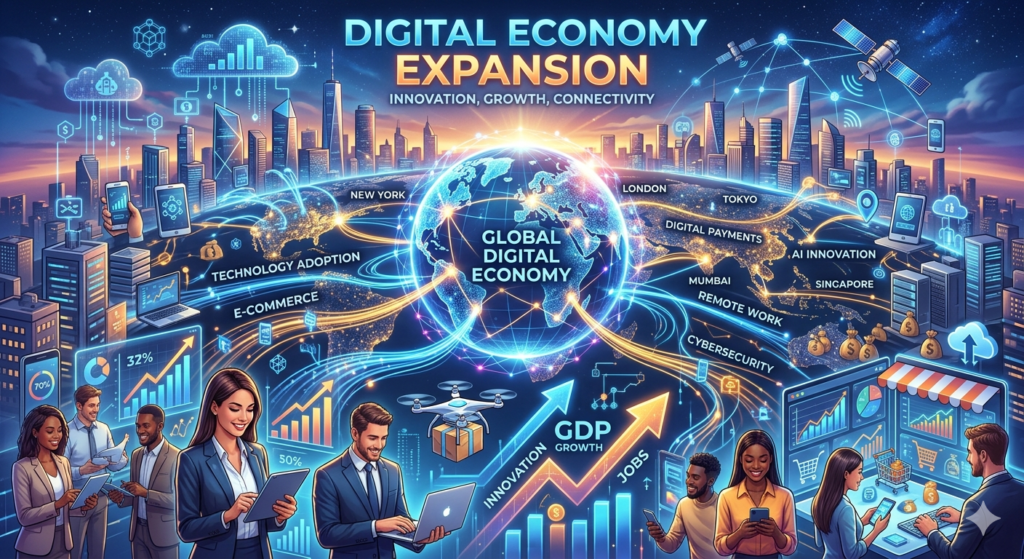
What Exactly is the Digital Economy????
The digital economy simply means all economic activities that depend on digital technology. It is not limited to big tech companies. Even a small shop accepting online payments is part of it.
It includes:-
Buying and selling through online platforms
Using mobile apps for payments and banking
Offering services through the internet
Running businesses through social media
In short, when technology becomes a medium for earning, spending, or managing money, it forms the digital economy.
Why is the Digital Economy Expanding So Fast???
The speed at which the digital economy is growing is remarkable. There are several strong reasons behind this rapid expansion.
One major factor is the easy availability of the internet. Data has become cheaper, and connectivity has improved significantly. This has allowed more people to come online.
Another reason is the rise in smartphone usage. Today, even in rural areas, people have access to mobile devices, which has increased digital participation.
Innovation is also playing a key role. Startups are bringing new ideas and solutions, making digital services more useful and accessible.
At the same time, government efforts to promote digital systems have created a supportive environment for growth.
Digital Payments:- The Backbone of Change
One of the most visible signs of the digital economy is the rise of digital payments. People are slowly moving away from cash and choosing faster and easier payment methods.
This shift is important because digital payments:-
Save time and effort
Provide a record of transactions
Reduce the chances of corruption
Increase financial inclusion
Today, even small vendors and street sellers are accepting payments through mobile apps. This shows how deeply digital systems have entered daily life.
Businesses in the Digital Era:-
The digital economy has completely changed the way businesses function. Earlier, businesses depended on physical presence. Now, they can operate online and reach a much larger audience.
Digital platforms help businesses to:-
Sell products without a physical store
Promote services through online channels
Interact directly with customers
Understand customer behavior using data
This has especially benefited small and medium businesses. With limited resources, they can now compete in larger markets.
New Jobs, New Opportunities:-
As the digital economy expands, it is creating a wide range of new job opportunities. The nature of work is also changing.
Some of the emerging fields include:-
Digital marketing
Data management and analysis
Software and application development
Cybersecurity
Artificial intelligence
Another important change is the rise of remote work. People are no longer restricted by location. They can work for companies across the world while sitting at home.
This has increased opportunities for young people and has made employment more flexible.
The Role of Public Policy and Support:-
The expansion of the digital economy is not happening on its own. It is supported by continuous efforts to improve digital infrastructure and awareness.
Key areas of focus include:-
Expanding internet access in remote regions
Encouraging digital learning
Supporting innovation and startups
Promoting secure digital transactions
These steps are helping in building a strong foundation for long-term digital growth.
Challenges That Need Attention:-
Despite its benefits, the digital economy also faces certain challenges that need to be addressed carefully.
Unequal Access:-
Not everyone has access to digital tools or stable internet. This creates a gap between those who can benefit and those who cannot.
Security Risks:-
With increased online activity, the risk of cyber threats and data breaches is also rising.
Skill Gap:-
Many people still lack the skills needed to use digital technologies effectively.
Privacy Issues:-
As more data is collected, concerns about its misuse are increasing.
Addressing these challenges is important to ensure that growth remains fair and inclusive.
Why Digital Literacy is Essential???
Digital literacy is no longer optional. It is a basic skill required in today’s world.
People need to understand:-
How to use digital devices??
How to make secure online transactions??
How to protect themselves from fraud??
How to access online services??
Improving digital literacy will allow more people to take part in the digital economy and benefit from it.
Possibilities:- What the Future Looks Like??.
The future of the digital economy is full of possibilities. With the development of advanced technologies, its impact will only increase.
Some expected trends include:-
Greater use of artificial intelligence
Expansion of online services and platforms
Growth of digital banking systems
Development of smart infrastructure
Increase in remote and flexible work
These changes will make systems more efficient and improve overall productivity.
Why This Expansion Truly Matters???
The digital economy is not just about convenience. It has a deeper impact on economic and social development.
It helps in:-
Boosting economic growth
Creating employment
Increasing transparency
Encouraging innovation
Connecting people globally
A strong digital economy can improve the quality of life and make growth more inclusive.
Conclusion:-( A Transformation That Will Continue)
The expansion of the digital economy is one of the most important changes of our time. It is reshaping industries, creating new opportunities, and changing the way people interact with the world.
However, for this transformation to be successful, it must be inclusive. Efforts should be made to ensure that everyone, regardless of their background, can benefit from digital growth.
As technology continues to evolve, the digital economy will become even more important. Adapting to this change is not just an option-it is a necessity.
In simple terms, the digital economy is not just growing silently; it is building the foundation of the future.