
Introduction:-
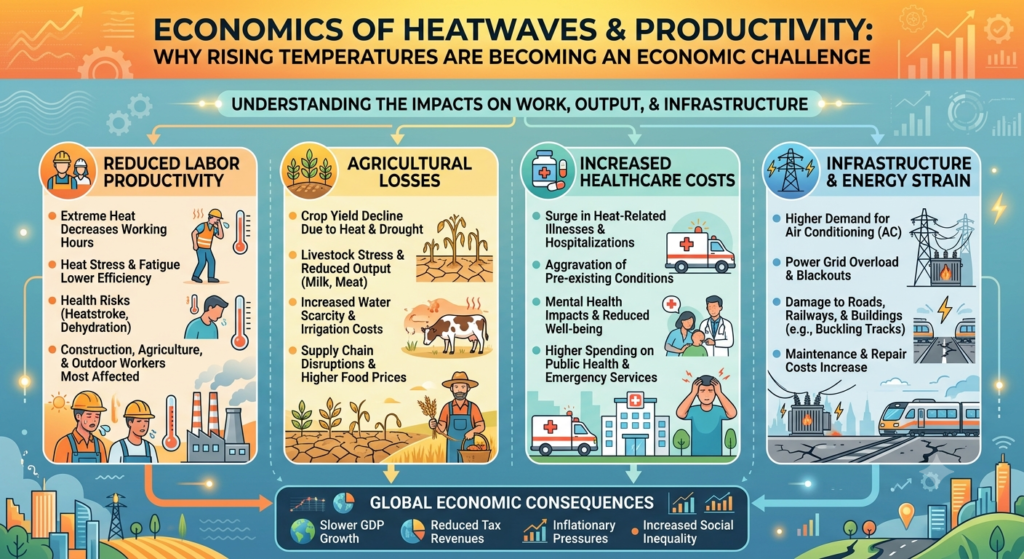
Summer is becoming hotter almost every year. In many places, people now face long heatwaves that make daily life more difficult. Most people think heatwaves only affect health, but they also have a big impact on the economy. When the weather becomes too hot, people cannot work with the same speed and energy. This reduces productivity, increases business costs, and slows down economic growth.
In 2026, heatwaves are becoming a serious concern for many countries because they affect workers, farmers, companies, and even small businesses. The economic impact is no longer limited to one sector. It can be seen in agriculture, construction, transport, tourism, manufacturing, and many other industries.
Understanding this connection helps us see that rising temperatures are not just an environmental issue. They are also an economic challenge that needs attention.
What Does Productivity Mean???
Productivity simply means how much work a person or a business can complete in a certain amount of time.
For example:-
A farmer harvesting more crops in one day has higher productivity.
A factory producing more goods with the same number of workers has better productivity.
An office employee completing more work in regular office hours is also productive.
When extreme heat reduces the amount or quality of work, productivity goes down.
Why Are Heatwaves Becoming More Common????
Many experts believe that rising global temperatures and changing weather patterns are increasing the number of heatwaves. At the same time, growing cities with more concrete buildings and fewer trees make the surroundings even hotter.
Some important reasons are:-
Rising global temperatures
Fast urban development
Less green cover
Increasing pollution
Higher demand for energy
Because of these reasons, many regions now experience longer and stronger heatwaves than before.
How Heatwaves Reduce Productivity????
The human body works best within a comfortable temperature range. When the weather becomes extremely hot, people lose energy more quickly and find it difficult to stay focused.
Some common effects include:-
Workers get tired faster.
Concentration becomes weaker.
More mistakes happen at work.
People need extra breaks.
Physical work becomes harder.
Decision-making becomes slower.
Even people working indoors may feel uncomfortable if cooling systems are not enough.
Example:-
Imagine a road construction project during peak summer.
Normally, workers can continue their work throughout the day. During a heatwave, however, they may have to stop working in the afternoon because of extreme heat. The project then takes more days to complete.
This means:-
Labour costs increase.
Project expenses become higher.
Delivery of the project gets delayed.
Companies may earn lower profits.
A simple increase in temperature can therefore create a chain of economic losses.
Which Workers Face the Biggest Challenge????
Not every job is affected in the same way. People who work outdoors face the highest risk.
(Farmers)
Farmers spend long hours under the sun. During extreme heat:-
Working hours become shorter.
Crop care becomes more difficult.
Heat can also reduce crop quality.
Farm income may fall.
(Construction Workers)
Construction work needs physical strength. High temperatures can cause:-
Faster exhaustion
Higher risk of heat stress
Lower daily work output
Delays in building projects
(Delivery Workers)
People delivering food, parcels, or goods often travel throughout the day.
Heatwaves can lead to:-
Slower deliveries
More tiredness
Higher health risks
Reduced daily earnings in some cases.
Heatwaves and Agriculture:-
Agriculture is one of the sectors that suffers the most from extreme heat.
High temperatures can:-
Dry the soil quickly.
Increase the need for irrigation.
Damage standing crops.
Reduce crop production.
Increase farming costs.
When food production falls, food prices may also rise. This affects both farmers and consumers.
Impact on Factories and Industries:-
Factories depend on both workers and machines.
During heatwaves:-
Workers become less productive.
Machines may overheat.
Electricity use increases because of cooling systems.
Production costs become higher.
If factories produce fewer goods, businesses may earn lower profits while consumers may have to pay higher prices.
Small Businesses Also Feel the Heat:-
Large companies often have enough resources to manage extreme weather. Small businesses usually face bigger difficulties.
For example:- imagine a small tea stall near a busy road.
On a very hot day:-
Fewer customers stop outside.
The owner spends more money on electricity and cooling.
Daily income becomes lower.
Even a few weeks of extreme heat can reduce the monthly earnings of many small business owners.
Why Heatwaves Increase Business Costs????
Extreme heat affects businesses in many different ways.
Companies may need to spend more money on:-
Cooling systems
Electricity bills
Safe drinking water
Medical support for workers
Extra rest breaks
Equipment maintenance
When expenses increase but production falls, profits naturally become smaller.

Heat Is More Than a Weather Problem:-
Many people think heatwaves only make life uncomfortable. In reality, they affect income, jobs, businesses, prices, and economic growth.
This is why economists now study heatwaves not only as a climate issue but also as an important economic challenge. As temperatures continue to rise, improving worker safety and adapting workplaces will become more important for every country.
Heatwaves and the National Economy:-
When millions of workers across different sectors become less productive, the impact is not limited to one company. It affects the entire economy.
If factories produce fewer goods, farms harvest fewer crops, and construction projects take longer to finish, the country’s economic growth also slows down. This means businesses earn less, workers may lose income, and governments collect less tax from economic activities.
A single heatwave may last only a few days, but repeated heatwaves throughout the year can create long-term economic pressure.
How Heatwaves Affect Food Prices???
Agriculture depends heavily on weather. When temperatures remain extremely high for many days, crops need more water and some crops may not grow properly.
This can lead to:-
Lower crop production
Higher farming expenses
Less supply in markets
Increase in food prices
For example:- if vegetable production falls because of extreme heat, families may have to spend more money on their daily meals. In this way, heatwaves affect both farmers and consumers.
Rising Electricity Demand:-
During a heatwave, almost everyone tries to stay cool.
People use:-
Air conditioners
Fans
Coolers
Refrigerators
Because of this, electricity demand increases sharply.
Higher electricity use means:-
Bigger electricity bills for families
Higher operating costs for businesses
Greater pressure on power systems
For many small businesses, higher electricity expenses directly reduce monthly profits.
Health Problems Also Create Economic Losses:-
Heatwaves do not only reduce productivity at work. They also increase health-related expenses.
Common problems include:-
Dehydration
Heat exhaustion
Heat stroke
Headache
Weakness
Dizziness
When workers become sick, they may miss work for several days. Companies lose valuable working hours, while families may lose part of their income. Hospitals and public health services also face extra pressure during extreme heat.
(Examples)
Example 1:-
A delivery worker usually completes many deliveries in one day. During a heatwave, frequent water breaks and slower travel reduce the total number of deliveries. As a result, daily earnings may decrease.
Example 2:-
A farmer spends more money on irrigation because the soil dries faster. Even after spending extra money, crop production may still be lower than expected.
Example 3:-
A construction company delays a building project because workers cannot safely work during the hottest hours of the day. The company spends more on labour and the customer receives the project later than planned.
These examples show that rising temperatures create financial losses in many different ways.
What Can Be Done????
Heatwaves cannot be completely stopped in a short time, but their economic impact can be reduced.
Some useful steps are:-
Plant more trees in cities.
Increase green spaces around buildings.
Provide clean drinking water at workplaces.
Change working hours during extreme heat.
Improve workplace ventilation and cooling.
Use heat-resistant building materials.
Spread awareness about heat safety.
Small improvements can protect both workers and businesses.
Role of Businesses:-
Companies also have an important responsibility.
They can:-
Allow flexible working hours.
Give regular rest breaks.
Provide shaded work areas.
Supply drinking water.
Improve workplace cooling systems.
Train workers to recognize heat-related health problems.
Healthy workers are more productive, and higher productivity benefits every business.
Possibilities:-
Climate experts believe that heatwaves may become more frequent in the coming years if global temperatures continue to rise.
This means countries will need to:-
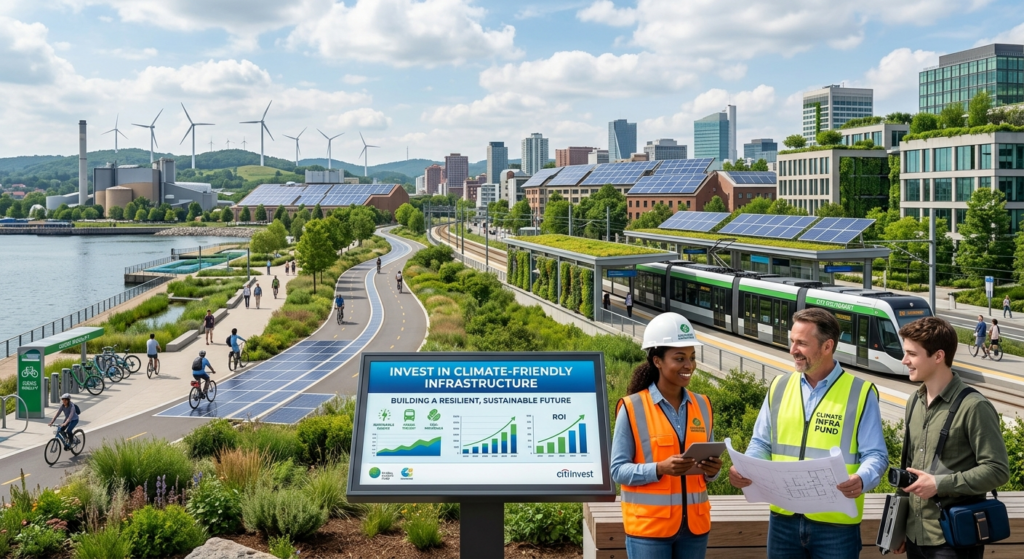
Invest in climate-friendly infrastructure.
Protect outdoor workers.
Improve water management.
Encourage energy-efficient technology.
Develop better heat action plans.
Taking action today can reduce future economic losses.
Conclusion:-
Heatwaves are no longer just a seasonal problem. They have become an economic challenge that affects workers, businesses, farmers, industries, and families.
When temperatures rise, productivity falls, business costs increase, food prices may rise, and economic growth can slow down. The effects are connected, which means one heatwave can influence many parts of the economy at the same time.
Protecting people from extreme heat is not only important for health but also for economic progress. Better planning, smarter cities, safer workplaces, and greater awareness can help reduce the impact of heatwaves.
As the climate continues to change, countries that prepare early will be in a stronger position to protect both their people and their economy. Understanding the economics of heatwaves reminds us that a healthy workforce is one of the most valuable resources for sustainable development.