
Introduction:-
Sports have become much more than a form of entertainment. Today, they play an important role in improving health, creating jobs, encouraging tourism, and supporting economic growth. Behind every successful athlete and every major sports event is a strong sports infrastructure. Stadiums, training centres, indoor arenas, playgrounds, swimming pools, sports academies, and fitness centres are all part of this infrastructure.
A country with good sports facilities gives its people better opportunities to learn, compete, and succeed. At the same time, these facilities create business opportunities and improve the local economy. Investment in sports infrastructure is no longer seen as an expense. Instead, it is considered a long-term investment that benefits both society and the economy.
Understanding Sports Infrastructure:-
Sports infrastructure includes all the physical facilities and support systems required for sports activities. It serves athletes, coaches, schools, local communities, and professional sports organisations.
Some common examples include:-
Outdoor stadiums
Indoor sports complexes
Cricket and football grounds
Athletics tracks
Swimming pools
Tennis and badminton courts
Sports academies
High-performance training centres
Sports science and rehabilitation facilities
Fitness and wellness centres
These facilities help people participate in sports at every level, from beginners to international athletes.
Why Sports Infrastructure Matters????
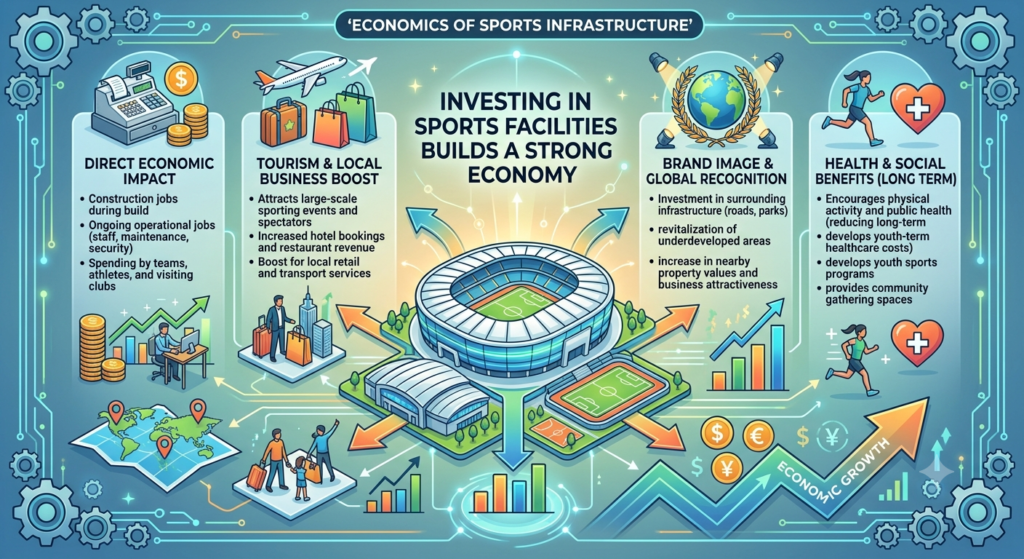
Sports infrastructure supports many sectors of the economy instead of benefiting only athletes.
Creates Employment:-
Building sports facilities requires skilled and unskilled workers such as engineers, architects, electricians, construction workers, designers, and equipment suppliers.
Once the facilities become operational, they continue creating employment for:-
Coaches
Trainers
Physiotherapists
Sports managers
Security staff
Ground maintenance workers
Event organisers
Ticketing and customer service teams
This generates stable income for thousands of families.
Supports Local Businesses:-
Whenever sports events are organised, nearby businesses experience higher customer demand.
Businesses that benefit include:-
Hotels
Restaurants
Cafes
Transport services
Sports equipment shops
Parking services
Small retail stores
As visitors spend money during tournaments, local business owners earn additional income, which strengthens the local economy.
Improves Public Health:-
Easy access to sports facilities encourages people to exercise regularly.
An active lifestyle helps reduce health problems such as obesity, diabetes, and heart disease. Healthy people are generally more productive at work, require fewer medical treatments, and contribute more effectively to the economy.
Therefore, investment in sports infrastructure also supports long-term healthcare savings.
Sports Infrastructure and Economic Growth:-
A strong sports infrastructure creates a chain of economic activities that continues for many years.
Encourages Private Investment:-
When governments develop modern sports facilities, private companies become more interested in investing in:-
Sports academies
Fitness centres
Sports equipment manufacturing
Sports technology
Professional leagues
Training programmes
Public and private investment together strengthen the sports industry and create new business opportunities.
Increases Tourism:-
National and international sporting events attract visitors from different regions.
Tourists spend money on:-
Accommodation
Food
Local transportation
Shopping
Entertainment
This additional spending supports businesses and increases economic activity in the host city.
Example:-
Imagine a city builds a modern multi-purpose sports complex with football grounds, indoor courts, and a swimming pool.
Within a few years:-
Children receive better sports training.
Local coaches start sports academies.
Schools organise competitions.
State-level tournaments attract visitors.
Hotels receive more bookings.
Restaurants serve more customers.
Local transport operators earn additional income.
Small businesses around the complex expand.
Although the project required a large initial investment, it created economic opportunities for many people over time.
Importance of Grassroots Sports Infrastructure:-
While international stadiums receive most of the attention, local sports facilities are equally important.
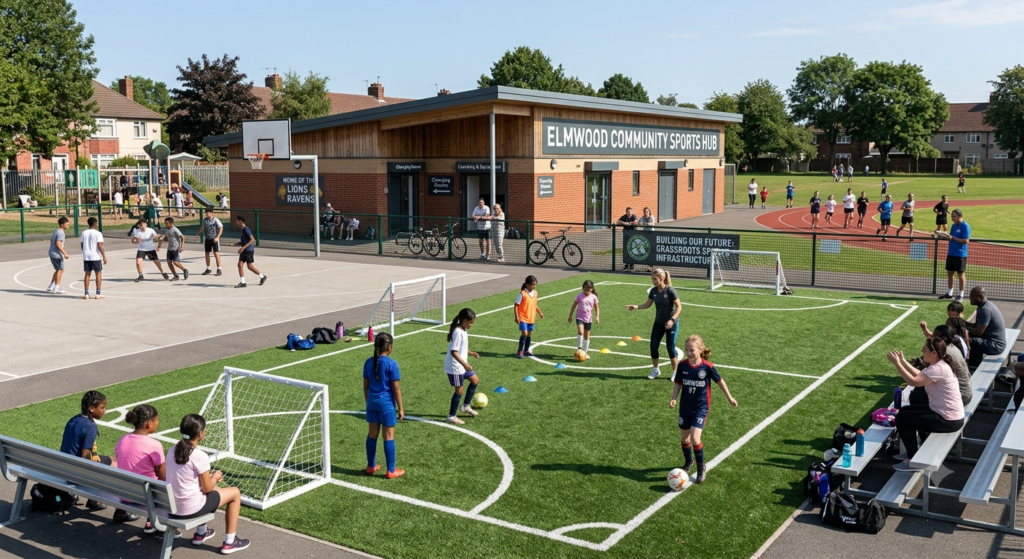
Communities need:-
School playgrounds
Public parks
Community sports halls
Village sports grounds
Affordable training centres
These facilities help identify young talent at an early stage and provide equal opportunities to children from different economic backgrounds.
A strong grassroots system creates future athletes while encouraging regular physical activity among ordinary citizens.
Technology in Modern Sports Infrastructure:-
Sports infrastructure has changed significantly with technological development.
Modern facilities now use:-
Smart lighting systems
Digital ticketing
Video performance analysis
Athlete tracking devices
Recovery and rehabilitation technology
High-speed internet
Energy-efficient equipment
Technology improves athlete performance, enhances the spectator experience, and reduces operating costs.
Sustainable Sports Infrastructure:-
Environmental sustainability has become an important part of modern sports development.
Many new sports facilities now include:-
Solar energy systems
Rainwater harvesting
LED lighting
Waste recycling
Water-efficient irrigation
Eco-friendly construction materials
These measures reduce maintenance costs while protecting natural resources, making sports infrastructure more sustainable for future generations.
Challenges in Developing Sports Infrastructure:-
Although sports infrastructure offers many economic benefits, building and maintaining quality facilities is not always easy. Several challenges can slow down progress if they are not addressed properly.
High Initial Investment:-
Developing modern stadiums, indoor arenas, swimming pools, and training centres requires a large amount of money. Construction costs, land acquisition, advanced equipment, and safety standards make these projects expensive. Smaller towns and rural areas often find it difficult to arrange enough funds.
Maintenance and Upgrades:-
Building a sports facility is only the beginning. Regular maintenance is equally important. Playing surfaces, seating areas, lighting systems, and sports equipment need timely repairs and upgrades. Without proper maintenance, even a modern stadium can become unsafe and less useful within a few years.
Unequal Access:-
Many large cities have better sports facilities than villages or small towns. As a result, talented young players living in rural areas may not receive proper training or opportunities. Balanced investment is necessary so that every region can benefit from quality sports infrastructure.
Limited Public Participation:-
In some places, sports facilities remain underused because people are not aware of available programmes or cannot afford training fees. Schools, local communities, and sports organisations should work together to encourage greater participation so that these facilities are used throughout the year.
The Role of Government and the Private Sector:-
The best sports infrastructure is often developed when the government and private organisations work together.
The government can:-
Build basic sports facilities.
Provide financial support for important projects.
Develop sports-friendly policies.
Improve transport and public services around sports venues.
Encourage sports education in schools.
The private sector can:-
Invest in sports academies.
Introduce modern technology.
Organise professional tournaments.
Sponsor young athletes.
Manage sports facilities efficiently.
When both sectors cooperate, projects are completed faster, managed better, and become financially sustainable.
Future Opportunities in Sports Infrastructure:-
The sports industry is expanding every year, creating new opportunities for economic growth.
Some promising areas include:-
High-performance training centres
Sports tourism
Adventure sports facilities
Sports medicine and rehabilitation
Fitness and wellness centres
Sports analytics and technology
Digital broadcasting facilities
Community sports parks
Multi-purpose indoor sports complexes
As people’s interest in fitness and sports continues to grow, demand for quality sports infrastructure is expected to increase in the coming years.
Example:-
Consider a district that transforms an unused piece of land into a modern sports park with football fields, basketball courts, jogging tracks, and an open gym.
After the project is completed:-
Local children begin participating in sports regularly.
Coaches start weekend training programmes.
Small shops selling sports equipment open nearby.
Food stalls and cafés attract more customers during tournaments.
Local schools organise annual competitions.
The district gains recognition for promoting sports.
A single project not only improves public health but also creates employment, supports local businesses, and increases community engagement.
How Sports Infrastructure Strengthens the Economy????
Investment in sports infrastructure creates long-term economic value in several ways.
Some of the major benefits include:-
Generates direct and indirect employment.
Supports local businesses and small entrepreneurs.
Increases tourism and visitor spending.
Encourages private investment.
Improves public health and workplace productivity.
Develops talented athletes.
Promotes social inclusion through equal access to sports.
Creates opportunities for sports-related businesses.
Increases economic activity in surrounding areas.
Enhances the overall quality of life.
These benefits continue for many years, making sports infrastructure one of the most valuable long-term public investments.
Possibilities:-
The future of sports infrastructure is not only about constructing bigger stadiums. It is about creating facilities that are accessible, environmentally responsible, technologically advanced, and useful for the entire community.
Modern sports complexes should support athletes, students, senior citizens, and fitness enthusiasts alike. Facilities that remain active throughout the year provide greater economic returns than those used only during major tournaments.
Governments, businesses, educational institutions, and local communities all have an important role in building a strong sports ecosystem. Their combined efforts can help create healthier citizens, stronger local economies, and better opportunities for future generations.
Conclusion:-
Sports infrastructure is much more than concrete buildings and playing fields. It is a powerful investment that contributes to economic development, employment generation, public health, tourism, education, and community well-being. Every well-planned sports facility has the potential to create opportunities that extend far beyond the world of sports.
Countries and communities that invest wisely in sports infrastructure are better prepared to develop talented athletes, encourage active lifestyles, and support long-term economic growth. At the same time, local businesses, workers, students, and families also benefit from these investments.
As the sports industry continues to grow, the importance of modern, inclusive, and sustainable sports infrastructure will become even greater. Building quality sports facilities today is not only an investment in sports but also an investment in a healthier society, a stronger economy, and a brighter future for everyone.