
Introduction:-
Can a small village become a source of economic growth, employment, and development???? The answer is yes. Across many parts of the world, rural tourism is proving that villages are not just places for agriculture and traditional living. They are becoming attractive destinations that create income, support local businesses, and improve the lives of rural communities.
In recent years, travelers have started looking for experiences that are different from crowded cities and commercial tourist spots. Many people now prefer peaceful surroundings, natural beauty, traditional food, and authentic cultural experiences. This shift in travel preferences has increased the importance of rural tourism.
Rural tourism is more than a travel activity. It is an economic opportunity that benefits local people while allowing visitors to experience the true essence of village life. It creates jobs, encourages entrepreneurship, preserves traditions, and contributes to sustainable development.
What is Rural Tourism????
Rural tourism refers to tourism activities that take place in villages and countryside areas. It allows visitors to experience local culture, nature, agriculture, traditions, and everyday rural life.
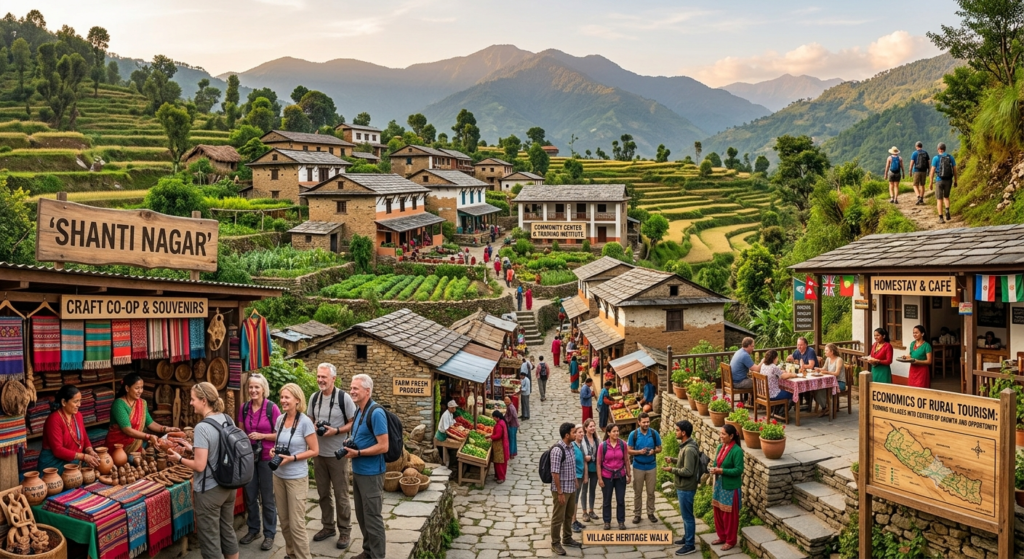
Some common forms of rural tourism include:-
Village homestays
Farm visits
Nature walks
Cultural festivals
Traditional food experiences
Handicraft workshops
Eco-tourism activities
Unlike urban tourism, rural tourism focuses on simplicity, authenticity, and direct interaction with local communities.
Why Rural Tourism is Becoming More Popular????
The popularity of rural tourism is growing because modern travelers want meaningful experiences instead of ordinary sightseeing.
Escape from Busy City Life:-
City life is often stressful due to traffic, noise, and pollution. Villages offer peace, fresh air, and a slower pace of life, making them attractive destinations.
Desire for Authentic Experiences:-
Many tourists want to learn how local people live, work, and celebrate. Rural tourism provides experiences that are difficult to find in urban areas.
Interest in Nature:-
Natural landscapes, rivers, forests, mountains, and agricultural fields attract visitors who want to reconnect with nature.
Growth of Responsible Tourism:-
Travelers are becoming more conscious about supporting local communities and protecting the environment. Rural tourism aligns well with these goals.
Economic Importance of Rural Tourism:-
Rural tourism contributes to economic development in several ways.
1. Employment Generation:-
One of the biggest benefits of rural tourism is job creation.
Tourism creates opportunities in areas such as:-
Accommodation services
Transportation
Food preparation
Tour guiding
Cultural performances
Handicraft production
Event management
These opportunities help reduce unemployment and provide additional sources of income for local residents.
2. Increase in Household Income:-
Tourists spend money on accommodation, food, local products, and recreational activities.
This spending directly benefits rural families.
For example, a family that earns income mainly from farming can increase its earnings by operating a homestay or selling homemade products to visitors.
Additional income improves financial security and living standards.
3. Encouragement of Entrepreneurship:-
Rural tourism motivates local people to start small businesses.
Examples include:-
Traditional food stalls
Souvenir shops
Bicycle rentals
Local guide services
Handicraft stores
These businesses generate income and contribute to local economic growth.
4. Development of Local Markets:-
As tourist numbers increase, demand for local products also rises.
Items such as:-
Handcrafted goods
Organic food products
Traditional clothing
Local artwork
gain more market value and provide better returns to producers.
The Strong Connection Between Tourism and Agriculture:-
Agriculture remains the primary occupation in many villages. Rural tourism creates a valuable connection between farming and tourism.
Tourists often enjoy:-
Visiting farms
Harvesting crops
Feeding animals
Learning farming techniques
Eating fresh farm-produced food
This creates additional income for farmers while promoting awareness about agriculture.
Farm tourism is becoming an important way for farmers to diversify their income and reduce dependence on seasonal crop production.
Example:- A Farmer Expanding His Income
Imagine a farmer who grows vegetables and fruits throughout the year.
Earlier, the farmer depended only on crop sales. However, he later started offering farm visits and traditional meals to tourists.
As visitor numbers increased:-
The farmer earned additional income.
Local women found work preparing meals.
Young people worked as guides.
Nearby shops sold more products.
A single tourism activity created benefits for the entire community.
This example shows how rural tourism can multiply economic opportunities.
Preserving Culture Through Economic Activity:-
Many villages possess unique cultural traditions that have been passed down through generations.
These may include:-
Folk dances
Traditional music
Local festivals
Handicrafts
Regional cuisines
Tourists are often interested in experiencing these traditions.
As demand increases:-
Artists receive better income.
Traditional skills are preserved.
Cultural identity becomes stronger.
Younger generations become interested in continuing these traditions.
Thus, rural tourism protects cultural heritage while creating economic value.
Improvement in Infrastructure:-
Tourism often encourages investment in infrastructure.
Common improvements include:-
Better roads
Reliable transportation
Improved sanitation
Internet connectivity
Public facilities
These developments not only benefit tourists but also improve the quality of life for local residents.
Better infrastructure attracts more investment and supports long-term economic growth.
Benefits for Women and Youth:-
Rural tourism creates opportunities for groups that may have limited employment options.
(Opportunities for Women)
Women can participate through:-
Homestay management
Food preparation
Handicraft production
Cultural activities
This increases financial independence and strengthens their role in the local economy.
(Opportunities for Youth)
Young people can work as:-
Tour guides
Content creators
Tourism entrepreneurs
Hospitality workers
These opportunities reduce migration to cities and encourage local development.
Challenges of Rural Tourism:-
Despite its advantages, rural tourism faces several challenges.
Limited Infrastructure:-
Some villages still lack quality roads, transportation, and accommodation facilities.
Lack of Awareness:-
Many rural destinations remain unknown because of insufficient marketing.
Seasonal Demand:-
Tourist arrivals often increase during holidays and festivals but decline during other periods.
Skill Gaps:-
Local communities may require training in hospitality, customer service, and digital marketing.
Environmental Concerns:-
If tourism is not properly managed, it can create waste and put pressure on natural resources.
Addressing these challenges is important for sustainable growth.
The Importance of Sustainable Rural Tourism:-
Sustainability is essential for the long-term success of rural tourism.
Important practices include:-
Protecting natural resources
Reducing waste generation
Supporting local businesses
Preserving cultural traditions
Encouraging community participation
Sustainable tourism ensures that economic benefits continue without harming the environment or local culture.
Future Prospects of Rural Tourism:-
The future of rural tourism appears very promising.
Several trends support its growth
Increasing interest in eco-tourism
Growing demand for authentic experiences
Expansion of digital marketing
Rising popularity of farm tourism
Greater awareness of sustainable travel
As connectivity improves and more people discover rural destinations, villages are likely to become stronger contributors to economic development.
Conclusion:-
Rural tourism is transforming villages into centers of economic opportunity. It creates employment, increases household income, supports agriculture, promotes entrepreneurship, and preserves cultural heritage. At the same time, it improves infrastructure and encourages balanced regional development.
The true strength of rural tourism lies in its ability to create growth without losing local identity. It allows villages to benefit economically while protecting their traditions, environment, and way of life.
In a world where travelers are searching for meaningful experiences and communities are seeking sustainable development, rural tourism offers a solution that benefits everyone. It is not only a growing sector of the economy but also a powerful tool for building stronger, more inclusive, and more prosperous rural communities.