
Housing Market Trends in 2026:-
The housing market in 2026 is going through a period of adjustment. After years of high inflation, rising interest rates, and economic uncertainty, the real estate sector is slowly finding balance. Property buyers are more careful, investors are more practical, and developers are focusing on realistic demand rather than fast profits.
Unlike previous years where prices were rising very quickly, 2026 shows a more stable and controlled housing environment.
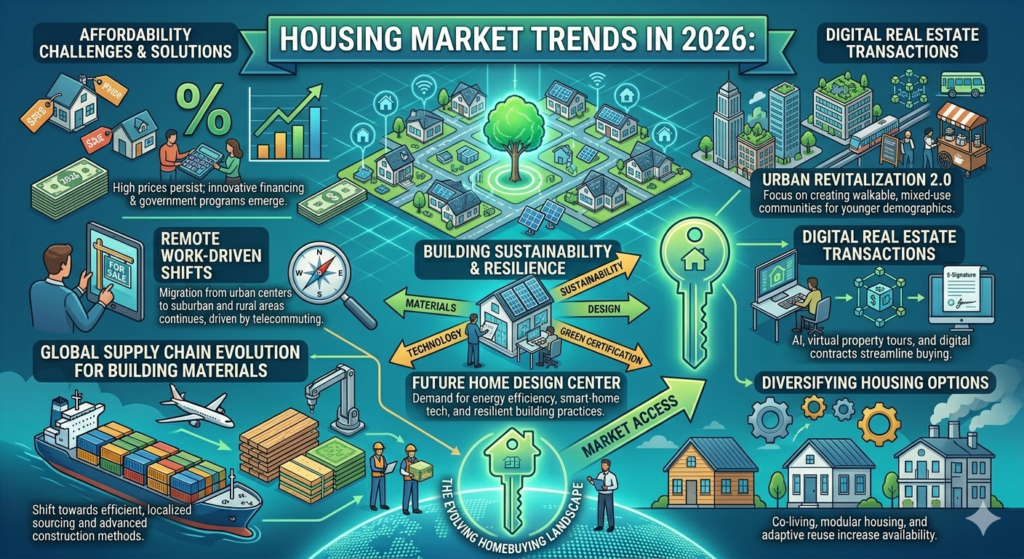
A Shift from Rapid Growth to Stability:-
During the post-pandemic years, housing demand increased sharply in many parts of the world. Low interest rates and changing lifestyle needs pushed property prices upward. However, that fast growth phase is now over.
In 2026:-
Property prices are growing slowly.
In some major cities, prices are stable.
Buyers are negotiating more than before.
Sellers are adjusting expectations.
This shift toward stability is not a negative sign. In fact, a balanced market reduces the risk of price bubbles and sudden crashes.
Interest Rates Still Influence Buying Decisions:-
One of the biggest factors affecting housing demand in 2026 is interest rates. Over the last few years, central banks increased rates to control inflation. As a result, home loans became expensive.
Currently:-
Mortgage rates remain higher than pre-2020 levels.
Monthly loan payments are heavier for new buyers.
First-time homebuyers are entering the market slowly.
Many families are planning their purchases carefully. Instead of rushing, buyers are comparing loan options and calculating long-term affordability. This cautious approach is creating a healthier market environment.
Strong Demand for Affordable and Mid-Range Housing:-
A major trend in 2026 is the growing demand for affordable and mid-range homes. Most middle-income families are not looking for luxury properties. They want practical homes with reasonable prices.
Popular buyer preferences include:-
Compact but functional apartments
Good connectivity to workplaces
Basic modern amenities
Safe and clean surroundings
Developers are responding by launching more projects in the mid-income segment. Luxury housing is stable, but real growth is happening in affordable categories.
Growing Popularity of Tier-2 and Tier-3 Cities:-
Housing demand is no longer limited to large metro cities. Smaller cities are becoming attractive for both living and investment.
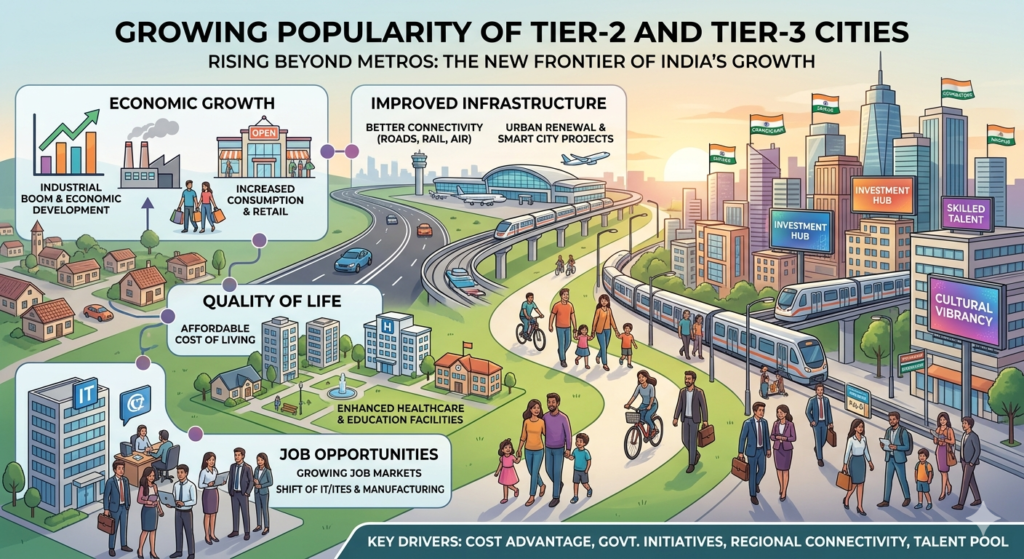
Reasons behind this shift:-
Lower property prices
Better quality of life
Less traffic and pollution
Remote and hybrid work options
In 2026, many buyers prefer spacious homes in developing cities instead of small expensive apartments in crowded metros. This trend is especially strong in emerging economies like India.
Rental Market Is Expanding:-
Because purchasing property has become costly, the rental market is growing steadily. Renting is now seen as a flexible and practical option.
Current rental trends include:-
Increase in rental prices in major cities
High demand from students and working professionals
Rise of managed rental housing projects
Investors are also focusing on rental income. Instead of short-term resale profits, they prefer stable monthly returns. This is making the rental sector stronger and more organized.
Impact of Technology on Real Estate:-
Technology is transforming the housing market in 2026. Buyers no longer depend only on physical visits.
Housing Market Trends in 2026:-
Online property listings with detailed information
Virtual home tours
Digital documentation and payments
Data-based property price predictions
Technology has increased transparency. Buyers can compare prices, check location details, and study market trends before making decisions.
Construction Sector and Supply Situation:-
The construction industry faced serious challenges in recent years due to rising material costs and supply disruptions. In 2026, the situation has improved.
observations:-
Raw material prices are more stable.
Construction speed has increased.
Many delayed projects are being completed.
However, in some fast-growing cities, supply is still limited compared to demand. This is one reason why prices are not falling sharply.
Balanced supply is necessary to maintain price stability in the coming years.
Housing Market in India:-
(2026 Overview)
India’s housing sector is showing steady growth in 2026. Demand remains strong in both metro cities and growing urban centers.
Major trends in India:-
Strong sales activity in residential housing
High demand in tier-2 cities
Increasing investment from Non-Resident Indians (NRIs)
Government support for affordable housing projects
At the same time, rising land prices in metro areas are creating affordability concerns. As a result, buyers are choosing properties in developing suburbs and nearby towns.
Overall, the Indian housing market is stable with gradual growth.
Rise of Sustainable and Green Housing:-
Environmental awareness is influencing buyer decisions in 2026. Many people now consider energy efficiency before purchasing a home.
Popular green features include:-
Solar energy systems
Water-saving designs
Natural lighting and ventilation
Eco-friendly construction materials
Green homes may cost slightly more initially, but they reduce electricity and maintenance expenses over time. This trend is expected to grow steadily in future years.
Challenges That Cannot Be Ignored:-
Even though the housing market is stable, some challenges remain
High mortgage rates
Rising property prices in prime areas
Limited affordable housing supply
Global economic uncertainty
If inflation increases again, interest rates may remain high, which could slow down housing demand. Therefore, economic stability is very important for future growth.
What Can We Expect in the Coming Years???
Looking ahead, the housing market is likely to grow in a controlled and practical manner.
Possible future trends:-
Gradual improvement if interest rates decrease
Strong rental demand
Continued growth in smaller cities
More focus on affordable and eco-friendly housing
A sudden boom similar to past years is unlikely. At the same time, a major crash also does not appear expected in most regions. Instead, steady growth seems more realistic.
Conclusion:-
The housing market in 2026 is defined by balance and maturity. Buyers are thinking long-term. Investors are focusing on stable returns. Developers are building according to actual demand rather than speculation.
Affordable housing, rental growth, technological innovation, and sustainability are shaping the new real estate landscape.
For families planning to buy a home, this is a time for careful financial planning. For investors, patience and smart location choice are more important than quick profit.
the housing market today is not about excitement or fear. It is about stability, smart decisions, and steady growth.