
Consumer Spending Patterns in India
In 2026, India is not just growing in population — it is growing in purchasing power. When I observe people around me, from metro cities to small towns, I can clearly see that spending habits have changed a lot compared to the past. Earlier, families focused mainly on saving and basic needs. Today, spending reflects lifestyle, comfort, technology, and future planning.
With a population of over 1.4 billion people and a fast-growing middle class, India has become one of the most dynamic consumer markets in the world. Consumer spending now contributes more than half of the country’s economic activity. This shows how important household consumption has become for overrall growth.
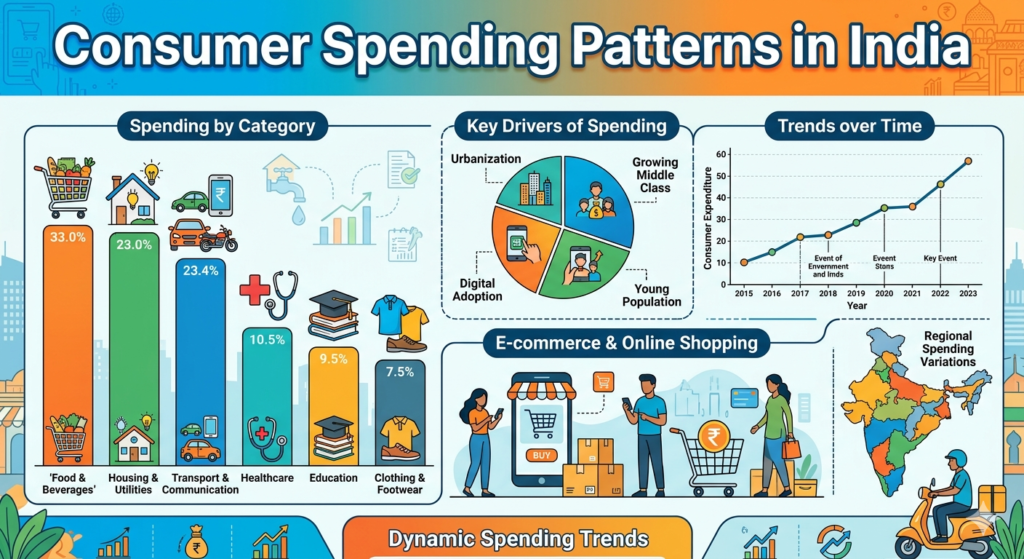
1. Basic Needs Still Matter Most:-
Even in 2026, the largest part of household income goes toward basic needs. Food, housing, electricity, and transport remain essential expenses.
On average:-
Around 30–35% of household income is spent on food and groceries.
20–30% goes toward housing (rent or home loan EMI).
A smaller but important share is spent on utilities like electricity, gas, and water.
However, what has changed is not just how much people spend, but what kind of products they choose.
For example, earlier families preferred loose grocery items from local markets. Today many households prefer packaged, branded, or organic products. Ready-to-cook and ready-to-eat food options are also becoming common, especially in working households.
2. Rise of Digital and Online Spending:-
One of the biggest changes in 2026 is the dominance of digital payments. UPI transactions are part of daily life. Even small roadside vendors accept QR code payments.
From buying vegetables to booking flight tickets, everything can be done through a smartphone. Online shopping has become normal, not special.
People buy online:-
Clothes and fashion items
Mobile phones and electronics
Groceries
Medicines
Home appliances
In my observation, convenience is the biggest reason. Consumers prefer saving time instead of visiting crowded markets. Discounts and easy return policies also encourage online purchases.
E-commerce growth in 2026 continues to expand, especially in tier-2 and tier-3 cities.
3. Youth Driving New Spending Trends:-
India has one of the youngest populations in the world. A large share of consumers are below 35 years of age. This group is shaping new spending patterns.
Young earners are more comfortable spending on:-
Branded fashion
Gadgets
Travel
Café culture
Subscription services
They are also more open to using credit cards and EMI options. Earlier, people avoided debt. Now, many prefer “buy now, pay later” methods.
This shift shows a move from a saving-focused mindset to a lifestyle-focused mindset.
4. Growing Demand for Technology and Gadgets:-
Technology spending has increased sharply in 2026. Smartphones are no longer luxury items -they are basic necessities.
Many consumers upgrade their phones every 2-3 years. Apart from smartphones, spending on:-
Laptops
Tablets
Smart TVs
Smartwatches
Wireless earphones
is rising.
Work-from-home culture, online learning, and digital entertainment platforms have increased demand for electronic products.
5. Housing and Home Improvement Spending:-
Housing is one of the largest expenses, especially in metro cities. Rent and home loan EMIs take a significant share of income.
But another interesting trend is home improvement spending. Even middle-income families now invest in:-
Modular kitchens
Interior decoration
Better furniture
Air conditioners and large appliances
People want their homes to reflect comfort and status. Housing is no longer just shelter – it represents lifestyle.
6. Education as Long-Term Investment:-
Education spending in 2026 is higher than ever. Indian families treat education as an investment for future income growth.
Parents spend on:-
Private schools
Coaching institutes
Online learning platforms
Skill development courses
Study abroad programs
Even during periods of inflation, education expenses are rarely reduced. From what I see, families are ready to cut luxury spending but not children’s education.
7. Healthcare and Fitness Awareness:-
Healthcare spending has grown due to rising awareness. Families now buy health insurance more commonly than before.
Spending areas include:-
Insurance premiums
Regular medical check-ups
Medicines
Fitness centers
Healthy food products
Medical costs are rising, so healthcare takes a larger share of income compared to the past decade.
Young people are also spending on gyms, yoga classes, and protein supplements. This shows a growing focus on preventive healthcare.
8. Travel and Experience Spending:-
Another noticeable change in 2026 is experience-based spending. People now value experiences as much as material goods.
Domestic tourism has increased. Many families plan at least one holiday per year. Hill stations, beaches, and religious tourism are popular choices.
International travel is also rising among upper-middle-class families.
In my opinion, this trend shows growing financial confidence among consumers.
9. Urban vs Rural Consumption:-
There is still a difference between urban and rural spending patterns, but the gap is reducing.
Urban consumers:-
Spend more on lifestyle products
Prefer branded goods
Use digital payments widely
Spend more on entertainment and dining out
Rural consumers:-
Spend more on essentials
Are more price-sensitive
Slowly increasing spending on smartphones and appliances
Better internet access and rising rural incomes are increasing demand in villages and small towns.
10. Impact of Inflation on Consumer Behavior:-
Inflation continues to influence spending decisions in 2026. When food and fuel prices rise, families adjust their budgets.
Common responses include:-
Choosing affordable brands
Reducing luxury purchases
Delaying vehicle or property buying
Increasing savings
However, essential categories like education and healthcare remain strong even during inflation.
11. Women’s Role in Financial Decisions:-
More women are working and earning independently in 2026. This has increased their role in spending decisions.
Spending influenced by women includes:-
Household products
Children’s education
Fashion and personal care
Health-related products
Women’s financial participation is positively affecting overall consumer demand.
Conclusion:-
Consumer spending patterns in India in 2026 clearly show a country in transition. Basic needs still take a large share of income, but lifestyle, technology, education, healthcare, and travel are growing rapidly.
Digital payments and online shopping have transformed how people spend. Youth population, rising middle class, and urbanization are driving this change.
From my observation, Indian consumers are becoming more confident and aspirational. They want better quality of life, better education, and better experiences.
At the same time, inflation and income differences still shape decisions. Rural and urban markets behave differently, but both are expanding.
Overall, India’s consumer story in 2026 is about growth, modernization, and changing priorities. And in the coming years, spending patterns will continue to evolve as income levels rise and digital access spreads deeper across the country.