
Gold Prices and the Economy
Gold has always been one of the most trusted assets in the world economy. From ancient civilizations to the modern financial system, gold has maintained its value and importance. Even today, when digital payments and modern banking systems are growing rapidly, gold still plays a major role in financial stability.
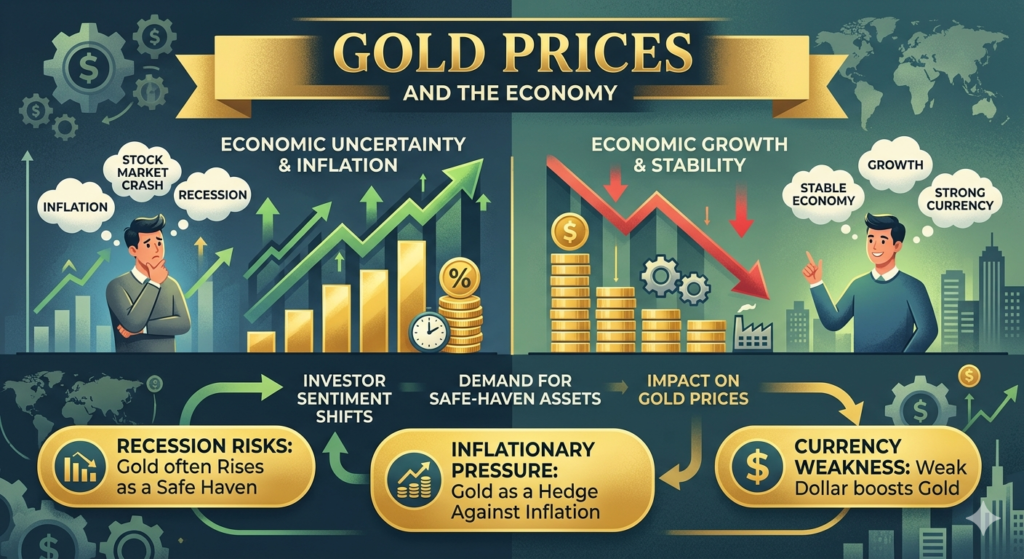
One interesting thing about gold is that its price constantly changes according to economic conditions. Sometimes gold becomes more expensive, and sometimes its growth slows down. These fluctuations are closely connected with global economic changes such as inflation, interest rates, financial uncertainty, and currency movements. Because of this strong connection, gold is often considered a mirror of economic conditions.
Gold as a Symbol of Financial Security:-
Gold is widely known as a safe investment. When people feel uncertain about the future of the economy, they often turn towards gold to protect their savings.
Unlike many financial assets, gold does not depend on the performance of a company or the success of a particular business sector. Its value comes from its rarity, global demand, and long history as a store of wealth.
Some key reasons why gold is trusted worldwide include:-
It keeps its value for a long period of time.
It is accepted globally as a valuable asset.
It helps protect savings during financial uncertainty.
It provides balance in investment portfolios.
Because of these reasons, gold remains important in both developing and developed economies.
Gold Price Fluctuations Over Time:-
Gold prices do not stay constant. They change according to different economic situations. In the past few years, the gold market has experienced several phases of fluctuation.
During periods of global economic stress and uncertainty, gold prices showed strong upward momentum. Investors moved their money from risky markets to safer assets, which increased demand for gold.
Later, when economic conditions started stabilizing and financial markets showed signs of recovery, the pace of gold price growth slowed down. This does not mean gold lost its importance; instead it shows how closely gold reacts to economic signals.
In the current economic period, gold prices continue to move up and down depending on global financial conditions, investor sentiment, and policy decisions.
Important Economic Factors That Influence Gold Prices:-
Several economic forces influence gold price movements. Understanding these factors helps explain why gold sometimes rises quickly and sometimes remains stable.
1. Inflation Pressure:-
Inflation is one of the most powerful factors affecting gold prices. When the prices of goods and services increase, the purchasing power of money decreases.
During high inflation periods, people become concerned that their savings may lose value. Because of this fear, many investors shift their money toward gold.
Gold is often seen as a protective asset during inflation because:-
It maintains long-term value.
It protects wealth when currency value declines.
It performs better than many assets during inflationary periods.
As inflation pressures increase in the economy, interest in gold often rises.
2. Interest Rate Movements:-
Interest rates also influence gold demand. When interest rates increase, financial institutions offer better returns on savings accounts, bonds, and other financial products.
Since gold does not provide interest income, some investors prefer those interest-earning investments during high interest rate periods.
However, when interest rates remain low for a long time:-
Investors start looking for alternative assets.
Gold becomes more attractive as a stable investment.
Demand for gold may increase again.
Because of this relationship, gold markets closely watch central bank policies around the world.
3. Global Economic Uncertainty:-
Another major reason behind gold price fluctuations is global uncertainty. Economic slowdowns, financial crises, political conflicts, and international tensions often create fear in global markets.
When investors feel uncertain about the future, they prefer assets that are considered safe and reliable. Gold becomes one of the top choices in such situations.
Examples of events that usually increase gold demand include:-
Global financial instability
Political tensions between countries
Economic slowdown in major economies
Banking or financial sector risks
These situations increase the demand for gold and influence its price movement.
India’s Strong Relationship with Gold:-
India has one of the strongest cultural and economic relationships with gold in the world. Gold is not only an investment but also a part of traditions and celebrations.
Indian families commonly purchase gold during:
Wedding ceremonies
Festivals such as Diwali and Dhanteras
Religious occasions
Long-term family savings plans
In many households, gold jewellery also acts as a financial backup that can be used during emergencies. Because of this cultural connection, gold demand in India remains strong even when market conditions change.
Role of Central Banks in Gold Demand:-
Central banks play an important role in the global gold market. Many countries hold gold as part of their financial reserves.
These reserves help strengthen national financial systems and provide confidence to investors.
Central banks maintain gold reserves for several reasons:-
To diversify national assets
To reduce dependency on foreign currencies
To support financial stability
To strengthen economic confidence
In recent years, many countries have gradually increased their gold reserves as part of long-term financial planning.
Currency Movements and Gold:-
Gold prices are also influenced by changes in global currency values. Since gold is commonly traded in international markets using the US dollar, currency fluctuations can impact gold demand.
When the dollar becomes stronger, gold may become relatively expensive for buyers using other currencies. On the other hand, when the dollar weakens, gold often becomes more attractive for global investors.
Because of this connection, currency markets and gold markets often influence each other.
Future Outlook for Gold:-
Looking ahead, gold is expected to remain an important part of the global financial system. Economic uncertainty, inflation concerns, and financial market volatility will continue to affect gold demand.
Some possible future trends include:-
Continued demand for gold as a safe asset
Strong interest from long-term investors
Stable cultural demand in countries like India
Price movements influenced by global economic policies
Although gold prices may fluctuate in the short term, its long-term importance in the economy is likely to remain strong.
Conclusion:-
Gold has always played a powerful role in the global economy. Its price movements reflect changes in economic conditions such as inflation, interest rates, financial uncertainty, and currency strength.
Over time, gold prices have experienced different phases of growth and stability depending on the global economic environment. Even with these fluctuations, gold continues to be one of the most trusted assets for protecting wealth.
In countries like India, gold carries both financial and cultural value. As the global economy continues to evolve, gold will likely remain an important asset that provides stability, confidence, and long-term security to investors and households around the world.