
Introduction:-
Culture is an important part of every society. It includes traditions, festivals, music, dance, art, literature, handicrafts, food, and heritage. Most people see cultural activities as a way to celebrate history and identity. However, culture is not only about traditions. It also plays an important role in the economy.
Today, cultural activities create jobs, support businesses, attract tourists, and generate income for millions of people. From local artisans and musicians to film makers and digital content creators, many people earn their living through cultural work. As economies become more creative and technology-driven, the economic value of culture continues to grow.
This article explains how cultural activities contribute to economic development and why they are becoming increasingly important in the modern world.
Culture Is More Than Entertainment:-
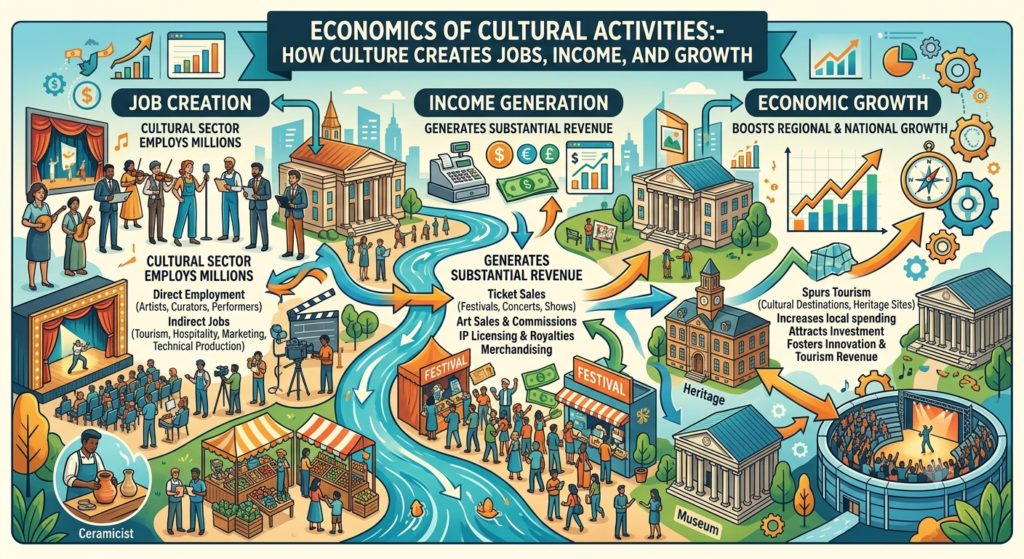
Many people think cultural activities are only for enjoyment. In reality, they are also economic activities because they involve the production and sale of goods and services.
Some common cultural activities include:-
Music concerts
Dance performances
Art exhibitions
Handicraft production
Film making
Theatre shows
Cultural festivals
Museums
Heritage tourism
Digital creative content
Whenever people spend money on these activities, economic transactions take place. Artists earn income, businesses make profits, and workers receive wages.
This shows that culture is not only a social asset but also an economic resource.
How Cultural Activities Create Employment????
One of the biggest economic benefits of cultural activities is job creation.
Many people work directly in cultural industries, such as:-
Artists
Musicians
Dancers
Writers
Photographers
Designers
Film makers
Craftsmen
Event organizers
At the same time, many indirect jobs are also created.
These include:-
Hotel workers
Transport providers
Tour guides
Food vendors
Marketing professionals
Security staff
Technical support teams
Example:-
Imagine a large cultural festival organized in a city.
Thousands of visitors attend the event. Hotels receive more bookings. Restaurants serve more customers. Local shops sell more products. Taxi drivers get more passengers.
Even people who are not directly connected to the festival benefit from the increased economic activity.
This is why cultural events often create a positive impact on local economies.
Cultural Tourism:- A Powerful Economic Driver
Tourism and culture are closely connected.
Many tourists travel to experience:-
Historical monuments
Traditional festivals
Local food
Folk music and dance
Heritage sites
Cultural fairs
When tourists visit a place, they spend money on:-
Hotels
Restaurants
Transportation
Shopping
Entertainment
This spending increases business income and creates employment opportunities.
Example:-
A tourist visiting a heritage city may stay in a hotel for several days, eat local food, hire a guide, buy handicrafts, and use local transportation.
As a result, many different businesses earn income from a single visitor.
This process helps local economies grow and creates opportunities for small entrepreneurs.
The Economic Importance of Handicrafts:-
Handicrafts are one of the oldest forms of cultural activity.
Many families depend on traditional crafts such as:-
Handloom weaving
Pottery
Wood carving
Painting
Embroidery
Jewelry making
These products are often sold in local markets, exhibitions, tourist destinations, and online platforms.
Example:-
A craftsperson creates handmade decorative items.
To produce the item, raw materials are purchased from suppliers. The finished product is transported to a market and sold through a retailer.
Income is generated for several people during this process.
This demonstrates how cultural products contribute to economic activity at multiple levels.
Festivals and Their Economic Impact:-
Festivals are important cultural events, but they are also major economic events.
During festival seasons, demand increases for:-
Clothing
Decorations
Food products
Electronics
Gifts
Transportation services
Businesses often experience higher sales during these periods.
Small vendors, shopkeepers, and service providers particularly benefit from increased consumer spending.
Example:-
A local sweet shop may sell significantly more products during a festival compared to normal days.
Similarly, transport services, hotels, and event organizers may experience increased demand.
This additional spending supports economic growth and creates seasonal employment opportunities.
The Growth of Creative Industries:-
In today’s world, culture is not limited to traditional activities.
Modern cultural industries include:-
Film production
Music streaming
Animation
Gaming
Graphic design
Publishing
Content creation
Digital media
These industries are part of the growing creative economy.
Unlike traditional industries that rely mainly on physical resources, creative industries depend on ideas, talent, and innovation.
Young people are increasingly finding career opportunities in these fields.
As internet access expands, creative professionals can reach audiences across the world.
Technology Has Changed the Cultural Economy:-
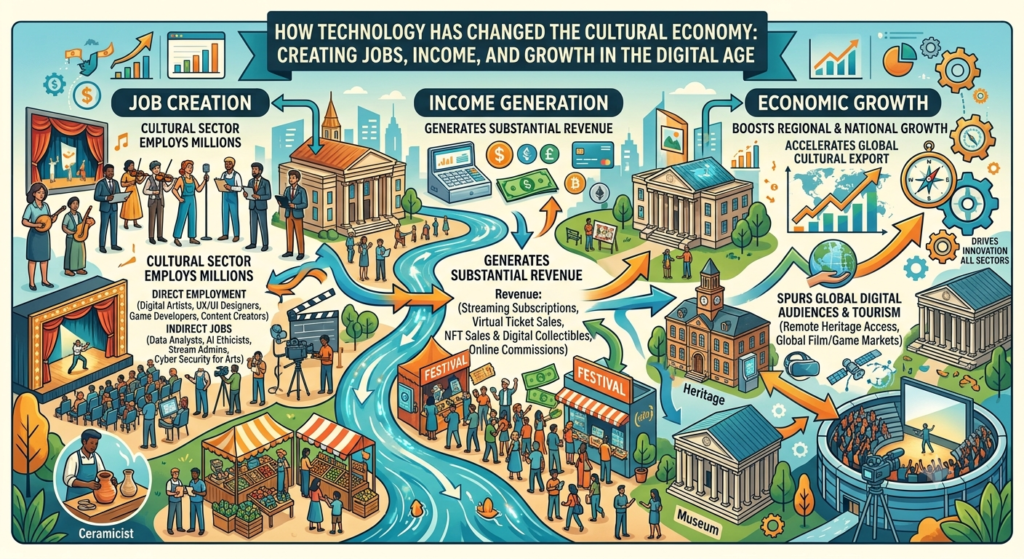
Technology has transformed the way cultural products are created and sold.
Today, creators can:-
Sell artwork online
Stream music globally
Organize virtual events
Promote products through social media
Reach international customers
This has reduced geographical barriers and increased market opportunities.
Example:-
A musician living in a small town can upload songs online and reach listeners in different countries.
Similarly, an artisan can sell handmade products through digital marketplaces without opening a physical store.
Technology has made cultural industries more accessible and profitable.
How Cultural Activities Support Small Businesses:-
Cultural activities provide opportunities for small entrepreneurs.
Examples include:-
Food stalls at festivals
Souvenir shops
Photography services
Local transport businesses
Event management companies
Traditional clothing stores
Many of these businesses require limited investment but can generate significant income during cultural events.
This helps promote self-employment and local economic development.
Benefits for Rural Economies:-
Cultural activities are especially important in rural areas.
Many villages have unique traditions, crafts, and cultural products that attract visitors and buyers.
When these cultural assets are promoted effectively:-
Rural income increases
Employment opportunities grow
Migration to cities may reduce
Local businesses expand
Cultural activities can therefore become an important tool for balanced regional development.
Challenges Faced by Cultural Sectors:-
Despite their importance, cultural industries face several challenges.
Some common problems include:-
Limited funding
Lack of modern infrastructure
Market competition
Digital piracy
Skill shortages
Unstable income
Many artists and artisans struggle to earn consistent income throughout the year.
Improving access to training, technology, and financial support can help address these challenges.
The Future of Cultural Economics:-
The future of cultural economics looks promising.
Several factors are supporting growth:-
Rising tourism
Increasing internet access
Growth of digital platforms
Greater demand for creative content
Expanding global markets
Consumers today are increasingly interested in unique experiences and authentic cultural products.
This trend is creating new opportunities for artists, performers, designers, and entrepreneurs.
As technology continues to evolve, cultural activities are expected to become even more important for economic growth and employment generation.
Conclusion :-
Cultural activities are much more than celebrations and traditions. They are valuable economic assets that create jobs, generate income, encourage entrepreneurship, and support tourism. From handicrafts and festivals to films and digital content, cultural industries contribute to development at local, national, and global levels.
In the modern economy, creativity has become a powerful resource. Countries and communities that invest in culture not only preserve their heritage but also create new opportunities for growth and prosperity. As a result, cultural activities will continue to play an important role in shaping the economy of the future.