
In almost every Indian household today, one common discussion keeps coming up — rising food prices. Whether it is vegetables, pulses, milk, or cooking oil, people feel the pressure directly in their monthly budget. Food inflation is not just an economic term, it is something that affects daily life.
In a country like India, where a large part of income is spent on food, even a small rise in prices can create serious financial stress. In the current financial year 2025–26, food inflation continues to remain one of the most important economic concerns.
What Is Food Inflation
Food inflation simply means a continuous increase in the prices of food items over time. It is measured under the Consumer Price Index (CPI), and food items carry a high weight in this index because Indian households spend a major share of income on food.
If a family earlier spent ₹3,000 on groceries and now needs ₹3,800 for the same items, that increase reflects food inflation. When such increases happen across the country, it becomes a national economic issue.
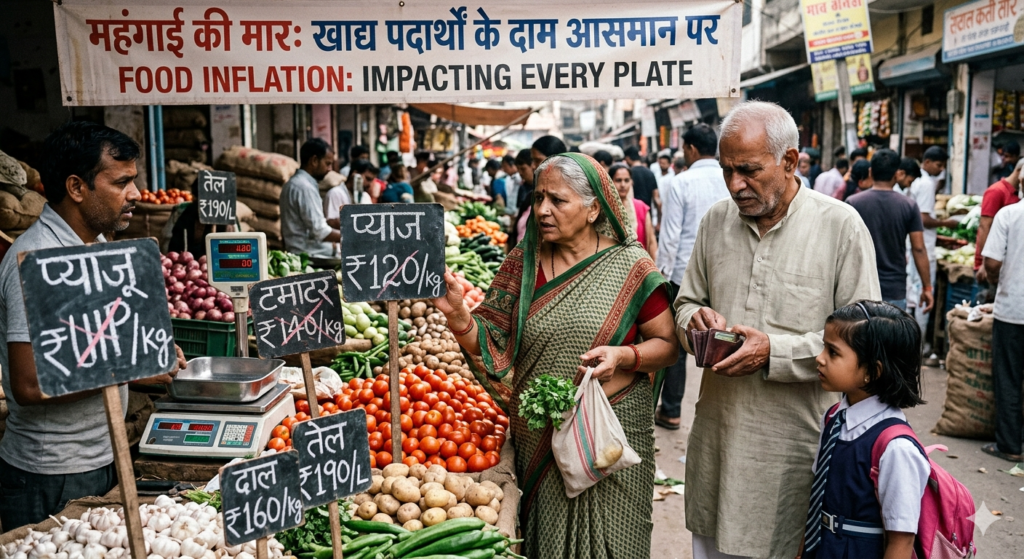
(Current Situation in 2025–26)
In the present year, food inflation shows mixed trends:-
Vegetable prices have shown sharp fluctuations.
Pulses and cereals remain relatively expensive.
Milk and dairy products have seen steady price increases.
Edible oil prices depend heavily on global markets.
Fruit prices change according to seasons.
While overall inflation may appear under control at times, food prices continue to move unpredictably. This uncertainty creates stress for both consumers and policymakers.
(Major Reasons Behind Rising Food Prices)
1. Unpredictable Weather:-
Indian agriculture still depends heavily on the monsoon. Irregular rainfall, floods, droughts, and heatwaves reduce crop production. Over the past few years, changing climate patterns have made farming more risky.
When production falls, supply becomes limited. Limited supply leads to higher prices. Vegetables are especially sensitive to weather changes, which is why their prices rise suddenly.
2. Rising Cost of Farming:-
Farming today is more expensive than before. Farmers face higher costs for:-
Fertilizers
Diesel
Electricity
Seeds
Labor
When production costs increase, farmers demand better prices to recover expenses. These higher costs are eventually passed on to consumers.
3. Supply Chain and Storage Problems:-
India produces a large amount of food grains, fruits, and vegetables. However, storage and transport systems are not strong everywhere. Lack of cold storage facilities leads to food wastage, especially for perishable items.
Transportation costs have also increased due to higher fuel prices. All these factors increase the final retail price.
4. Global Market Influence:-
India imports certain food items like edible oils and some pulses. When international prices rise due to global tensions or supply shortages, Indian markets are affected as well.
Global shipping costs, trade restrictions, and production issues in other countries directly influence domestic food prices.
Which Food Items Are Most Affected????
Vegetables:-
Tomatoes, onions, and potatoes often show sudden price spikes. A small shortage in supply can double prices within weeks.
Pulses:-
India is one of the largest consumers of pulses. When domestic production is low, imports increase. But global price rises make imports expensive.
Milk and Dairy:-
Milk prices have gradually increased because of higher animal feed costs and transportation expenses.
Edible Oils:-
Cooking oil prices depend largely on international supply conditions. Any disruption in global production quickly affects Indian households.
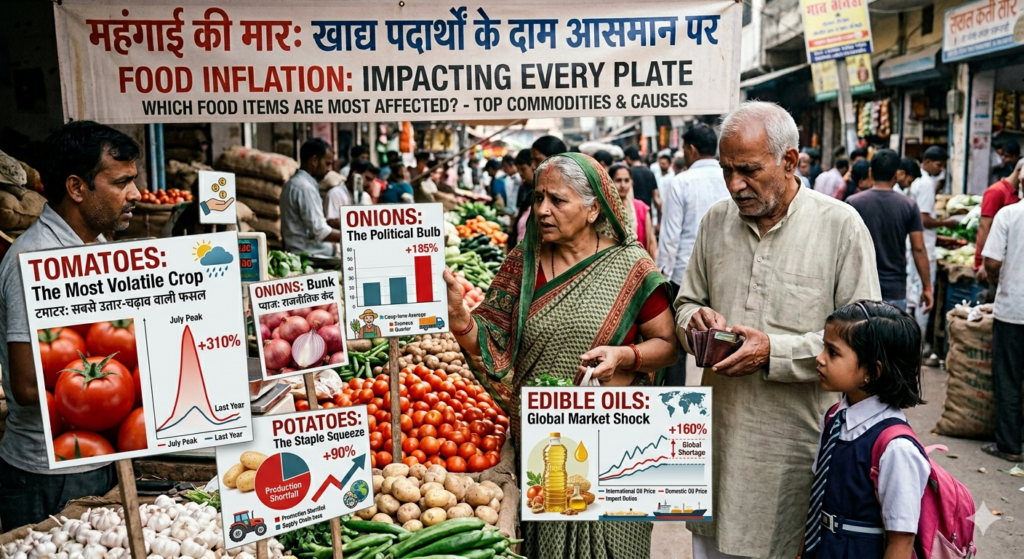
(Impact on Common People)
Food inflation affects everyone, but its impact is not equal.
Pressure on Household Budgets:-
Low-income families suffer the most because they spend a larger share of their income on food. When food prices rise, they have less money for education, healthcare, and savings.
Middle-class families also feel the strain. Monthly budgets need constant adjustment.
Nutrition Concerns:-
When healthy food becomes expensive, people may shift to cheaper and less nutritious options. This can lead to long-term health problems, especially for children.
Reduced Savings:-
Rising food costs reduce disposable income. Lower savings affect long-term financial security of families.
Impact on the Indian Economy:-
Food inflation also influences the broader economy.
It pushes overall inflation higher.
It affects interest rate decisions.
It can slow down economic growth if high inflation continues.
When inflation remains high, borrowing becomes costly. Businesses may delay investments, and economic activity can slow down.
Government Measures:-
To control food inflation, several steps have been taken:-
Releasing buffer stocks of wheat and rice
Adjusting import duties
Restricting exports of certain items
Providing subsidies and farmer support
Expanding storage facilities
These measures help in the short term, but long-term stability requires structural improvements.
(Long-Term Solutions)
In my opinion, temporary price control is not enough. India needs deeper reforms:-
Improve Agricultural Productivity:-
Better irrigation, modern technology, and quality seeds can increase production.
Strengthen Storage and Logistics:-
Reducing wastage through better cold storage and transport systems can stabilize supply.
Promote Climate-Resilient Farming:-
Farmers must be supported to adapt to climate change through sustainable practices.
Crop Diversification:-
Encouraging farmers to grow a variety of crops can reduce pressure on specific food items.
Conclusion:- More Than Just Rising Prices
Food inflation in India is not just about expensive vegetables or milk. It reflects deeper issues in agriculture, climate conditions, global trade, and supply systems.
In 2025–26, the situation is manageable but still uncertain. If proper reforms are implemented, India can move toward stable and affordable food prices. But without long-term planning, volatility may continue.
Food is not a luxury -it is a basic necessity. Ensuring affordable food for every household should remain a top national priority.