
India’s Unemployment Situation:- A Silent Struggle Behind Economic Growth
Intro/Starting View:- Growth with Unequal Opportunities
India is often described as a fast-growing economy and a rising global power. Tall buildings, digital payments, startups, and highways show progress everywhere. Yet behind this progress, millions of people wake up every day searching for work. This gap between economic growth and job availability makes unemployment one of India’s most pressing challenges.
Unemployment is not just about not having a job. It affects confidence, family income, mental health, and social stability. In India, this issue is deeply connected with youth, education, skills, and changing economic needs.
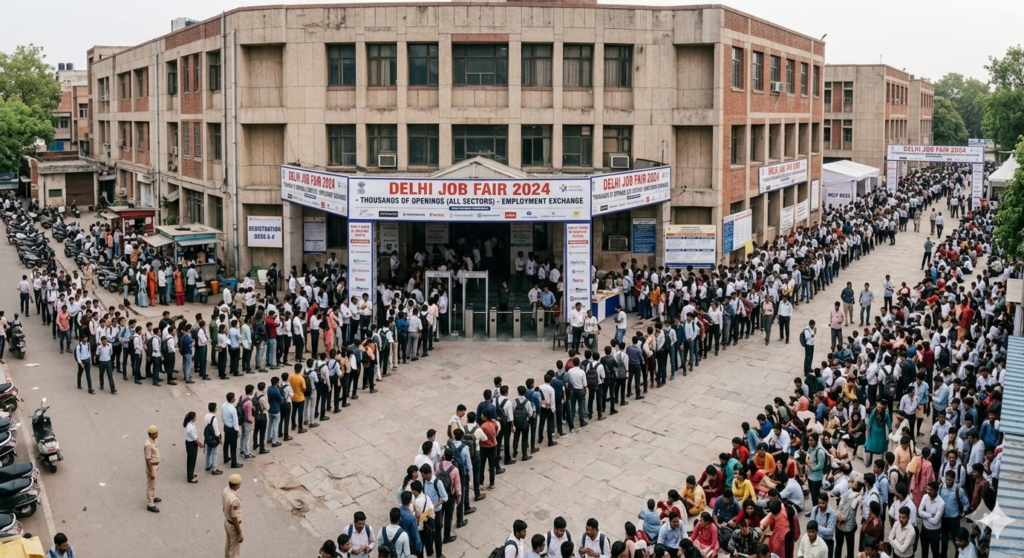
What Does Unemployment Really Mean in India???
In simple terms, unemployment means people are willing and able to work but cannot find suitable jobs. In India’s current situation, the overall unemployment rate is around 5 percent. This number may seem small, but due to India’s huge population, it represents crores of jobless individuals.
More importantly, unemployment in India is uneven. Some people have jobs but earn too little. Some work only a few months a year. Others have degrees but no matching jobs. This makes the problem more complex than it appears in numbers.
Two Indias, Two Job Realities:- Rural and Urban
Rural India:- (Working, Yet Struggling)
In villages, many people are engaged in farming and related activities. This reduces visible unemployment, but a hidden problem exists. Many rural workers:-
Do seasonal work.
Earn low wages
Have no job security.
This condition is called disguised unemployment, where more people are working than actually needed, reducing productivity and income.
Urban India:- (Educated but Jobless)
Cities promise better jobs, so people migrate in large numbers. However, urban areas face:-
Limited formal jobs
High competition
Rising cost of living
As a result, many educated young people remain unemployed or accept jobs far below their qualifications.
Youth Unemployment:- (Dreams on Hold
India has one of the youngest populations in the world. This should be an advantage, but unemployment among youth remains high. Young people face problems such as:-
Lack of experience.
Skill mismatch.
Long waiting periods for government jobs.
Many spend years preparing for a few vacancies, while private-sector jobs remain unattractive due to low pay or insecurity. This delay wastes valuable time and talent.
Degrees Without Direction:- (The Education Gap)
Every year, India produces millions of graduates. Still, companies often say they cannot find suitable candidates. This is because:-
Education focuses more on exams than skills.
Practical training is limited.
Industry needs change faster than college courses.
As a result, students complete education but remain unprepared for real-world jobs, leading to educated unemployment.
Women and Work:- (An Untapped Strength)
Women form nearly half of India’s population, but their participation in the workforce is low. Many women who want to work face barriers like:-
Family responsibilities.
Safety concerns.
Lack of flexible work options.
Social expectations.
When women are unable to work, not only do families suffer, but the economy also loses a massive source of growth and innovation.
Why Is Unemployment So Persistent in India???
- Population Pressure:-
India’s working population grows faster than job creation, putting constant stress on the job market. - Weak Manufacturing Jobs:-
Manufacturing can create large-scale employment, but growth in this sector has not been strong enough. - Skill Mismatch:-
Jobs are available in some sectors, but people lack the required skills. - Informal Employment:-
Many people work without contracts, stability, or benefits, making employment fragile. - Job Preferences:-
Many youth prefer limited types of jobs, leaving other opportunities unfilled.
New Age Jobs:- (Hope in the Digital Economy)
India’s service sector and digital economy are creating new employment opportunities in:-
Technology services.
Online platforms.
E-commerce.
Remote and freelance work.
These jobs are flexible and growing fast. However, they require digital skills, communication ability, and adaptability. Without training, many people cannot access these opportunities.
Government Steps:- (Moving in the Right Direction)
The government has launched various initiatives to tackle unemployment:-
Skill training programs.
Support for startups and self-employment.
Infrastructure projects creating manual and technical jobs.
Encouraging local manufacturing and innovation.
These efforts aim to create both short-term and long-term employment, especially for youth and rural populations.
Private Sector and Job Creation:-
The private sector plays a crucial role in employment generation. For businesses to create jobs, they need:-
Stable policies.
Ease of doing business.
Access to finance.
Skilled workers.
When businesses grow, employment grows with them. Strong cooperation between government and industry is essential.
Future Job Potential:- Where Opportunities Lie??
India’s future employment growth can come from:-
Green energy and environmental jobs.
Healthcare and wellness services.
Logistics and supply chains.
Education and training services.
Technology support and AI-related roles.
With proper planning, these sectors can absorb a large workforce in the coming years.
What India Must Focus on Now???
To reduce unemployment effectively, India needs to:
Shift education towards skill-based learning
Promote entrepreneurship at the local level
Encourage women’s employment
Strengthen manufacturing and rural industries
Match education with market demand
Employment must be treated as a core development goal, not a side effect of growth.
Conclusion:- From Challenge to Opportunity
India’s unemployment situation is serious but solvable. The country has energy, talent, and ambition. The real task is to connect people with opportunities through skills, innovation, and inclusive policies.
If India succeeds in creating meaningful and stable jobs, unemployment can turn from a challenge into an opportunity. A nation where people work with dignity and security is a nation that truly progresses